


5 Things You Need to Know About Intel at Computex Taipei
 Published2016.05.31 20:13
Intel Launches Intel Core i7 Extreme Edition, the Most Powerful Desktop Processor in Intel History
Intel is once again at the center of attention at Computex Taipei this week. As the boundaries of computing expand, Intel plans to showcase how technology is transforming industries worldwide. Billions of smart, connected devices powered by the IoT, along with new data-centric services and cloud applications, will provide new and exciting experiences in everyday life, heralding the beginning of the next generation of computing.
Unveiling of new products and industry collaborations for machine learning, IoT, and 5G
Next-generation computing can be defined as a virtuous cycle of growth in which both users and enterprises derive maximum value by fully utilizing solutions based on edge devices, networks, and the cloud. Here are five things to know about Intel at Computex 2016.
1. Intel's Innovation is Ongoing
Last month, Intel CEO Brian Krzanich explained how Intel would evolve from a PC company into a company responsible for the performance of billions of smart, connected computing devices and the cloud. At this Computex event, Diane Bryant, General Manager and Senior Vice President of Intel's Data Center Group, and Navin Shenoy, General Manager and Vice President of the Client Computing Group, participated as co-keynote speakers to explain how Intel's new technologies, product families, and collaborations accelerate a virtuous cycle of growth.
2. Visual Cloud and Machine Learning Awaken Human Potential
As video accounts for nearly 80% of all internet traffic (Source: Cisco Visual Networking Index: Forecast and Methodology, 2014–2019), delivering visual content quickly and effectively over the cloud has become a top priority for service providers. In response, Intel has launched the new Intel® Xeon® processor E3-1500 v5 family, which cost-effectively accelerates video and enables secure, remote delivery of graphics-intensive applications.
This product family combines the performance of Intel Xeon processors with the graphics performance of Intel® Iris Pro Graphics P580, Intel's most powerful graphics processor. This enables service providers to process more video streaming on a single server or appliance, allowing them to minimize data center space and reduce power consumption.
In this regard, Intel demonstrated a 360-degree live-streamed virtualized reality jazz concert featuring a performance at New York's legendary Blue Note Jazz Club through hardware-supported 4K video playback on Intel Xeon E3v5 servers at the Computex venue.
Furthermore, diverse experiences are being newly realized through vast amounts of data, and machine learning innovations are expanding insights across all forms of computing. Human potential is being further expanded by intensive computing that utilizes massive data sets, ranging from autonomous driving to media, health, and technology.
To meet these new opportunities, Intel unveiled a complete product lineup for machine learning workloads and introduced how the upcoming Intel Xeon Phi family will deliver outstanding price-to-performance ratios per watt for customers in the deep learning field. Intel also began shipping pilot systems based on the Intel Xeon E5-2600 v4 combined with integrated FPGAs for machine learning applications.
3. Continuously expanding the boundaries of PC innovation
Intel has a tradition of continuously pushing the limits of computing. As the industry enters a completely new era defined by immersive experiences, high-end gaming, and content creation, Intel is pursuing innovation across the entire PC sector, from 2-in-1 to gaming and entry-level.
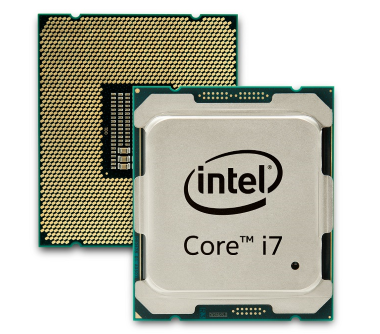
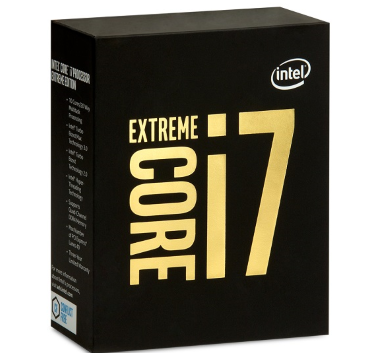
In this regard, Intel has launched the Intel® Core™ i7 processor Extreme Edition, the most powerful desktop processor in Intel's history. The new Intel Core i7 processor Extreme Edition family was developed to meet the demands of today's "mega-tasking" gamers and content creators. As Intel's first 10-core desktop processor, it provides up to 20 threads capable of handling multiple computationally intensive workloads simultaneously, and features 40 PCIe lanes of platform scalability for expanding systems equipped with graphics cards and SSDs. In addition, it provides a new level of performance that overcomes the limits of a PC with the new Intel Turbo Boost Max Technology 3.0 and quad-channel memory support.
This product can also be fully unlocked for performance tuning, so custom-tuned systems built by enthusiasts will be exhibited during Computex as part of the annual HWBOT Overclock World Tour.
In addition, Intel demonstrated the 7th Generation Intel Core processor (codename Kaby Lake) for the first time while discussing innovations expected in the PC sector in the second half of this year, and introduced enhanced performance, battery life, and media capabilities to be implemented in premium devices scheduled for release in the second half of 2016. Intel's PC business serves as the foundation of its strategy to regularly launch new products every year and generates core IP (intellectual property) that drives innovation across the entire product portfolio. Furthermore, Intel is expanding the application of Intel Core processors not only across the broad PC sector, ranging from ultra-slim 2-in-1s to extreme gaming desktops, but also into IoT fields such as retail, signage, industrial IoT, and healthcare.
4. 'Objects' that are becoming smarter and more connected
The various 'things' that currently constitute the PC business and IoT industry can demonstrate greater value when connected to the cloud, regardless of whether they are for home, automotive, or enterprise use.
In this regard, Intel has launched the Intel® AnyWAN™ GRX 750 SoC family and the Intel® XWAY™ WAV500 Wi-Fi chipset, a new 5th generation 11ac MU-MIMO Wi-Fi family for home gateways. The Intel AnyWAN GRX750 SoC enables home gateways to deliver richer experiences. The Intel platform enables local and cloud-based services, media creation, and content sharing for a wide range of tools, from next-generation UHD devices to personal home devices.
Intel's connectivity products provide the necessary foundation to support the growing number of connected devices and internet-based services, delivering secure and easy experiences to general households and small and medium-sized businesses. Intel is helping dozens of OEMs and ODMs supply home gateways and Wi-Fi access points to the retail market.
In the transportation sector, Intel announced a collaboration with Taiwan's Chunghwa Telecom and SanJet Technology Corp. to provide connected telematics services utilizing entry-level Intel Atom x3 processors for IoT. The devices will provide drivers with customized insurance policies based on their driving habits and vehicle usage patterns. Intel will continue to expand solutions based on Intel Atom x3 processors for IoT product families such as POS systems, healthcare tablets, and industrial devices.
5. Transform mobility with 5G to create a smart, connected society
If 4G was about transferring data at high speeds, 5G will enable a more powerful wireless network to interconnect things, people, and the cloud. 5G will bring changes to our daily lives by realizing a smart and connected society through smart cities, autonomous vehicles, and new industrial efficiencies. To make 5G a reality, networks must become faster, smarter, and more agile to handle the unprecedented volume and complexity of data traffic as more devices are connected and new digital services are added.
Intel is leading the network transformation to modernize today's telecommunications infrastructure and lay the foundation for 5G. At Computex, Intel announced that it has agreed to jointly develop network infrastructure technologies with Foxconn to accelerate this transformation. The two companies plan to collaborate on Proofs of Concept (PoCs) and pilot programs for technologies such as Mobile Edge Computing, CloudRAN, and Network Functions Virtualization. Through these efforts, Intel and Foxconn will support telecommunications service providers and solution providers in more easily reconfiguring their networks and beginning preparations for 5G.

Comments
Related news
Intel Leads Cloud Transition with Enterprise Microprocessors
Intel announced on the 6th through a product presentation that it will introduce various new technologies, investment plans, and industry collaborations for cloud services with superior speed and scalability, and will support enterprise customers in building cloud infrastructure more easily, enabling them to launch new services quickly and drive revenue growth. The Intel Xeon Processor E5-2600 v4 product family was developed using 14nm process technology and provides key components for SDI, including Intel Resource Director Technology. Intel Resource Director Technology enables customers to transition to fully automated SDI-based cloud services by providing excellent visualization for seamless control and monitoring of critical shared resources such as processor cache and main memory.
2016.04.08by 신윤오 기자
Intel Seeks to Expand Computing Horizons at Computex Taipei e21 Forum
The e21 Forum, one of the most important forums at COMPUTEX TAIPEI, will be held on May 31st at the Banquet Hall (3rd Floor) of the Taipei International Convention Center. This year's theme is "Vision with Intelligence: Amazing New Era!" where participants can explore future technologies together and gain information on recent innovation trends.
2016.05.13by 명세환 기자
Intel Delivers Ultimate Immersive Gaming Experience at 2016 PlayX4 Expo
Intel Korea (President Kwon Myung-suk) will participate in the 2016 PlayX4 (PlayX4), an international gaming exhibition held for four days from May 19-22 at KINTEX in Ilsan, Goyang, to provide domestic gamers with newer and more immersive gaming experiences. Intel Korea is participating in this event to create opportunities for active engagement with domestic gamers ahead of the December hosting of Intel Extreme Masters (IEM), an international gaming competition, in Goyang. Intel will operate four experience zones at the Intel booth, providing participants with opportunities to directly experience the latest games that implement stunning visuals and immersive experiences on Intel-based systems.
2016.05.20by 명세환 기자

Intel Unveils Next-Generation 'Core Ultra Series 3' and vPro Platform for Enterprise PCs
Intel has officially unveiled the "Intel Core Ultra Series 3" for next-generation enterprise PCs and the latest vPro platform, addressing a wide range of demands from enterprise notebooks to high-performance workstations.
2026.03.26by 배종인 기자

ROHM Launches ESD Protection Diode Compatible with High-Speed Interfaces of 10Gbps or Higher
Semiconductor specialist ROHM has developed the 'RESDxVx series' of ESD (electrostatic discharge) protection diodes capable of responding to next-generation high-speed data communication environments exceeding 10Gbps, simultaneously enhancing both signal quality maintenance required in high-speed interfaces and IC protection performance.
2026.03.26by 배종인 기자











