


LTE-M or LoRa? The War to Build 'Commercial Networks' for the Internet of Things Within the Year
 Published2016.06.21 10:38
KT plans to commercialize NB-IoT for its nationwide LTE-M network service as well.
LG Uplus supports LTE Cat.1 with the release of an LTE communication module
As dedicated IoT networks specialized for the Internet of Things are rapidly established, related IoT services are also expanding.
The Internet of Small Things (IoST) is a transmission technology characterized by low cost, low power consumption, and low capacity, enabling the transmission of small amounts of data and operation solely on batteries without the need for constant power. This is because not all objects necessarily require high-cost, ultra-high-speed networks to exchange data over the Internet.
Accordingly, leading domestic telecommunications companies are expanding the construction of their respective IoT networks and launching IoT services based on them one after another. While LTE-M technology utilizing existing networks was initially highlighted for IoT-dedicated networks specialized for the IoT, Low Power Wide Area (LPWA) communication technology for the IoT field is also gaining attention. LoRa, NB-IoT, and SigFox are competing as LPWA technologies.
These low-power, long-distance communication technologies each have their own advantages and disadvantages. LoRa, which boasts low power consumption, low speed, and long range, has been deployed by companies such as KPN in the Netherlands, Swisscom, Bouygues and SingTel in France, Proximus in Belgium, and FastNet in South Africa. In Korea, SK Telecom has set out to commercialize a nationwide network within the year.
SigFox, characterized by low power, low cost, low speed, and long range, is also being applied to commercial networks centered in Europe, including France, the Netherlands, Spain, and Switzerland. On the other hand, it is reported that LTE-M has been fully implemented in commercial networks by multiple mobile carriers, starting with Verizon in the United States.
LTE-M, which has already been commercially deployed in Korea, is a service suitable for small amounts of data (10 Mbps download, 5 Mbps upload); compatible devices are currently being prepared, and continuous upgrades are possible if necessary. For LoRa, for which equipment and network server development and interoperability testing have been completed, a nationwide network covering 99% of the population and 90% of the land area will be established within the year, starting with the Daegu IoT pilot city, Daejeon, Sejong, and Busan. Accordingly, the launch of various services utilizing sensors, such as metering, monitoring, and tracking, is also scheduled.
SK Telecom Completes LoRa Network Construction in Daegu, 'Expanding Nationwide Network'
SK Telecom is the most active in building dedicated IoT networks. On the 31st of last month, SK Telecom announced that it had completed the construction of a LoRa network, a dedicated IoT network, throughout Daegu, an IoT pilot city. This marks the first application of this technology at the city level in Korea. Based on this, SK Telecom plans to install T Open Lab by July, where ventures and startups can develop and verify new services, and also provide an environment that makes it easier to utilize its IoT platform, 'ThingPlug'. SK Telecom plans to expand its LoRa network nationwide by June and is also preparing various services through 'LTE-M', an IoT-dedicated network that has been applied to its commercial LTE network.
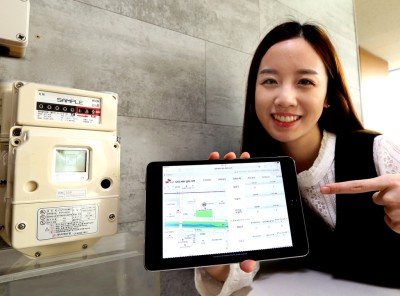
▲ Checking data from a smart gas meter equipped with a dedicated IoT module via a tablet. SK Telecom
SK Telecom predicts that the potential domestic market size for the IoT industry, which provides low-volume data such as numbers and coordinates infrequently, will reach 2.2 trillion won based on currently applicable services. At the IoT Convergence World held last month, SK Telecom’s Vice President Kim Jin-hyung stated, “SK Telecom plans to revitalize IoT services by opening up its platform to develop various data-based services and provide high value to customers, supplying chips and modules at low prices, and introducing new IoT-specific pricing plans.”
In this regard, SK Telecom is providing Korea's first LoRa-based bidirectional gas AMI. By combining a communication modem, the bidirectional gas AMI supports wireless remote meter reading and safety shut-off control services, eliminating the hassle of usage recording, text messaging, and unnecessary complaints. Additionally, the company is introducing a bicycle service equipped with dedicated LoRa tracking devices. This bicycle tracking service provides location verification, movement path monitoring, and data analysis solutions. In addition, we plan to utilize LoRa infrastructure to provide weather forecasting services and management services for the socially vulnerable.
KT Aims for 4 Million Connected IoT Devices by 2018
Last March, KT announced its Internet of Things business through the commercialization of the world's first nationwide 'LTE-M' network service.
KT announced that 'LTE-M,' which has launched nationwide commercial service, is superior to IoT technologies such as SigFox and LoRa in terms of coverage and stability. LTE-M not only enables nationwide service coverage but also utilizes licensed frequency bands, ensuring no degradation in communication quality due to frequency interference. Furthermore, it allows for bidirectional communication with objects, enabling control of devices that is impossible with SigFox or LoRa, and offers advantages in global scalability through roaming.
KT also announced plans to invest 150 billion won in NB-IoT through a presentation on its Internet of Things business. Prior to this, the NB-IoT Open Lab was opened at the Gyeonggi Creative Economy Innovation Center, and plans are underway to complete commercial network interoperability testing and service verification of NB-IoT within the year to pursue the world's first nationwide commercialization of NB-IoT.
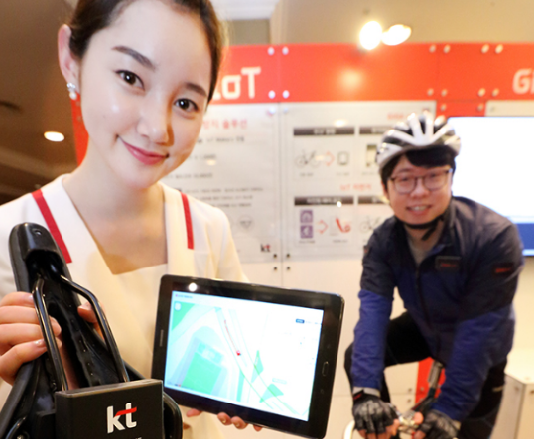
▲ KT 'Bicycle Theft Control Service'
At the presentation, KT’s Kim Jun-geun, Head of the GiGA IoT Business Unit, stated, “We will become a leading player in the IoT market by achieving the goal of 4 million connected IoT devices by 2018 through aggressive investment and ecosystem building for the IoT business.”
KT also introduced a 'Bicycle Theft Monitoring Service' that allows users to check the real-time location of bicycles along with an IoT network. The 'IoT Bicycle' is a solution that utilizes KT's nationwide LTE-M network and IoT platform to include features for preventing theft, such as vibration and alarms, sophisticated location tracking, and a battery complete discharge warning function. On the 25th of last month, KT signed a 'business agreement for the revitalization of the IoT bicycle market' with Alton Sports, BC Card, KT Telecop, and Dongbu Insurance at the Alton Sports headquarters located in Pangyo, Seongnam-si, Gyeonggi-do.
In addition, KT showcased various services, including a 'Smart Blood Box' capable of measuring the temperature and monitoring the movement of blood being transported, and a 'Smart Lighting Service' that links sensors for store signage and in-store temperature and humidity.
LG Uplus Announces LTE Communication Module Together with LG Innotek
LG Uplus launched its Internet of Things (IoT) business in earnest last March with the release of an LTE communication module using LTE services.
This company has successfully developed an ultra-low-cost, low-power LTE communication module dedicated to the Internet of Things (IoT) in collaboration with LG Innotek, and has launched the module and commercialized the service. Since the IoT-dedicated LTE Category 1 (Cat.1) communication module utilizes existing LTE networks, unlike dedicated IoT networks such as NB IoT, LoRa, and Sigfox, there is no need to invest additional time and money in new network infrastructure or development, making nationwide service immediately possible.
The company stated that the size has been minimized to approximately 50% of existing LTE communication modules (28.8mm x 16.6mm x 2.5mm), enabling its use in a variety of products such as wearables and medical devices. Additionally, a key advantage is its affordable price in the 10,000 won range, compared to the 30,000 to 40,000 won range of existing modules. Notably, it supports a Power Save Mode (PSM) function that transmits data only when necessary and automatically switches to power-saving mode at other times, making it suitable for IoT services.
Comments
Related news

What are the 5 conditions for the success of IoT products?
The Korea Trade Association recently released a report titled 'Success Strategies for Smart Products Integrating Overseas IoT Technology,' introducing five strategies: ▲Connect objects that customers need ▲Provide personalized services ▲Add smart to smart through combination with different technologies and infrastructure ▲Encourage smartification of existing products through enhanced compatibility ▲Provide economic incentives to customers. The report, which emphasizes the need to strengthen data usability, states that it is important not merely to apply IoT technology to products, but to add smartness to existing products by delivering clear value unique to IoT technology in areas where customers require it.
2016.04.11by 신윤오 기자
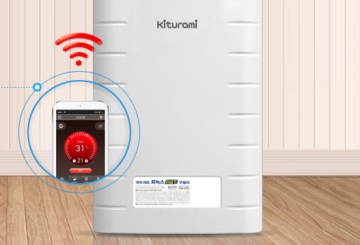
KT Signs MOU with Kiturami Boiler for IoT Business Cooperation
KT (Chairman Hwang Chang-gyu) and Geuktoorami (CEO Lee Jong-ki) signed a "Memorandum of Understanding for IoT Business" on the 23rd at KT's Gwanghwamun Building East headquarters and announced that they will proceed with service collaboration based on LTE-M (Low Power Wide Area Network). Through this MOU, Geuktoorami will expand its IoT service—currently applied only to residential boilers—to various product categories by leveraging KT's nationwide LTE-M network service and IoTMakers, KT's IoT platform, while providing integrated management of products and customer-friendly services.
2016.05.23by 명세환 기자
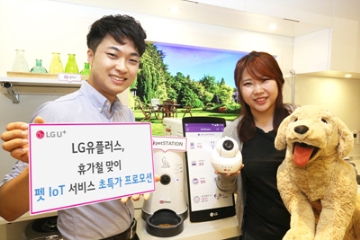
LG Uplus Unveils Various Pet IoT Services Ahead of Vacation Season
With growing interest in pets and rapid expansion of the pet market, attention toward pet IoT is also heating up. LG Uplus (Vice Chairman Kwon Young-soo) announced that ahead of the vacation season, it is running a special promotion offering the premium remote feeder 'petSTATION' at the discounted price of 1,000 won when customers sign up together for Home CCTV MomCa, a home IoT product for pets.
2016.06.16by 명세환 기자
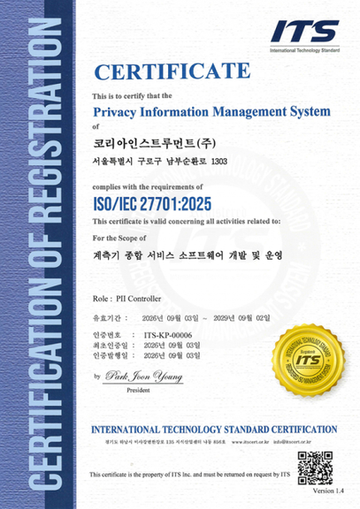
Korea Instrument, KOLAS Accredited Calibration Agency First to Simultaneously Acquire ISO/IEC 27,001·27,701
Korea Instrument has become the first among KOLAS accredited calibration agencies to simultaneously acquire ISO/IEC 27,001 and ISO/IEC 27,701 certifications. Through its proprietary platforms CWIZ Enterprise and CWIZ Partners, the company has embedded information security and personal data protection requirements across all business processes including customer information, equipment data, and calibration reports, with plans to continuously advance its management system through regular audits and security inspections.
2026.10.12by 배종인 기자

TeamViewer One, IT Incident Automation Workflow and Resolution Center Enhanced
TeamViewer has added IT incident automation capabilities and an advanced Resolution Center to its integrated digital workplace management platform 'TeamViewer ONE'. Recurrent service disruptions, configuration errors, and capacity shortages are automatically handled according to preset policies, and device status verification through script deployment can be managed in a unified interface, significantly reducing repetitive tasks for IT teams.
2026.10.12by 배종인 기자











