


Samsung Electronics Supports a Total of 225 Companies to Date in 'Smart Factory' Project
 Published2016.07.05 12:13
Based on the know-how provided by the Gyeongbuk Center, nationwide expansion starting this year
Samsung Electronics supported the 'Smart Factory' project for a total of 105 small and medium-sized enterprises (hereinafter SMEs) in the first half of this year.
Based on its experience supporting 120 small and medium-sized enterprises in the Gyeongbuk region last year, Samsung Electronics has supported the 'Smart Factory' project to a total of 225 companies so far this year, including 27 companies in Gyeonggi and Incheon, 11 companies in Jeolla, Chungcheong, and Daejeon, and 67 companies in Gyeongbuk and Gyeongnam regions.
The 'Smart Factory' project, which aims to enhance the manufacturing competitiveness of small and medium-sized enterprises by transferring Samsung Electronics' manufacturing competitiveness and know-how, was launched last year at the Gyeongbuk Creative Economy Innovation Center.
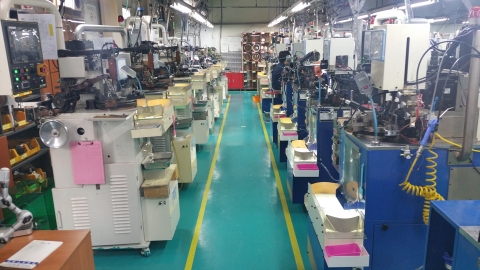
Starting this year, Samsung Electronics is actively expanding its 'Smart Factory' initiative nationwide in conjunction with regional Creative Economy Innovation Centers, and is concentrating its support on factory operating systems, manufacturing automation, process simulation, and ultra-precision molds under the backing of the Ministry of Trade, Industry and Energy and the Ministry of Science, ICT and Future Planning.
The 'Smart Factory' support program innovates the manufacturing sites of small and medium-sized enterprises, providing practical assistance to management, such as improving performance.
For example, Saehan Tungsten, a manufacturer of automotive light bulb filaments located in Namyangju, Gyeonggi Province, carried out a smart factory project from April to June of this year. Three manufacturing experts from Samsung Electronics and employees of Saehan Tungsten also carried out manufacturing site innovation activities to improve the factory environment, manufacturing logistics, warehouse management, and quality control.
Through this, the company was able to reduce chronic drop defects. Filaments, which are small components, become defective simply by falling to the floor, but Saehan Tungsten significantly reduced the amount of falling filaments by improving the equipment structure with the support of Samsung Electronics.
In addition, through the implementation of the MES system (Manufacturing Execution System), a smart factory support field, productivity was improved by 60%, the product return rate was reduced by 44%, and the time from order to shipment was shortened by 14%.
These activities were of great help to Saehan Tungsten in attracting clients. The fact that the factory was transformed into a clean factory equipped with systems through Samsung’s technical support received an excellent evaluation during the GE new supplier evaluation, leading to a supply contract and raising expectations for increased sales.
Kim Hak-jun, CEO of Saehan Tungsten, said, “With the help of the Gyeonggi Creative Economy Innovation Center and Samsung Electronics, we have achieved significant changes ranging from the factory environment and productivity improvement to quality control and the reform of employee mindset,” adding that “innovation activities have borne fruit in every corner of the manufacturing site.”
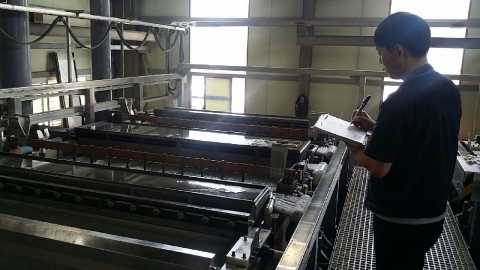
Dongjin Anotech, an anodizing plating company based in Busan, is a company specializing in the surface treatment field, which is one of the six major root industries that form the basis of manufacturing quality competitiveness.
Since the plating line is an environment where monitors and computers are prone to corrosion, it is common for workers to record manufacturing status manually.
However, through the 'Smart Factory' project, Dongjin Anotech established an MES system that allows workers to send manufacturing status to a computer server using an electronic pen, enabling the computerization of production management, equipment management, and quality management.
As a result, it became possible to easily collect data and monitor it in real time, leading to expectations of an annual cost reduction of 90 million won, including a 25% reduction in process defect rates and a 5% improvement in equipment utilization rates.
Dongjin Anotech CEO Kang Byeong-ryong said, “We have become a model and benchmark for the plating industry by promoting the smart factory business,” adding, “We are fully realizing the effects of strengthening corporate competitiveness and building our brand image.”
Under the goal of establishing 1,000 smart factories nationwide by 2017, Samsung Electronics raised a fund totaling 30 billion won last year with the Ministry of Trade, Industry and Energy, with 15 billion won each, andThe 'Creative Economy Support Center' has also been newly established to actively support businesses.

Comments
Related news
[CASE STUDY] Robots are the central axis of the 'Smart Factory,' innovation in the manufacturing field.
A 'smart factory' is a manufacturing system that integrates the entire manufacturing process—from product planning and design through production, distribution, and sales—using ICT (Information and Communications Technologies). Through systems equipped within the factory and sensors installed on machinery, a 'smart factory' autonomously controls production and processes while managing workplace safety. It is truly a 'smart factory' in the literal sense of the word.
2016.01.28by 명세환 기자
What are the power requirements for implementing a smart factory automation system?
In our country, as manufacturers introduce sensors and new control structures, production site systems are becoming increasingly smart. In this process, industrial form factors are shrinking to incorporate more functions, and there is a growing trend of configuring boards with fewer components in that constrained space.
2016.03.28by 명세환 기자
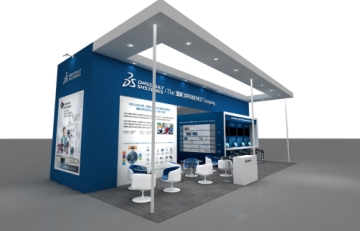
Dassault Systèmes introduces smart factory platform and cases at SIMTOS
Dassault Systèmes Korea (www.3ds.com/ko) will participate in the "Seoul International Machine Tool Show 2016 (www.simtos.org)" Smart Factory Special Exhibition, held from April 13-17 at KINTEX in Ilsan, as part of the "Dassault Systèmes 3D Experience Consortium." At this exhibition, Dassault Systèmes Korea will introduce its smart factory solutions and case studies as the most efficient next-generation operational model through the application of simulation philosophy to production sites. Dassault Systèmes Korea is a global company that provides an integrated platform capable of implementing a "Connected Smart Factory" environment where product planning, marketing, and research and development are linked through production and service, based on the digitalization of manufacturing processes.
2016.04.12by 명세환 기자
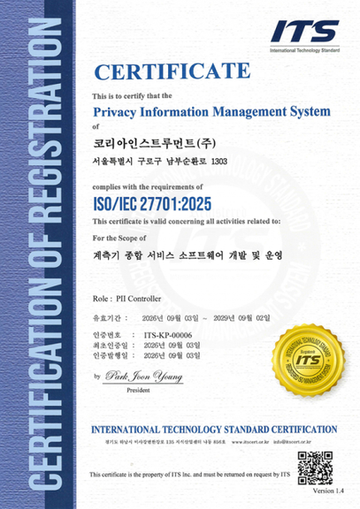
Korea Instrument, KOLAS Accredited Calibration Agency First to Simultaneously Acquire ISO/IEC 27,001·27,701
Korea Instrument has become the first among KOLAS accredited calibration agencies to simultaneously acquire ISO/IEC 27,001 and ISO/IEC 27,701 certifications. Through its proprietary platforms CWIZ Enterprise and CWIZ Partners, the company has embedded information security and personal data protection requirements across all business processes including customer information, equipment data, and calibration reports, with plans to continuously advance its management system through regular audits and security inspections.
2026.10.12by 배종인 기자
TeamViewer One, IT Incident Automation Workflow and Resolution Center Enhanced
TeamViewer has added IT incident automation capabilities and an advanced Resolution Center to its integrated digital workplace management platform 'TeamViewer ONE'. Recurrent service disruptions, configuration errors, and capacity shortages are automatically handled according to preset policies, and device status verification through script deployment can be managed in a unified interface, significantly reducing repetitive tasks for IT teams.
2026.10.12by 배종인 기자











