



Secure system semiconductor technology for autonomous vehicles by 2021
 Published2016.08.11 10:14
Focused support for smart cities, artificial intelligence, virtual and augmented reality, etc.
Nine national strategic projects aimed at securing new growth engines have been announced.
The nine national strategic projects selected by the government this time are ① autonomous vehicles ② post-steel lightweight materials ③ smart cities ④ artificial intelligence ⑤ virtual and augmented reality ⑥ precision medicine ⑦ carbon resource utilization ⑧ (ultra)fine dust ⑨ biopharmaceuticals.
The government announced that at the 2nd Science and Technology Strategy Meeting presided over by the President held on the 10th, it decided to intensively foster nine national strategic projects through intensive investment at the national level and collaboration between the public and private sectors.
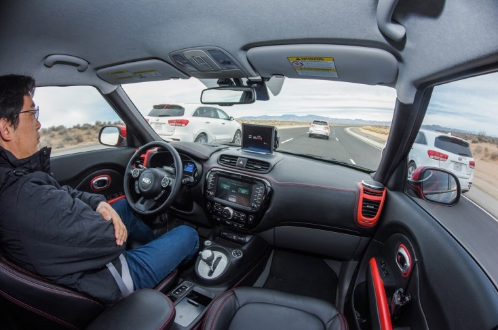
Among these, the Ministry of Trade, Industry and Energy plans to provide intensive support as the lead ministry for autonomous vehicles and post-steel lightweight materials projects to revitalize key industries and create new future markets.
It is projected to account for 75% of the new car market by 2035 and is expected to have a significant ripple effect on related industries such as semiconductors and ICT. Accordingly, the Ministry of Trade, Industry and Energy is promoting 'autonomous vehicles' as a national strategic project through inter-ministerial collaboration with the Ministry of Land, Infrastructure and Transport, the Ministry of Science and ICT, and others.
Intensive support for the localization of core components such as sensors and system semiconductors to reduce reliance on overseas sources
First, we will provide intensive support for the localization of core components, such as sensors, and system semiconductors that are essential for autonomous vehicles but are currently dependent on overseas sources. The plan is to develop eight key components essential for autonomous driving—including surrounding situation recognition cameras, radar/lidar, vehicle-to-external communication modules, 3D digital maps, integrated controllers, autonomous driving recorders, positioning, and driver monitoring—by 2019, and to secure automotive system semiconductor technology, which is expected to see high growth in areas such as image processing and communication, by 2021 based on excellent domestic semiconductor technology.
In addition, we plan to provide support to secure six major convergence technologies, including AI-based recognition rate enhancement technology, by utilizing world-class domestic ICT technology.
In addition to these, new convergence technologies include test systems utilizing virtual and augmented reality, electric vehicle-based autonomous driving platforms, traffic flow optimization technology, communication security, and cloud-linked mapping technology.
Based on excellent domestic semiconductor technology, we plan to secure automotive system semiconductor technology in 2021, which is expected to see high growth in areas such as image processing, communication, security, and HMI (Human Machine Interface) system semiconductors.
Through national strategic project R&D, we will expand convergence alliances between heterogeneous industries, such as domestic automobiles and ICT, where collaboration is currently lacking, and develop a common platform for autonomous vehicles designed with standardized interfaces by 2021 so that any ICT company can use it.
The Ministry of Trade, Industry and Energy identifies various service models to create new markets that may arise from autonomous vehicles, such as unmanned shuttles and traffic control, and supports their commercialization after demonstration in regulatory free zones. To this end, we plan to establish a global-level specialized testbed by utilizing regulatory free zones and other measures, and to comprehensively improve regulations that are excessive compared to developed nations through a joint effort by relevant ministries based on a comparative analysis of overseas laws and systems.
This project is scheduled to run for eight years starting in 2017 and is expected to require a total investment of 570 billion won jointly by the public and private sectors. If the plan proceeds without setbacks, it is expected to achieve results such as becoming a leading nation in autonomous vehicle technology, securing a global market share of over 10% for finished vehicles, and fostering 100 new small giants.
Building a smart city, artificial intelligence, and virtual/augmented reality ecosystem
Meanwhile, to build world-leading smart cities, we will combine our strengths in urban development experience with excellent ICT, and expand the construction of demonstration cities and entry into overseas markets. The government plans to improve urban management efficiency by more than 15%, create a high-value-added industrial ecosystem (fostering the top 10 global companies and 100 startups), and increase the proportion of overseas orders in the urban development sector.
Artificial intelligence (AI) technology, which will lead the intelligent information society, aims to strengthen national AI technological capabilities and secure a leading position in the global AI market by securing core AI technologies. A collection of AI elemental technologies designed to comprehensively understand diverse expertise and support human professional decision-making will be developed through public-private collaboration. The goal is to enhance Korea's technological prowess through research on source AI technologies and to incorporate the results of these developments into a common AI platform.
We also focus on building a virtual and augmented reality ecosystem. We concentrate on developing core technologies for virtual and augmented reality and standardizing them. To ensure user safety, we promote research and development and international standardization to address human factor side effects such as dizziness and motion sickness.
Comments
Related news
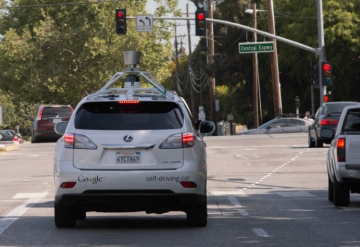
Why did Google's self-driving car spend 3.85 million kilometers on road tests?
Dr. Cha Won-yong, a representative futurologist in Korea and CEO/Director of ASPEC Future Technology Management Research Institute, revealed this through his recently published book titled "Intensive Patent Analysis of Google's AI-based Autonomous Vehicles," stating that "most of Google's patents are aligned with Levels (L) 3 and 4 as defined by the American SAE," and "patents related to software design capabilities for artificial intelligence (AI)-machine learning (ML)-deep learning (DL), which is the core of autonomous vehicles, and patents regarding situations, responses, and learning that occur during actual road testing based on this foundation." Dr. Cha identified 250 Google patents from 2009 through December 31, 2015, related to Google's Self-Driving Car (SDC) project, specifically semi-autonomous cars (Self-Autonomous Car) and autonomous cars (Autonomous Car), and analyzed 110 important patents among them. Most of these patents are sensor systems (Sensor System), autonomous driving computer systems (Autonomous Driving Computer System), which are core to autonomous vehicles, and authentication systems between users and autonomous vehicles when commercialized.
2016.05.02by 신윤오 기자
[CPU Planning ②] The goal is to expand the application of domestic cores in the field of autonomous vehicle image recognition
The Aldebaran CPU core is a core independently developed by the Electronics and Telecommunications Research Institute (ETRI). The name is derived from Aldebaran, the first-magnitude star representing Taurus in the constellations. This processor provides integrated ADE (Application Development Environment) that includes a CPU core based on power consumption minimization microarchitecture and an open source (GNU)-based software toolchain to enhance interoperability with enterprises. As computational functionality and learning capability for optimization in given situations are required, the development of hardware-based MCUs capable of efficiently calculating intelligent algorithms is increasingly demanded. To meet these requirements, the Electronic Components Research Institute developed the MENSA core.
2016.05.16by 신윤오 기자
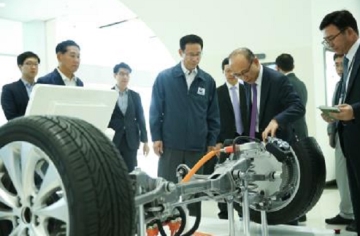
Localization of key components is necessary for the commercialization of autonomous vehicles
Choi Jeong-ho, Vice Minister of Land, Infrastructure and Transport, visited Hyundai Mobis's Mabok Research Institute on the 3rd, which became the first automotive parts supplier to receive temporary autonomous vehicle operation approval. He was briefed on the autonomous vehicle-related research and development initiatives being pursued at the institute. At a roundtable discussion attended by Hyundai Mobis Executive Vice President Jeong Seung-gyun and research institute officials, Vice Minister Choi encouraged them, stating, "I appreciate the efforts of those who have worked on technology development to make today's Hyundai Mobis possible."
2016.06.07by 명세환 기자
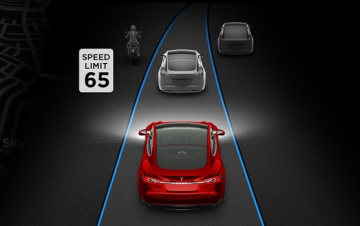
Can domestic LiDAR technology, the eyes of autonomous vehicles, drastically lower prices?
Last May, when a fatal accident involving a Tesla electric vehicle occurred while driving with autonomous driving capability (Autopilot), autonomous vehicles once again became the center of controversy. The U.S. National Highway Traffic Safety Administration (NHTSA) regards this accident as the first fatal accident occurring in autonomous driving mode. This accident has become an opportunity to comprehensively review autonomous vehicle technology, from the sensor role to commercialization. Accordingly, we examined autonomous vehicle forward detection technology through the current domestic technology status of LiDAR (Light Detection and Ranging), which can be considered the "eyes" of autonomous vehicles, and related technologies.
2016.07.04by 신윤오 기자
[Automotive Innovation Day] NXP Semiconductor Leads Autonomous Vehicles with V2X and Radar Chips
NXP Semiconductor, participating in the Automotive Innovation Day (2016 Automotive Innovation Day) held on the 14th, hosted by Automotive Electronics, showcased automotive solutions including Ethernet and V2X. The automotive Ethernet solution for ADAS and infotainment consists of complete hardware and software. Audio and video playback synchronization between multiple displays is possible.
2016.07.18by 신윤오 기자











