


NI Announces MIMO Application Framework to Accelerate 5G Prototyping
 Published2016.08.25 06:02
National Instruments (NI) has announced the world's first MIMO application framework.
When this software design framework is combined with NI software-defined radio hardware, it enables the construction of a physical layer that allows designers to develop both conventional MIMO and Massive MIMO prototypes. This physical layer is written in LabVIEW source code, offering high readability, reconfigurability, and parameter-based operation.
The MIMO application framework enables wireless developers to develop algorithms and evaluate custom IP while addressing the diverse and practical challenges associated with implementing real multi-user MIMO systems. The MIMO application framework supports antenna configurations ranging from 4 to 128 antennas, and when used with NI USRP RIO and NI PXI hardware platforms, it minimizes system integration and design efforts for both large and small antenna systems.
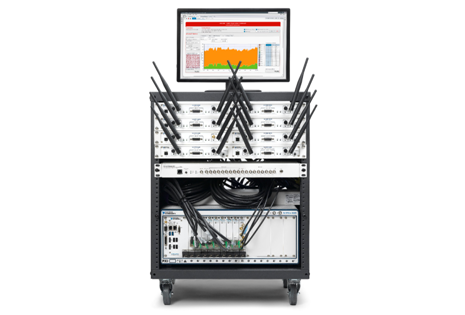
Researchers can conduct Massive MIMO experiments using the system without additional configuration and seamlessly integrate their own signal processing algorithms in significantly shorter timeframes compared to alternative approaches, enabling design cycles to be drastically shortened in the wireless industry's competition toward 5G.
Researchers from Bristol University in the United Kingdom, participating in NI's RF/Communications Lead User Program, have utilized NI's flexible prototyping platform in 5G research, and recently conducted joint research with Lund University in Sweden, announcing remarkable achievements that improve spectrum efficiency by 22 times compared to today's 4G networks.
Andrew Nix, head of the CSN group and dean of the engineering faculty at Bristol University, emphasized that "NI's MIMO platform has been an indispensable tool for Massive MIMO research," and stated "The research team was able to proceed directly with advanced research using the MIMO application framework provided by NI, and through seamless integration of software and hardware, we were able to rapidly develop prototypes based on theory. As a result, we have established record-breaking achievements in spectrum efficiency, demonstrating the potential of Massive MIMO as a 5G technology."
Comments
Related news
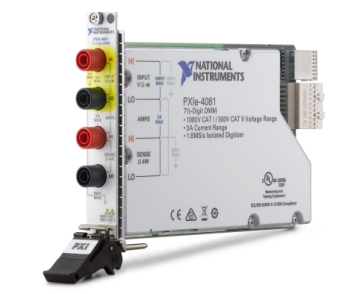
NI Announces Accurate, High-Performance Digital Multimeter
National Instruments (ni.com/korea, hereinafter NI) has announced the NI PXIe-4081, a 7½ digit resolution digital multimeter (hereinafter, DMM) that offers the highest accuracy and performance in the industry. The NI PXIe-4081 is the industry's first PXI Express DMM and also functions as a 1.8MS/s isolated digitizer. It meets the resolution (7½ digit) and isolation performance (1.8 MS/s) requirements necessary for engineers to build intelligent test systems, ranging from consumer electronics to aerospace and defense solutions.
2016.06.02by 명세환 기자
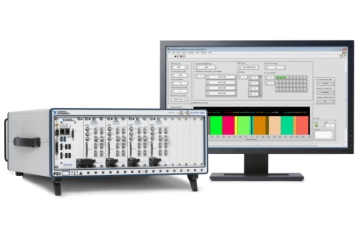
NI Launches 802.11ax High-Efficiency Wireless Standard Test Solution
National Instruments (ni.com/korea, hereinafter NI) has announced the NI WLAN Measurement Suite, software that supports the IEEE 802.11ax (draft 0.1) high-efficiency wireless standard. When the WLAN Measurement Suite is integrated with NI's RF vector signal transceiver (VST), 802.11ax design performance can be reliably measured even with variations in 802.11 physical layer specifications.
2016.06.27by 명세환 기자
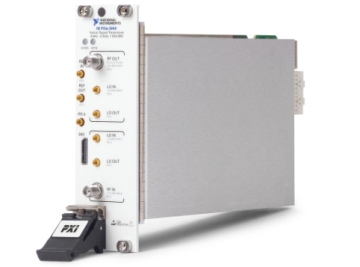
NI Launches Second-Generation Vector Signal Transceiver with Significantly Improved Bandwidth and Size
National Instruments (ni.com/korea, hereinafter NI) has launched the second-generation Vector Signal Transceiver (VST). The NI PXIe-5840 module is a VST with the world's maximum bandwidth of 1GHz, designed to address challenging requirements in RF design and test applications.
2016.07.15by 장은성 기자

ESP32 Development Environment Selection and GPS Application Implementation
The ESP32 is a microcontroller that integrates Wi-Fi, Bluetooth, 12-bit ADC, capacitive touch, PWM, DAC, and UART in a single SoC. However, the abundance of features does not by itself solve the designer's problems. The real challenges lie in selecting the appropriate development environment, determining which pins can be used and which must be avoided, and converting raw data from modules into usable information. This document addresses ESP32 peripheral constraints (ADC2 and Wi-Fi coexistence limitation, UART1 occupancy, ADC non-linear regions), the trade-offs between Arduino IDE and ESP-IDF, and the process from connecting NEO-6M/NEO-M8N GPS modules to UART2, parsing NMEA sentences, and visualizing routes in Google Earth, all organized based on documented references.
2026.10.12by 편집부
MIPI CSI-2, DSI-2, C-PHY, D-PHY Test Solution Technical White Paper
The MIPI interface adopts a burst mode that transitions between low-power (LP) and high-speed (HS) states for low-power consumption, and in return, strict timing rules are imposed on state transitions. Additionally, the high-speed section operates as a packet-based protocol with headers, ECC, and CRC, so verification engineers must handle waveforms and protocols simultaneously. Traditional configurations combining general-purpose oscilloscopes and AWGs reveal limitations in setup complexity, measurement uncertainty, and lack of reproducibility when faced with these requirements. This white paper, based on webinar materials, organizes the structure of this problem and describes how the SV5C-DPTXCPTX generator for receiver testing and SV5C-DPRXCPRX analyzer for transmitter testing integrate state transition testing, stressed eye testing, and protocol analysis into a single bench, along with their application boundaries.
2026.10.12by 편집부











