



We will intensively foster AI-based commercialization projects with significant industrial ripple effects.
 Published2016.09.12 17:25
The core competitiveness of future industries lies in the virtuous cycle of 'big data' and 'artificial intelligence technology'
The Artificial Intelligence Application Industrialization Promotion Team (co-chairs Professor Lee Soo-young of KAIST and Kim Young-sam, Director General of System Industry Policy at the Ministry of Trade, Industry and Energy) held an Artificial Intelligence Application Industrialization Forum on the 12th by inviting experts from industry, academia, and research institutes related to artificial intelligence (AI).
The Artificial Intelligence Application Industrialization Promotion Team, launched last March, has gathered opinions from various fields and identified 15 technology development and commercialization projects with significant industrial ripple effects from the use of artificial intelligence (AI).
At the forum, experts from industry, academia, and research institutes assessed the current status of artificial intelligence (AI) utilization in the industry and discussed necessary tasks and future development plans to promote industrialization.
Apply artificial intelligence to industry
Dr. Lee Seong-ho (Science and Technology Policy Institute) predicted that the Fourth Industrial Revolution creates new value based on “artificial intelligence” technology, which combines Internet of Things technology and artificial intelligence technology, and that the core competitiveness of future industries lies in a virtuous cycle of “big data” and “artificial intelligence technology.”
Professor Lee Sang-eun (Yonsei University Severance Hospital) stated that precision medicine technologies for personalized disease prevention, diagnosis, and treatment are expected to advance in the future based on big data, including genomic information, health checkups, and medical records. Additionally, Professor Lee Kang-yoon (Department of Computer Engineering, Gachon University) mentioned that IBM Watson is a callHe said that by performing the role of DIVA in centers, insurance, chatbots, and civil complaint services of government agencies, business knowledge previously performed by experts in finance, law, manufacturing, etc., will be accumulated as data and related transaction markets will be formed.
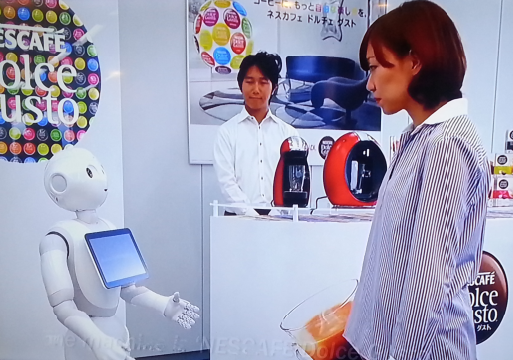
▲ Example of a robot applying IBM Watson Cognitive. (IBM)
Research Fellow Baek Soon-kwon (Hyundai Motor Company’s Vehicle Information Technology (IT) Intelligence Research Lab) stated, “We are conducting research on deep learning-based voice signal processing, including situation judgment algorithms based on acoustic (voice) signals, speech recognition, and natural language processing,” and emphasized, “In the future, an open protocol is needed for information transmission and exchange between artificial intelligences, and we must pursue development through the development of a Korean-style industry-academia-research model.”
Son Jin-ho, Head of Research Institute (LG Electronics Intelligence), stated, “We are currently applying voice recognition and natural language processing-based technologies to mobile devices, televisions (TVs), and home appliances. We plan to expand this into core technologies for e-commerce (B2B) businesses, including voice/video-based smart butlers, AI-based intelligent home appliances, automobiles, robots, and signage.”
How Artificial Intelligence (AI) is Used in the Field of Unmanned Vehicles
Park Sung-joo, Vice President of Eugene Robot, who participated in the unmanned vehicle session, stated, “Since the main market for intelligent logistics robots is overseas, it is necessary to reflect the requirements of overseas markets from the early stages of development and establish market penetration strategies,” adding, “Instead of a one-time development of the framework for social intelligence-based service robots, an open community type that guarantees sustainability."A development strategy through the sex industry is necessary," he said.
Team Leader Yoo Hyuk (Flight Control Research Team, KARI) emphasized that mission execution efficiency can be enhanced through AI-applied field information support systems utilizing mission equipment data and image information recognition-based technologies. Senior Researcher Kim Nak-in (Korea Institute of Construction Machinery & Parts) pointed out that rather than following market leaders in AI applications, it is important to pursue commercialization by considering the characteristics of our companies' core products.
We must develop services and AI-based technologies.
Jo Sang-wook, Managing Director of Infinite Healthcare, stated that there is a need to diversify the scope to enable the participation of AI diagnostic technologies for other diseases, such as tuberculosis and lung cancer, beyond cardiovascular diseases. Additionally, Ko Jae-jin, Project Director at the Electronics Components Research Institute, noted that applying AI technology to smart factory failure prediction can optimize production procedures and enable the creation of new businesses based on this.
Park Woo-jin, CEO of E-Lancer Co., Ltd., stated, “Cyber security issues such as hacking will become a major obstacle to the use of artificial intelligence (AI) in the industry, and therefore, technological development and market preemption are necessary.” He added, “Deep learning technology analyzes patterns and shares similarities with pattern analysis in security technology, making it easy to apply deep learning technology in the security field.”
Based on the diverse expert opinions discussed at the forum, the Ministry of Trade, Industry and Energy plans to supplement the projects identified by the task force, incorporate them into the comprehensive plan for the Intelligent Information Society currently being formulated jointly by the Ministry of Science, ICT and Future Planning and relevant ministries, and actively promote them starting in the second half of this year through the Ministry's technology development projects. Lee Soo-young, Head of the AI Application Industrialization Task Force (and Professor at KAIST), who presided over the forum, explained the progress of the task force's activities so far, stating that experts from industry, academia, and research institutes, through three plenary sessions and 25 industry-specific subcommittee meetings He said that the derived projects would contribute significantly to promoting the utilization of artificial intelligence in Korea.
In his congratulatory remarks, Kim Young-sam, Director General of System Industry Policy at the Ministry of Trade, Industry and Energy, assessed that the projects presented by the task force would serve as a catalyst for the leap forward of our industries. He also stated that the ministry plans to actively support the application and industrialization of artificial intelligence (AI) in collaboration with relevant ministries so that the utilization of AI can become a new turning point for growth in our industries.
Comments
Related news
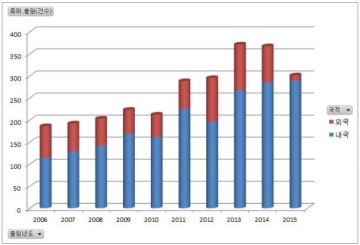
AI-related patents in the U.S. are nine times higher than those in Korea
According to the Korean Intellectual Property Office (Commissioner Choi Dong-gyou), an analysis of domestic artificial intelligence-related patent applications using natural language search methods reveals that over the past 10 years (2006-2015), patent applications totaled 2,638 cases, representing an average annual increase of approximately 5%. Natural language search is a search method that enables queries at the sentence level, utilizing search terms such as 'artificial intelligence, machine learning, artificial neural networks, deep learning, and decision-making'.
2016.03.21by 신윤오 기자
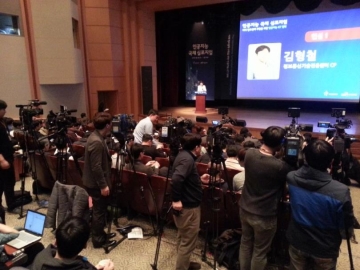
[Reporter's Notebook] Have We Ever Been This Thirsty for 'Artificial Intelligence'!
People and media outlets eager for artificial intelligence focused intently, hanging on every word of the seminar speakers. At this symposium, artificial intelligence experts from IBM's Watson—famous for defeating humans at chess—as well as Microsoft, Samsung Electronics, and MIT presented their views on the current state of artificial intelligence technology and its potential impact on humanity.
2016.03.28by 신윤오 기자
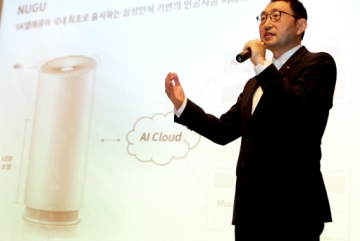
Will 'NUGU,' the conversational AI service, succeed in capturing the home market?
SK Telecom announced on the 31st that it has launched the conversational artificial intelligence service 'NUGU', thereby opening the 'era of AI democratization'. On this day, the company unveiled the voice recognition-based artificial intelligence service 'NUGU' and its dedicated device, and announced plans to co-evolve the artificial intelligence platform service together with customers and external developers. The artificial intelligence service 'NUGU' is a service wherein when customers speak to the dedicated device as if having a conversation, advanced voice recognition technology and an artificial intelligence engine identify and execute what the customer desires. The company explained that it launched the artificial intelligence service in preparation for the era of service convergence based on artificial intelligence technology.
2016.08.31by 신윤오 기자
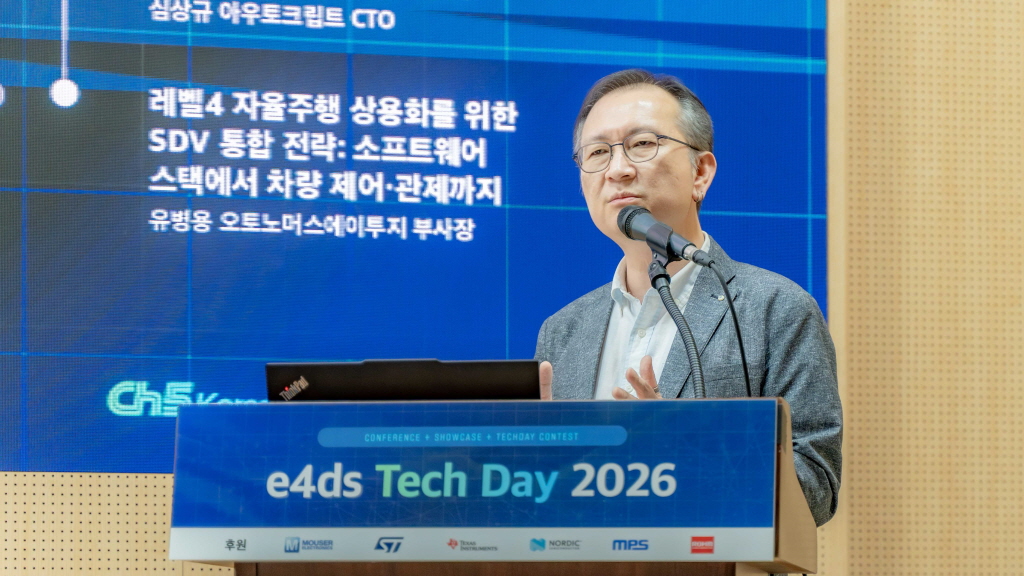
[e4ds Tech Day 2026 ⑨] Sim Sang-gyu, Autocrypt CTO: "In the Physical AI Era, Automotive Security Must Extend Beyond the Vehicle"
At e4ds Tech Day 2026, Sim Sang-gyu, CTO of Autocrypt, explained automotive cybersecurity strategies in the era of Physical AI and SDV (Software-Defined Vehicle). Automobiles are evolving as part of an ecosystem connected to AI, cloud, chargers, IoT, and robots, and he emphasized that the scope of security must expand beyond the vehicle interior to the entire connected environment. In particular, AI model tampering, adversarial attacks, OTA updates, and EV charger hacking were identified as major threats. He explained that response measures require zero trust, AI model integrity protection, intrusion detection, Security by Design and Default, and full lifecycle security management, and that proactive security system establishment beyond regulatory compliance is critical for securing future mobility competitiveness.
2026.10.12by 배종인 기자
NVIDIA to Invest $1 Billion in U.S. Science Over Next Five Years
NVIDIA has announced plans to invest $1 billion over the next five years to strengthen U.S. scientific and technological competitiveness. The company will enhance cutting-edge artificial intelligence research and development capabilities in key areas including quantum computing, healthcare, and energy security, while expanding support for higher education research institutions and cloud service providers. NVIDIA is participating as a major industry partner in the White House Office of Science and Technology Policy's Genesis Mission, and is promoting supercomputer construction in collaboration with national laboratories including Argonne and Los Alamos.
2026.10.12by 배종인 기자











