



[A Close Look at ICT R&D] 11. The AI Industry Sparked by AlphaGo: A Long and Difficult Road Ahead
 Published2016.10.10 17:58
Lack of competitiveness in domestic core software technology and inferiority in investment scale and brand recognition
The Ministry of Science, ICT and Future Planning has unveiled the draft Technology Roadmap 2022, which adds artificial intelligence to the 10 major ICT R&D technology fields. The 10 major ICT R&D technologies selected by the Ministry to strengthen the interconnectedness of science and technology and ICT and to discover new industries are: digital content, convergence services, ICT devices, information security, mobile communications, networks, broadcasting/smart media, radio waves and satellites, software, foundational SW computing, and (added) artificial intelligence. Accordingly, e4ds News presents the future technology development roadmap by introducing the R&D strategies for these fields in turn.
The "Go match of the century" between Google's AlphaGo and Lee Sedol at the beginning of the year brought an artificial intelligence frenzy to our society. In response, the government also added a technology roadmap for the field of artificial intelligence separately from the top 10 ICT R&D sectors.
Artificial intelligence is an ICT technology designed to realize high-level human information processing capabilities, such as cognitive, learning, reasoning, and comprehension abilities. It is considered a key player in the Fourth Industrial Revolution, which is envisioned as an "evolution into a society where everything is connected and more intelligent." Intelligent information technology refers to the convergence technology of intelligent information processing software and hardware that realizes new intelligent services by combining 'intelligence' implemented through artificial intelligence technology with 'information' based on big data, IoT, and the cloud.
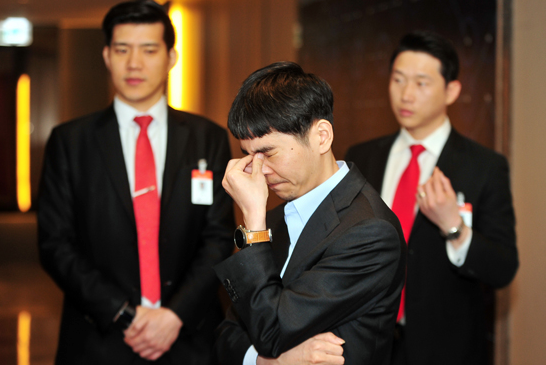
▲ The Go match between Google's AlphaGo and Lee Se-dol last March instantly brought artificial intelligence to the forefront as a major issue in our society. (The photo shows Lee Se-dol 9-dan deep in thought before entering the match venue. Source: Korea Baduk Association)
This refers to technologies that mimic human intelligence, such as learning and reasoning, contextual reasoning, language comprehension, visual comprehension, and cognitive computing. It also includes integrated technologies such as AI chips, brain science/engineering, convergent intelligence, AI platforms, and neuromorphic computing, as well as related technologies such as robots, cloud computing, knowledge services, IoT/big data, autonomous vehicles, AR/VR, and drones.
Artificial intelligence is rapidly advancing new learning methods and application technologies driven by the simultaneous growth of big data and cloud technologies. While core AI technologies such as language and vision are approaching human levels and evolving into self-learning and knowledge-growth technologies, the system still falls significantly short in terms of intelligence.
The global market grew from $7.5 billion in 2015 to $13.1 billion in 2018.
The market outlook is very bright. The global market is projected to grow at an annual average rate of 19.8% from $7.5 billion in 2015 to $13.1 billion in 2018. Looking at the sales forecast by product type related to artificial intelligence, expert systems are expected to grow from $3,950 million in 2015 to $5,960 million in 2018, the autonomous robots market from $1,668 million to $3,003 million, and the intelligent virtual assistants market from $769 million to $1,707 million.
As such, expert systems and autonomous robots are expected to lead the artificial intelligence market. The areas in which expert systems will be used are highly diverse, and they are likely to take the form of long-tail businesses. Autonomous robots are expected to be primarily used in manufacturing sectors (automotive, food manufacturing, electrical and electronics, etc.) and are anticipated to include functions capable of efficiently managing production and inventory.
The domestic artificial intelligence market grew at an annual average rate of 19.8% from 143.4 billion won in 2015 to 249.7 billion won in 2018. This figure is based on the assumption that the domestic market accounts for 1.6% of the global market.
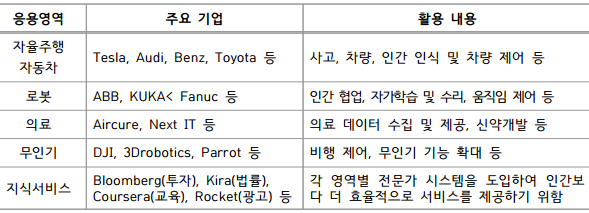
▲ Major companies and AI technology utilization in key application areas (Source: ETRI AI Technology and Industrial Potential Report)
As such, artificial intelligence has begun to attract attention as an engine to drive the Fourth Industrial Revolution, and it is a field with high expectations as a technology for securing productivity to address population decline and aging. Strong government policies to support and promote various IT services by utilizing the latest world-class ICT technologies are also considered a strength. The world-class terminal development and commercialization capabilities, along with a market environment that shows relatively low resistance to new technologies and change, are also positive factors.
However, it has weaknesses such as a lack of competitiveness in foundational core software technology, inferior investment scale and brand recognition, a domestic-centric market structure, and insufficient experience in entering global markets. The shortage of highly skilled professionals compared to global companies in developed countries is also a problem. Furthermore, there is resistance to the application of convergence industries due to a lack of secured technological stability and reliability, and threats arise from the accelerating global competition in technology and markets centered around existing leading companies. Additionally, concerns regarding the negative consequences of AI technology advancements, such as job losses and human rights violations, cannot be ignored.
Goal to achieve over 85% of the world's highest technology level by 2022
Accordingly, the government has a vision to realize a global powerhouse in the AI convergence industry by 2022 by securing competitiveness in five key AI core technologies. CP Kim Hyung-cheol stated, “We have set a goal to achieve a technological level of over 85% compared to the world’s leading nations by 2022,” adding, “The strategy is to develop core AI technologies with the goal of preempting the global market, create new industries through collaboration with related technologies, and establish an intelligent ecosystem for the convergence industry.”
As of 2015, the level of language comprehension technology is 79.4%, visual comprehension is 70.9%, spatial comprehension is 66.3%, and sentiment comprehension is 64.7%. Accordingly, among the five major fields of artificial intelligence, large-scale flagship projects are being pursued in the fields of situational comprehension and visual comprehension, which will lead the intelligence of convergence industries; the focus is on securing source technologies for learning and reasoning and situational comprehension technologies, while the focus is on securing basic foundational technologies for cognitive computing technology. In addition, we plan to create a new intelligent information industry ecosystem by strengthening cooperation with related technologies such as big data and cloud computing.
In response, CP Kim Hyung-chul stated, “It is urgent to overcome the limitations of domestic technological capabilities by promoting the development of core technologies for the intelligentization of convergence industries, such as learning and reasoning, situational awareness, language comprehension, and visual comprehension, as well as through international joint research and joint development with open source software leaders.” <End of Series>
Comments
Related news
We will intensively foster AI-based commercialization projects with significant industrial ripple effects.
The Artificial Intelligence Applied Industrialization Promotion Unit (co-chaired by Professor Lee Su-young of KAIST and Kim Young-sam, Director of System Industry Policy at the Ministry of Industry) held an Artificial Intelligence Applied Industrialization Forum on the 12th, inviting experts from industry, academia, and research institutions related to artificial intelligence (AI). The Artificial Intelligence Applied Industrialization Promotion Unit, which was launched in March, has gathered opinions from various sectors and identified technology development and commercialization projects (15 in total) with significant industrial ripple effects from AI utilization.
2016.09.12by 신윤오 기자
Was the impact of AI 'AlphaGo' significant? Related trademark applications surge.
Following Google's artificial intelligence computer 'AlphaGo' competing against Lee Sedol 9-dan in a baduk match in March, which garnered significant public attention, trademark applications related to artificial intelligence have become increasingly active. According to the Korean Intellectual Property Office (Commissioner Choi Dong-kyou), artificial intelligence-related trademark applications totaled 18 filings over five years: 3 in 2011, 3 in 2012, 0 in 2013, 9 in 2014, and 3 in 2015. However, this year saw 35 applications filed through July alone, representing nearly double the total number of filings from the previous five-year period of 18 cases.
2016.09.13by 신윤오 기자

Samsung Electronics Acquires Next-Generation AI Platform Company - Here's Why
Samsung Electronics announced the acquisition of VIV Labs Inc. (hereinafter "VIV"), an artificial intelligence (AI) platform development company based in Silicon Valley, USA. VIV's artificial intelligence platform is characterized by allowing external service providers to freely participate and connect their respective services to a natural language-based artificial intelligence interface.
2016.10.07by 신윤오 기자
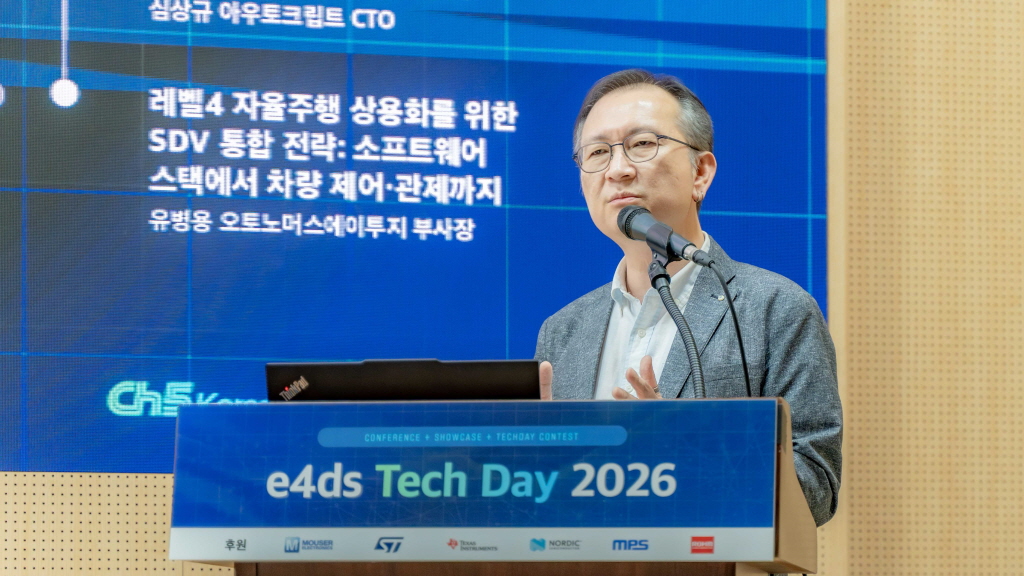
[e4ds Tech Day 2026 ⑨] Sim Sang-gyu, Autocrypt CTO: "In the Physical AI Era, Automotive Security Must Extend Beyond the Vehicle"
At e4ds Tech Day 2026, Sim Sang-gyu, CTO of Autocrypt, explained automotive cybersecurity strategies in the era of Physical AI and SDV (Software-Defined Vehicle). Automobiles are evolving as part of an ecosystem connected to AI, cloud, chargers, IoT, and robots, and he emphasized that the scope of security must expand beyond the vehicle interior to the entire connected environment. In particular, AI model tampering, adversarial attacks, OTA updates, and EV charger hacking were identified as major threats. He explained that response measures require zero trust, AI model integrity protection, intrusion detection, Security by Design and Default, and full lifecycle security management, and that proactive security system establishment beyond regulatory compliance is critical for securing future mobility competitiveness.
2026.10.12by 배종인 기자
NVIDIA to Invest $1 Billion in U.S. Science Over Next Five Years
NVIDIA has announced plans to invest $1 billion over the next five years to strengthen U.S. scientific and technological competitiveness. The company will enhance cutting-edge artificial intelligence research and development capabilities in key areas including quantum computing, healthcare, and energy security, while expanding support for higher education research institutions and cloud service providers. NVIDIA is participating as a major industry partner in the White House Office of Science and Technology Policy's Genesis Mission, and is promoting supercomputer construction in collaboration with national laboratories including Argonne and Los Alamos.
2026.10.12by 배종인 기자











