


IoT Standards Organizations Converge on OCF: Is 'Open Source' Becoming Mainstream?
 Published2016.10.24 17:20
Expanding application across various fields based on the IoT standard platform 'IoTivity'
With the trend toward the unification of IoT standardization organizations, the open source initiatives promoted by these groups are expected to spread rapidly.
The Open Connectivity Foundation (OCF), an Internet of Things standardization organization, announced on the 10th that it is merging with the AllSeen Alliance, an IoT consortium that was a kind of rival organization.
Until now, the general view in the IoT industry was that the Open Interconnect Consortium (OIC), the predecessor of OCF, was a camp centered on Samsung Electronics and Intel, while AllSeen was an IoT camp centered on LG Electronics and Qualcomm. However, the situation has changed rapidly recently as OCF merged with AllSeen and major home appliance manufacturers like LG Electronics joined as board members. This has resulted in the birth of the most representative consortium for creating international standards related to IoT (with 310 member companies as of October 13).

In fact, unified standards in the field of the Internet of Things are welcome news for consumers and small and medium-sized enterprises (SMEs). This is because consumers want unconditional device connectivity, and SMEs with limited software development capabilities want to quickly manufacture products and enter the market. Open source has been regarded as the core of the IoT industry, given that unified standards are necessary to ensure interoperability between devices.
Accordingly, OCF currently adopts a unique approach of providing both open source and standards. The reason OCF (formerly OIC), which initially advocated solely for open source development, began creating and distributing standards is to provide developers with broader development opportunities and support interoperability verification. OCF, which announced the open source project 'IoTivity' at CES earlier this year, operates in a way that allows all essential features created within its own specifications to be included. This enables not only large corporations but also small businesses to easily build IoT products and conduct interoperability tests.
The reason OCF did not directly manage the IoTivity project under its umbrella but instead had the Linux Foundation operate it exclusively is also for the sake of the developer ecosystem. By leveraging the familiar brand of Linux rather than the unfamiliar organization of OCF, they enabled the development of IoT technology and the growth of the ecosystem.
One of the factors behind the expansion of open source is that its quality has risen to a significantly high level. In the past, companies chose to develop in-house rather than modify and improve low-quality open source software, as it was more cost-effective. However, the situation has changed. Even when massive resources are invested, the quality often falls short of that of open source. Furthermore, the pace of open source development has become so rapid that it is difficult for companies to keep up. As long as there are no licensing issues, there is no reason not to use open source. Industry insiders unanimously agree that "the adoption of open source has gained tremendous momentum and this will not easily change."
For example, Samsung Electronics’ Tizen platform, currently applied to TVs and refrigerators, is also 80–85% built entirely from open source. Only about 15% of the source code was developed in-house by Samsung. This implies that any company capable of creating that 15% of software can produce a product similar to Tizen.
The AllSeen consortium's sudden joining of OCF was driven not only by the technical background that OCF's adopted RESTful architecture is highly efficient for bus structures in IoT scenarios, but also by the significant impact of its royalty-free IP policy. The entry of Qualcomm, which led AllSeen, into OCF was interpreted as a clear agreement with OCF's royalty-free policy.
Park Soo-hong, a senior executive at Samsung Electronics, spoke at the International Internet of Things Conference on the 13th, stating, “If Korean companies want to seize business opportunities through the OCF, they need to actively utilize open source. This is because we believe that open source will become the standard for IoT.” He added, “Up until the current IoTivity 1.0 version, we have had many contacts regarding the smart home sector, but we expect to expand into various fields of interest in the future.”
OCF is expanding its services in healthcare, where ETRI is excelling, as well as in oneM2M connectivity, smart homes and cloud computing, and automotive and logistics.
Furthermore, Senior Manager Park stated, “I believe the key to OCF success going forward lies in how quickly we can bring products to market and make them available for use.” "To this end, OCF is working with various partners and collaborating with other IoT organizations," he said.
Comments
Related news
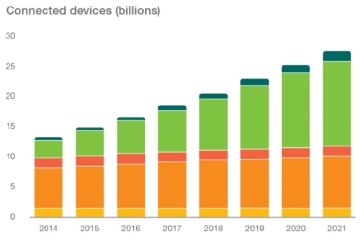
Number of IoT connected devices to grow at an annual average of 23% through 2021
Between 2015 and 2021, cellular IoT is expected to show the highest growth rate, with the number of IoT connected devices growing at an annual average rate of 23%. By 2021, approximately 28 billion connected devices will emerge, of which about 16 billion will be IoT devices. In Western Europe, the number of IoT devices will increase up to four times by 2021, leading the IoT market. This growth will be driven mainly by regulatory authority decisions on demand, including intelligent utility meters and connected cars, which include the EU e-Call directive to be implemented in 2018.
2016.06.29by 홍보라 기자
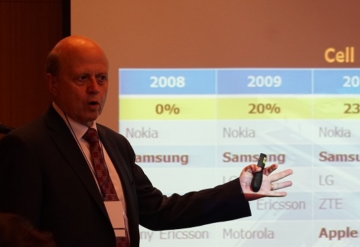
In the IoT era, focus on "data centers, gateways, and IoT nodes."
"The main growth sectors of IoT semiconductors are three categories: data centers, gateways, and IoT nodes. In other words, the analytics, networking, and storage fields of data centers, big digital SoCs, storage semiconductor memory fields, the gateway field of data collection hubs, and finally the IoT node field encompassing sensors, actuators, imagers, and transmitters." Walden C. Rhines, CEO of Mentor Graphics, has returned. Chairman Rhines, who visits Korea once a year to attend 'Mentor Forum 2016', a leading domestic EDA technology event, is known for expressing his views on the semiconductor market each time he visits.
2016.08.26by 신윤오 기자
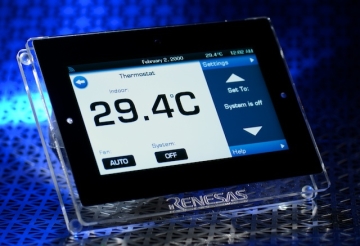
[Product Review] If you are concerned about time and cost when developing IoT devices, solve it with the ‘Renesas IoT Platform’
Renesas Electronics Korea Co., Ltd. (Representative Director: Atsuo Sakai, hereinafter Renesas) has begun providing the "Renesas Synergy Platform" in Korea starting September 30th. This platform is designed to help developers in the rapidly growing IoT (Internet of Things) sector, particularly in consumer and home appliance product markets, bring their developed products to market earlier, thereby reducing the total cost of ownership (TCO) encompassing product development and technical support, as well as minimizing initial costs such as time and development effort required at the start of development.
2016.10.04by
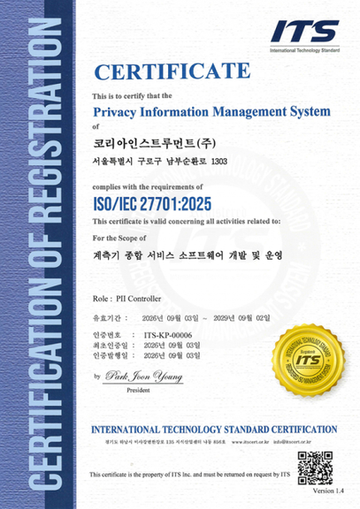
Korea Instrument, KOLAS Accredited Calibration Agency First to Simultaneously Acquire ISO/IEC 27,001·27,701
Korea Instrument has become the first among KOLAS accredited calibration agencies to simultaneously acquire ISO/IEC 27,001 and ISO/IEC 27,701 certifications. Through its proprietary platforms CWIZ Enterprise and CWIZ Partners, the company has embedded information security and personal data protection requirements across all business processes including customer information, equipment data, and calibration reports, with plans to continuously advance its management system through regular audits and security inspections.
2026.10.12by 배종인 기자
TeamViewer One, IT Incident Automation Workflow and Resolution Center Enhanced
TeamViewer has added IT incident automation capabilities and an advanced Resolution Center to its integrated digital workplace management platform 'TeamViewer ONE'. Recurrent service disruptions, configuration errors, and capacity shortages are automatically handled according to preset policies, and device status verification through script deployment can be managed in a unified interface, significantly reducing repetitive tasks for IT teams.
2026.10.12by 배종인 기자











