



Smartphone Market in 2017: “China is slowing down and India is rising”
 Published2016.11.21 11:07
The smartphone market next year is expected to see growth in the Indian market, while advanced markets and the Chinese market are expected to slow down.
At the System Semiconductor Forum hosted by the Korea Semiconductor Industry Association, Park Won-jae, an analyst at Daewoo Securities, said, “The U.S. and Western European markets, which had been driving smartphone growth, are beginning to see a full-blown slowdown, and the Chinese market, which had been the main driver of smartphone market expansion, is also beginning to see a slowdown,” adding, “Growth centered on India is expected in the future.”
In this way, the smartphone market in 2017 is expected to be decorated with keywords such as full-fledged maturity and intensifying competition, with sales volume reaching 1.53 billion units. In 2016, handset shipments are expected to decline to 1.95 billion units, while smartphone shipments are expected to reach 1.46 billion units in 2016, following 1.3 billion units in 2014 and 1.44 billion units in 2015.

▲Consumers who visited the 'Galaxy S7 Edge' Blue Coral and 'Gear S3' experience zone are examining the products.
Analyst Park Won-jae said, “The smartphone market in 2017 will enter a full-fledged maturity phase with a slight increase of 4.6% compared to the previous year,” and “The double whammy of domestic companies is expected to accelerate due to the solid Apple and aggressive China.”
This year, the expansion of the mid-to-low-end market and the growth of Chinese companies were hot topics in the smartphone market. Chinese online and offline companies such as Huawei, Oppo, and Vivo grew on the back of Samsung’s Galaxy Note 7 and Apple’s sluggish performance, and the Indian market also continued to show double-digit growth rates (11.3%).
Concerns over overcapacity in the parts industry
In addition, it is evaluated that the parts industry has become more competitive and differentiated due to lower unit prices this year. The slowdown in smartphone growth and the increase in low- to mid-priced products have made the business environment for parts companies difficult. In other words, differentiation is becoming more serious due to new functions such as metal cases, wireless charging, iris recognition, and waterproofing and dustproofing, as well as advanced technologies such as camera modules and connectors, and the overproduction capacity of the parts industry continues to cause difficulties.
The smartphone market is expected to experience a period of maturity and decline after next year. The mid-to-low-priced product line is expected to shift its growth axis to the Chinese, Indian, and South American markets due to brand competitiveness, economies of scale, and cost efficiency. Samsung Electronics expects the launch of the Galaxy S8 to be a turning point for stabilizing smartphone competitiveness, and growth is expected to come from semiconductors, parts, and materials.
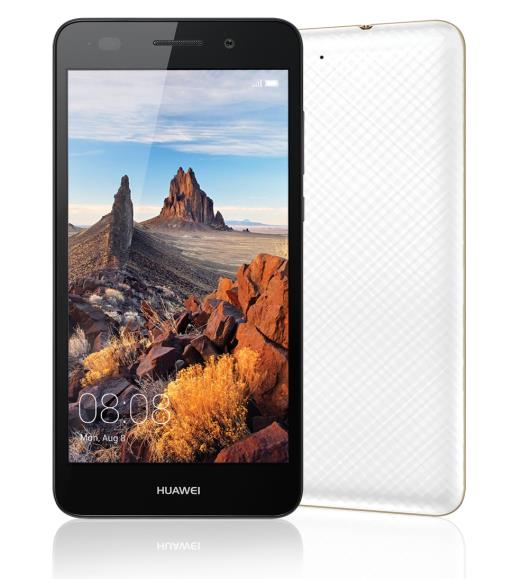
▲Huawei's 'H' smartphone with enhanced display and cost-effectiveness
Apple's moves and the differentiation of Chinese companies are also interesting to watch. 2017 is the 10th anniversary of the iPhone, and attention is being paid to what the icon of innovation, the iPhone (iPhon 8), will look like. It seems inevitable that Chinese companies will compete with each other as they face the reality of slowing growth. The survival competition among Chinese smartphone companies that have sprung up like mushrooms is expected to have a significant impact on the Chinese smartphone market.
The problem is that the market landscape is likely to fluctuate depending on how domestic companies respond in this rapidly changing smartphone market. In the rapidly commoditizing smartphone market, the strong supply chain effect of Korean IT companies is noteworthy. This is because the competitiveness of the supply chain of products, parts, and materials is also an important factor in an environment where they must respond quickly to customer demands and release inexpensive products. As seen in the cases where countries that were IT powerhouses developed from IT products to parts and then materials/equipment, the prediction that the parts industry will become an important axis of the IT industry in the future is gaining more strength.
Analyst Park Won-jae said, “Advanced markets are already saturated, and most of the demand is replacement demand, and future growth is likely to occur in emerging markets focused on the mid- to low-end.” He added, “Apple is exerting a strong influence in the high-end market, and Chinese companies have grown in the mid- to low-end market. We need to respond to risk factors that are growing as much as opportunities.”
Comments
Related news
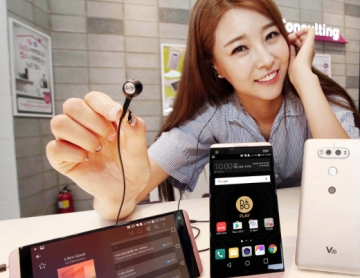
The premium smartphone market is expected to recover to 3.5% growth in 2017.
Gartner Inc. forecasted that global shipments of all devices (PCs, tablets, ultrabooks, and mobile phones) would decline by 3% year-over-year in 2016. This marked two consecutive years of decline, following a 0.75% drop in the global device market in 2015. Ranjit Atwal, principal research analyst at Gartner, stated, "It will not be easy for the global device market growth rate to return to single digits in the near term," and added, "The growth rate is expected to remain at current levels over the next five years. While growth rates are expected to decline across all devices in 2016, premium ultrabooks and utility mobile phones (basic mobile phones) are expected to be exceptions. Single-digit growth is anticipated in these two segments this year."
2016.10.10by 김수지 기자
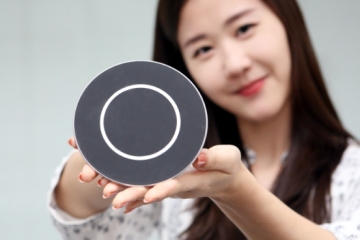
LG Innotek Begins Mass Production of 15-Watt Wireless Charging Pads for Smartphones
LG Innotek (CEO Park Jong-seok) has commercialized a wireless charging pad that can charge smartphones as quickly as a wired fast charger without the need for cables. The company announced on the 12th that it has begun mass production of a 15-watt (W) wireless charging pad for the first time in the world. This is the first mass production for consumer sales, not a prototype. A wireless charging pad is a device that supplies power to smartphones and is manufactured in a slim shape like a cup coaster. When a wireless charging-enabled smartphone is placed on top of it, the battery charges.
2016.10.13by 김수지 기자
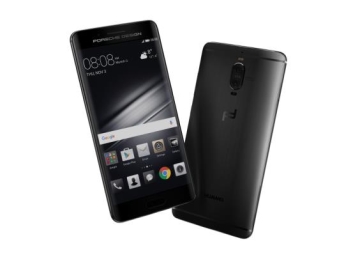
Huawei Unveils Latest Premium Smartphone Mate 9
Huawei unveiled the Mate 9 for the first time at a private global launch event held in Munich, Germany. The newly introduced Huawei Mate series is a smartphone that stands out for its sophisticated design and powerful performance, and is expected to provide users with the best processing speed, SuperCharge technology, and an innovative Android experience through a new UX.
2016.11.07by 장은성 기자
ESP32 Development Environment Selection and GPS Application Implementation
The ESP32 is a microcontroller that integrates Wi-Fi, Bluetooth, 12-bit ADC, capacitive touch, PWM, DAC, and UART in a single SoC. However, the abundance of features does not by itself solve the designer's problems. The real challenges lie in selecting the appropriate development environment, determining which pins can be used and which must be avoided, and converting raw data from modules into usable information. This document addresses ESP32 peripheral constraints (ADC2 and Wi-Fi coexistence limitation, UART1 occupancy, ADC non-linear regions), the trade-offs between Arduino IDE and ESP-IDF, and the process from connecting NEO-6M/NEO-M8N GPS modules to UART2, parsing NMEA sentences, and visualizing routes in Google Earth, all organized based on documented references.
2026.10.12by 편집부
MIPI CSI-2, DSI-2, C-PHY, D-PHY Test Solution Technical White Paper
The MIPI interface adopts a burst mode that transitions between low-power (LP) and high-speed (HS) states for low-power consumption, and in return, strict timing rules are imposed on state transitions. Additionally, the high-speed section operates as a packet-based protocol with headers, ECC, and CRC, so verification engineers must handle waveforms and protocols simultaneously. Traditional configurations combining general-purpose oscilloscopes and AWGs reveal limitations in setup complexity, measurement uncertainty, and lack of reproducibility when faced with these requirements. This white paper, based on webinar materials, organizes the structure of this problem and describes how the SV5C-DPTXCPTX generator for receiver testing and SV5C-DPRXCPRX analyzer for transmitter testing integrate state transition testing, stressed eye testing, and protocol analysis into a single bench, along with their application boundaries.
2026.10.12by 편집부











