


Is China's 'racing' electric vehicle market thanks to severe air pollution?
 Published2016.11.28 12:38
The sales share of mainstream HEVs dropped to 51%, while PHEV and BEV sales increased.
Global electric vehicle (EV) sales are projected to grow by 21.9% by 2020.
Looking at the EV types, it is expected that 3.33 million HEVs (hybrid) and 1.43 million PHEVs (plug-in hybrids) and 1.74 million BEVs (battery electric vehicles) will be sold, with a total of 6.54 million units including others.
Although HEV sales are expected to remain the mainstream of the electric vehicle market until 2020, their market share is projected to decline from 95% in 2011 to 51% in 2020. On the other hand, PHEVs and BEVs are expected to grow at an annual average rate of 66.8% and 51.8%, respectively, drawing attention to future changes in the electric vehicle market.
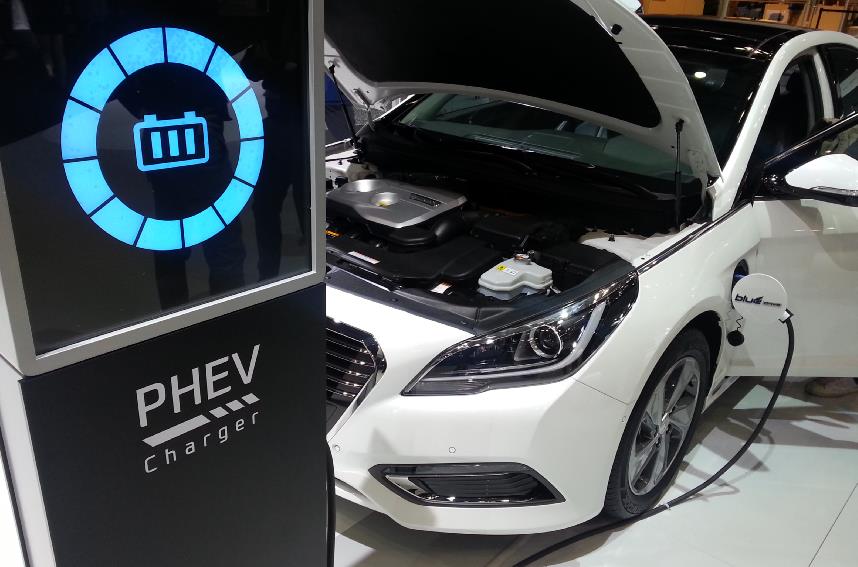
PHEVs and BEVs are expected to increase at an annual average rate of 66.8% and 51.8%, respectively, in 2020.
Ji Young-seung, Managing Director of INI R&C, stated at the Korea Industrial Technology Association’s presentation on electric vehicle market trends, “In the PEV electric vehicle market, BEVs are expected to be dominant in 2020 due to the continuous increase in BEV market share in China and Europe.”
In 2015, global electric vehicle sales reached 2.36 million units, a growth rate of 17.5% compared to the previous year, and HEV sales accounted for 71.4%. The market growth rate of HEVs fell sharply from 43.3% in 2012 to -4.4% last year due to sluggish markets in the U.S. and Japan and falling oil prices.
PHEVs also could not avoid a significant decline. They fell sharply from 336.6% in 2012 to 53.5% last year, attributed to sluggish sales of the GM Bolt, a shortage of PHEV models, and aging inventory. On the other hand, the BEV market showed continuous growth, rising from 69.3% in 2012 to 142% in 2015, driven by strong performance in the Chinese and European markets and incentive support from various governments.
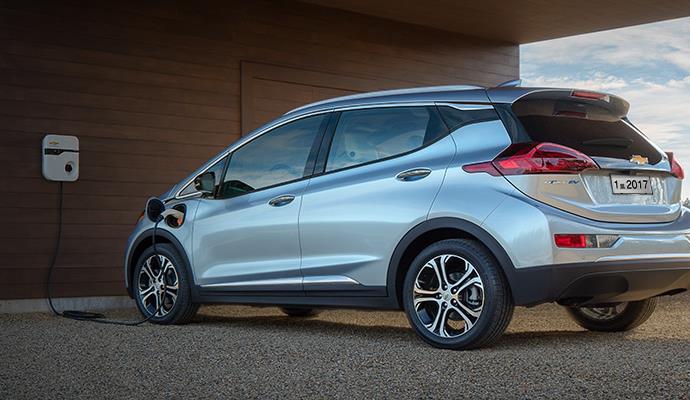
Chevrolet’s Bolt EV, scheduled for release in the first half of next year, travels 383 km on a single charge according to North American certification standards.
Analysis suggests that this phenomenon is caused by the contraction of the electric vehicle market itself due to declining sales in the US and Japan, which are HEV-centric markets, as well as by falling oil prices. In contrast, the European market grew due to the harmonization of HEV and PEV (PHEV, BEV) markets, government subsidies, and eco-friendly adoption policies, while China, centered on PEVs, continued its growth trend driven by the government's strong new energy vehicle promotion policies.
In the 2015 regional PEV electric vehicle market, China ranked 331,000 units, Europe 188,000 units, and the United States 115,000 units, with China, Europe, and the United States leading the global PEV electric vehicle market.
Lee Hak-mu, an analyst at Mirae Asset Securities, said, “In the future, European fuel efficiency regulations will become an invisible trade barrier while also acting as a driving force for the global electric vehicle market,” adding, “While German automakers are using fuel efficiency regulations to expand the new eco-friendly vehicle market, this is partly aimed at maintaining their dominance in the large sedan market, but major European automakers are also proactively launching competitive electric vehicles.”
The success of Tesla's electric vehicles will be a major success factor for U.S. electric vehicles.
The U.S. electric vehicle market, which is expected to grow based on new conveniences, and China's electric vehicle market as a solution to environmental issues are also areas to watch in the future.
Regarding this, Analyst Lee Hak-mu stated, “We should pay attention to the fact that Tesla Motors is opening up a market by adding new features to automobiles, much like Apple’s iPhone,” and predicted, “If this company continues its success, existing automakers will inevitably have to revise their strategies regarding the EV market, making it a major factor in the growth of the U.S. EV market.”
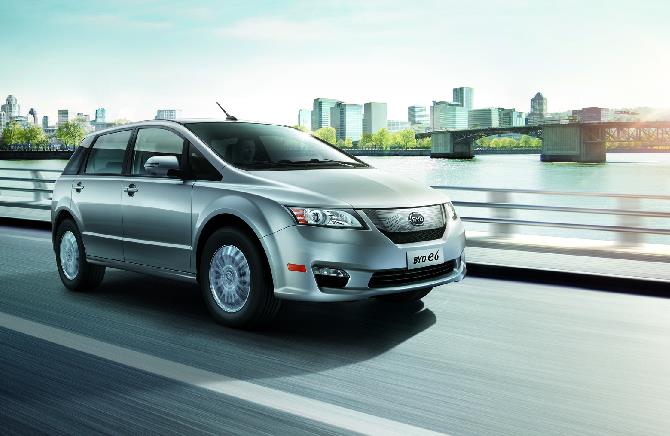
▲ China's BYD e6 electric vehiclebr />
In addition, as automobile exhaust is cited as one of the major causes of air pollution in China, interest in eco-friendly vehicles, such as electric cars, is increasing. This is reflected in the fact that as of 2015, China had already risen to the top spot in global electric vehicle sales.
China grew 4.4 times in 2015 compared to the previous year due to policies such as subsidies, new car registration regulations in eight major cities, and the electrification of commercial vehicles. Among electric vehicles, BEVs accounted for 75% and PHEVs for 25%, while by electric vehicle type, passenger cars accounted for 63% and commercial vehicles for 37%.
Continuous decline in battery prices will determine the growth of electric vehicles
Battery prices are still cited as the biggest obstacle to the sustained growth of the electric vehicle market. While aggressive investment by battery manufacturers has led to a rapid decline in battery prices, it appears that continued price drops will have a significant impact on the electric vehicle market in the future.
China's shipments of electric vehicle batteries are projected to grow from 16 GWh in 2015 to 30 GWh in 2016, and shipments are surging due to the explosive growth of passenger cars, commercial vehicles, and especially electric buses.
Panasonic is building a 'Gigafactory' in Nevada, USA, in partnership with Tesla, and plans to further expand it depending on the success of future Tesla models. China's BYD plans to increase its battery production capacity by 6 GWh annually and aims to reach a level comparable to Tesla's Gigafactory by 2020. Additionally, Samsung SDI plans to invest 3 trillion won by 2020, while LG Chem is proceeding with the expansion of its battery factory to enter the European market.
Comments
Related news
Infineon Launches Next-Generation AURIX MCU to Accelerate Autonomous Driving and EVs
Infineon Technologies (Korea Representative Director Lee Seung-soo) has announced a next-generation AURIX™ microcontroller product family supporting the requirements of autonomous vehicles and electric vehicles. The next-generation TC3xx microcontroller offers industry-leading integration and three times higher real-time performance compared to the previous generation. The AURIX product family TC3xx combines a high-performance hexa-core architecture with advanced features for connectivity, security, and embedded safety, making it ideal for diverse automotive applications. Powertrain applications include engine management and transmission control as well as new systems for electric and hybrid drives.
2016.11.07by 홍보라 기자

KES 2016 Keynote, Electric Vehicle and IT Convergence Technology and Innovative IoT Platform Strategy
IT news specialist channel, e4ds news (e4ds.com) will exclusively live broadcast the opening ceremony and keynote of the 2016 Korea Electronics Show (KES) running for four days from the 26th to 29th Live coverage of representative company booths including Samsung Electronics, LG Electronics, and Chevrolet
2016.11.08by 명세환 기자
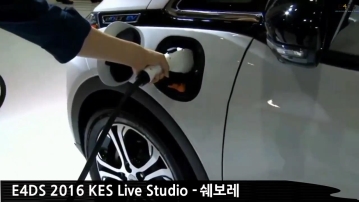
Chevrolet, Next-Generation Electric Vehicle Volt EV Arrives with 383km Range on Single Charge
Chevrolet, Next-Generation Electric Vehicle Volt EV Arrives with 383km Range on Single Charge
2016.11.08by 명세환 기자
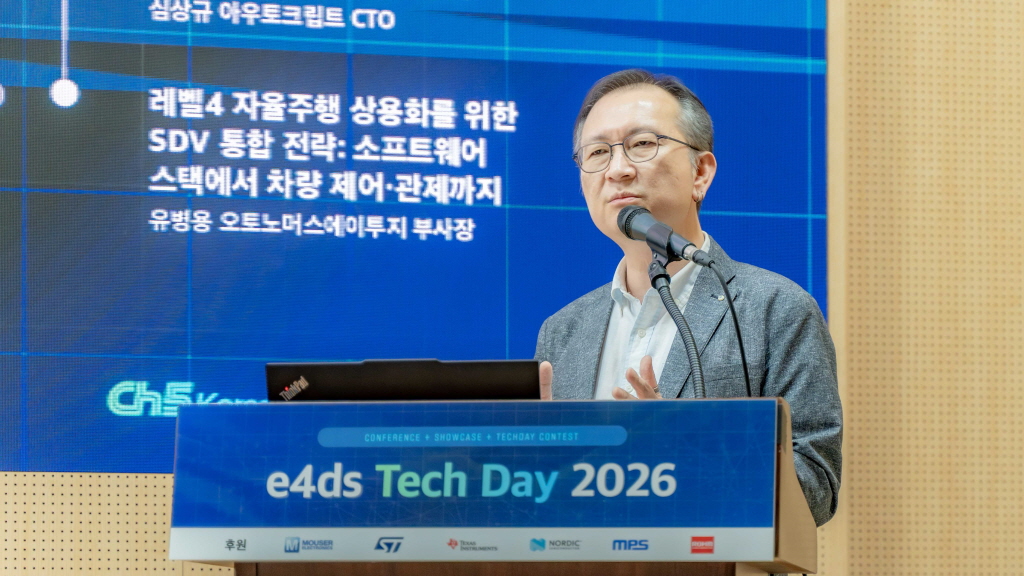
[e4ds Tech Day 2026 ⑨] Sim Sang-gyu, Autocrypt CTO: "In the Physical AI Era, Automotive Security Must Extend Beyond the Vehicle"
At e4ds Tech Day 2026, Sim Sang-gyu, CTO of Autocrypt, explained automotive cybersecurity strategies in the era of Physical AI and SDV (Software-Defined Vehicle). Automobiles are evolving as part of an ecosystem connected to AI, cloud, chargers, IoT, and robots, and he emphasized that the scope of security must expand beyond the vehicle interior to the entire connected environment. In particular, AI model tampering, adversarial attacks, OTA updates, and EV charger hacking were identified as major threats. He explained that response measures require zero trust, AI model integrity protection, intrusion detection, Security by Design and Default, and full lifecycle security management, and that proactive security system establishment beyond regulatory compliance is critical for securing future mobility competitiveness.
2026.10.12by 배종인 기자

Practical HIL Construction Strategy for Automotive and Off-Highway Controller Validation
As vehicle E/E architecture transitions to zonal structures and shifts to software-defined vehicles (SDV), the number of controllers (ECUs) requiring validation and software complexity are surging dramatically. Meanwhile, real vehicle testing cannot provide repeated verification under identical conditions and entails lead time and safety concerns. This white paper explains the principles of HIL (Hardware-in-the-Loop) validation and the structure of the NI platform composed of PXI, SLSC, and VeriStand, and through two actual implementation cases—Camera Record & Replay HIL for In-Cabin Monitoring Controller (ICMU) and Forklift Controller (VCU) HILS—describes how controller-level regression testing becomes possible. Additionally, it explicitly states application boundaries and limitations, such as lack of A2B support.
2026.10.12by 편집부











