


The global cognitive and artificial intelligence systems market is set to grow at an average annual rate of 55.1% until 2020.
 Published2016.11.29 10:46
According to a recent research report by IDC (www.idc.com), the global Cognitive/AI systems market is projected to grow rapidly, exhibiting an average annual growth rate of 55.1% over the five-year period from 2016 to 2020. Driven by widespread adoption across various industries, the market size is expected to reach $47 billion in 2020, up from $8 billion in 2016.
David Schubmehl, Research Director for Cognitive Systems and Content Analytics at IDC, explained that "software developers and end-user enterprises are already embedding or adopting cognitive and artificial intelligence into almost every type of enterprise application and process," and that companies must develop and implement strategies that encompass this broad range of technologies. He further emphasized, "Understanding cognitive and AI systems technologies, analyzing use cases, and acting on growth opportunities will become a key differentiating factor for companies, and digital transformation through these technologies will become critical."
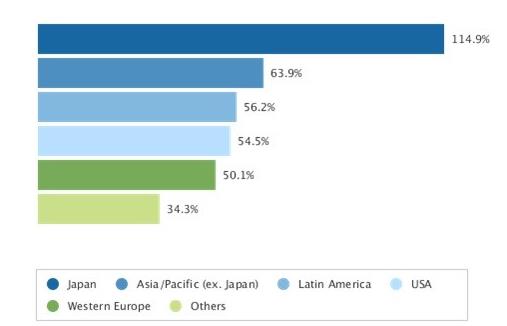
<Regional Growth Rates by Region for 5 Years (2015–2020) (Source: IDC)>
Through technology that recognizes and responds to data flows using algorithms and rule-based logic, cognitive/artificial intelligence systems enable the automation of a wide range of functions across various industries. According to this report, key use cases in 2016 will be automated customer service agents, quality control investigation and recommendation systems, diagnostic and treatment systems, and fraud analysis and investigation. Additionally, the use cases expected to see the fastest revenue growth over the next five years are public safety and emergency response, pharmaceutical research and discovery, diagnostic and treatment systems, supply and action planning, and quality control investigation and recommendation systems.
Jessica Goepfert, Program Director leading Customer Insights and Analysis research at IDC, stated, “In the short term, there are opportunities for cognitive systems in industries such as banking, securities and investment, and manufacturing.” She noted that these industries are more open to innovative technologies because they are rich in unstructured data and require corresponding insights. She explained, “The value proposition of cognitive systems aligns with the primary priorities of corporate executives. For example, cognitive technology can be used to detect and prevent fraud in the banking industry. In contrast, in manufacturing, where executives’ primary goal was product quality improvement, cognitive systems recognize dynamic changes in product specifications and respond accordingly to ensure production does not deviate from quality targets.”
In 2016, the industries expected to invest the most in cognitive/artificial intelligence systems are banking and retail, followed by healthcare and assembly manufacturing. These industries are expected to account for more than half of global cognitive/artificial intelligence revenue in 2016, with banking and retail sectors projected to reach approximately $1.5 billion each. Healthcare and assembly manufacturing are expected to show the largest revenue growth during the 2016-2020 forecast period, with compound annual growth rates (CAGRs) of 69.3% and 61.4%, respectively. The education and process manufacturing sectors are also expected to show significant growth during the forecast period.
During the forecast period, approximately half of Cognitive/AI system revenue is expected to come from the software sector, which includes cognitive applications (*including text and rich media analysis, tagging, search, machine learning, classification, clustering, hypothesis generation, question answering, visualization, filtering, alerting, and exploration) and cognitive software platforms (*facilitating intelligence, advisory, and cognitive-enabled solutions). Cognitive applications are the largest and fastest-growing sector within cognitive systems, projected to reach $18.2 billion in 2020. Following this, Cognitive/AI-related services (business services and IT consulting) represent the second-largest category, while the hardware sector (purchases primarily focused on servers and storage) is expected to grow rapidly, rivaling software, with an average annual growth rate of over 60% over the five-year period.
Geographically, North America (the United States and Canada) is currently the region with the largest spending on cognitive systems, with sales reaching $6.2 billion in 2016. The Europe, Middle East, and Africa (EMEA) region is the second largest, but the cognitive and artificial intelligence market in Asia-Pacific, including Japan, is expected to significantly narrow the gap with EMEA by 2020.
Comments
Related news
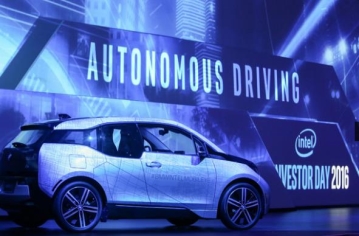
SK Telecom to Develop 5G AI-Based Autonomous Vehicles with Intel
SK Telecom has partnered with Intel, a global semiconductor chip manufacturer, to jointly develop autonomous driving technology based on 5G and deep learning. SK Telecom (CEO Park Jae-young, www.sktelecom.com) announced that it has signed a memorandum of understanding (MOU) with Intel (CEO Brian Krzanich), a global semiconductor chip manufacturer, for joint research and development of autonomous driving technology and services.
2016.10.31by 신윤오 기자
Acquired Viv Labs' open AI to be applied to Galaxy S8
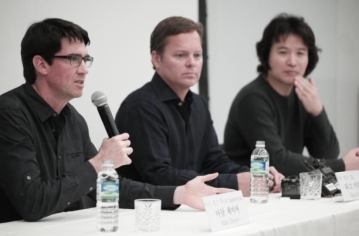
Samsung Electronics acquired VIV Labs Inc., an artificial intelligence platform development company based in Silicon Valley, on October 6th. The management team of VIV Labs (hereinafter 'VIV') visited Korea to explain the acquisition background and future plans. The briefing session was attended by VIV Labs CEO Dag Kittlaus, CTO Adam Cheyer, and Samsung Electronics Wireless Business Division Development 1 Director Vice President Lee In-jong. VIV Labs Inc. is a company that developed an innovative open artificial intelligence platform, located in San Jose, California. It was founded in 2012 by artificial intelligence experts Dag Kittlaus, Adam Cheyer, and Chris Brigham.
2016.11.07by 신윤오 기자
NVIDIA and Microsoft Partner to Accelerate AI Development
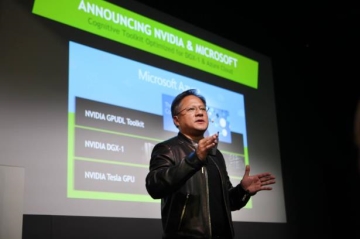
Nvidia announced a partnership with Microsoft to accelerate AI advancement in the enterprise sector. The company stated that this enables more enterprises to participate in the AI revolution. Through this collaboration, enterprises can now leverage optimized enterprise AI frameworks designed to run on Nvidia Tesla GPUs on Microsoft Azure or On-Premises environments, allowing them to maintain an AI platform spanning from their own data centers to the Microsoft cloud.
2016.11.17by 신윤오 기자

[e4ds Tech Day 2026 ⑨] Sim Sang-gyu, Autocrypt CTO: "In the Physical AI Era, Automotive Security Must Extend Beyond the Vehicle"
At e4ds Tech Day 2026, Sim Sang-gyu, CTO of Autocrypt, explained automotive cybersecurity strategies in the era of Physical AI and SDV (Software-Defined Vehicle). Automobiles are evolving as part of an ecosystem connected to AI, cloud, chargers, IoT, and robots, and he emphasized that the scope of security must expand beyond the vehicle interior to the entire connected environment. In particular, AI model tampering, adversarial attacks, OTA updates, and EV charger hacking were identified as major threats. He explained that response measures require zero trust, AI model integrity protection, intrusion detection, Security by Design and Default, and full lifecycle security management, and that proactive security system establishment beyond regulatory compliance is critical for securing future mobility competitiveness.
2026.10.12by 배종인 기자
NVIDIA to Invest $1 Billion in U.S. Science Over Next Five Years
NVIDIA has announced plans to invest $1 billion over the next five years to strengthen U.S. scientific and technological competitiveness. The company will enhance cutting-edge artificial intelligence research and development capabilities in key areas including quantum computing, healthcare, and energy security, while expanding support for higher education research institutions and cloud service providers. NVIDIA is participating as a major industry partner in the White House Office of Science and Technology Policy's Genesis Mission, and is promoting supercomputer construction in collaboration with national laboratories including Argonne and Los Alamos.
2026.10.12by 배종인 기자











