



[Outlook] What would a dish made by a robot taste like?
 Published2016.12.12 12:43
Global ICT Market Grows to $3.5 Trillion, Domestic Investment in 4th Industrial Revolution Technologies Lacks
In 2017, ICT convergence services such as healthcare, media, finance, robotics, and automobiles were expected to emerge in earnest.
In a forecast of 2017 tech trends centered on ICT convergence services, Baek Jun-bong, Senior Vice President of KT Economic and Management Research Institute, stated, “IoT, cloud, and big data are cited as the core digital infrastructure of ICT convergence, and AI (artificial intelligence) is already being applied to daily life in areas such as healthcare and finance.”
ICT convergence, which is accelerating the advent of the Fourth Industrial Revolution, is driving mutually synergistic results in industries such as the Internet of Things (IoT), cloud computing, and big data. For instance, when large amounts of information collected by IoT sensors are transmitted to the cloud, big data analyzes the data stored there, which then derives insights back into the IoT.
In the field of the Internet of Things (IoT), the number of connected devices is projected to grow from 15 billion in 2015 to 31 billion in 2020, with an annual average growth rate of 15.6%, while the market size is expected to expand at an annual average rate of 32.6%. Furthermore, the global cloud market is expected to reach $141 billion in 2017, growing from $70 billion in 2015 at an annual average rate of 19.4%, and the big data market is projected to grow from $122 billion in 2015 to $187 billion in 2019.
Accordingly, Executive Director Baek selected smart healthcare, virtual reality, fintech, home IoT, drones, robots, and autonomous vehicles as the seven major trends of ICT convergence for 2017.
First, the convergence of AI and healthcare is expected to fully launch the smart healthcare market. Diagnosing cancer by analyzing only existing medical data yields an accuracy of 56%, but applying artificial intelligence and big data to utilize medical records, images, genetic analysis, and treatment simulations improves accuracy to 96%. Accordingly, as healthcare evolves toward personalized treatment in 2017, the development of customized cancer treatments through AI analysis of individual genetic information is being promoted. By utilizing AI in clinical practice, diseases can be diagnosed with higher accuracy than medical professionals, and diseases such as diabetes can be prevented through preventive health management based on DNA and wearable information.
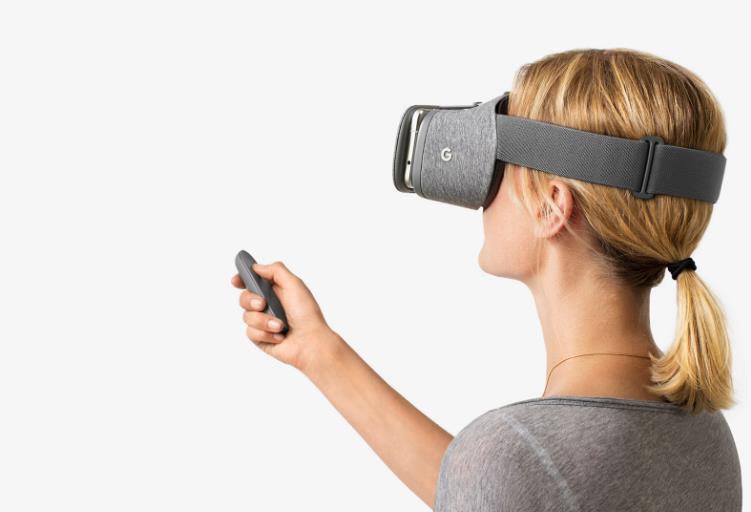
▲ Google Daydream.
The convergence of AI and Virtual Reality (VR) is also expanding. Unlike conventional VR that offered one-way experiences, the introduction of interactive technologies such as voice, spatial, and gaze recognition is expected to lead to the full-scale launch of virtual reality games, for instance. Automaker Ford has reduced prototype production costs by 30% through virtual assembly and plans to expand its application from select models like the Mustang to all vehicles next year. Furthermore, the application of VR is expanding into medical services, such as psychotherapy involving repeated exposure to fear factors. Samsung Electronics is attempting to treat acrophobia using its VR application, 'Be Fearless'.
AI-based fintech is set to launch investment advisory services in earnest. AI-fintech will detect abnormal transaction patterns to prevent fraud, manage personalized AI assets, and conduct personal credit evaluations. Major U.S. banks are scheduled to launch robo-advisors one after another next year, and in particular, U.S. company Dataminr is expanding its AI investment advisory services, including predicting stock price fluctuations through AI analysis of 500 million tweets. Personal asset management robo-advisors enable a 75% reduction in fees, and it appears that the customer base for loans can be expanded to include borrowers with low to medium credit scores through AI credit evaluation.
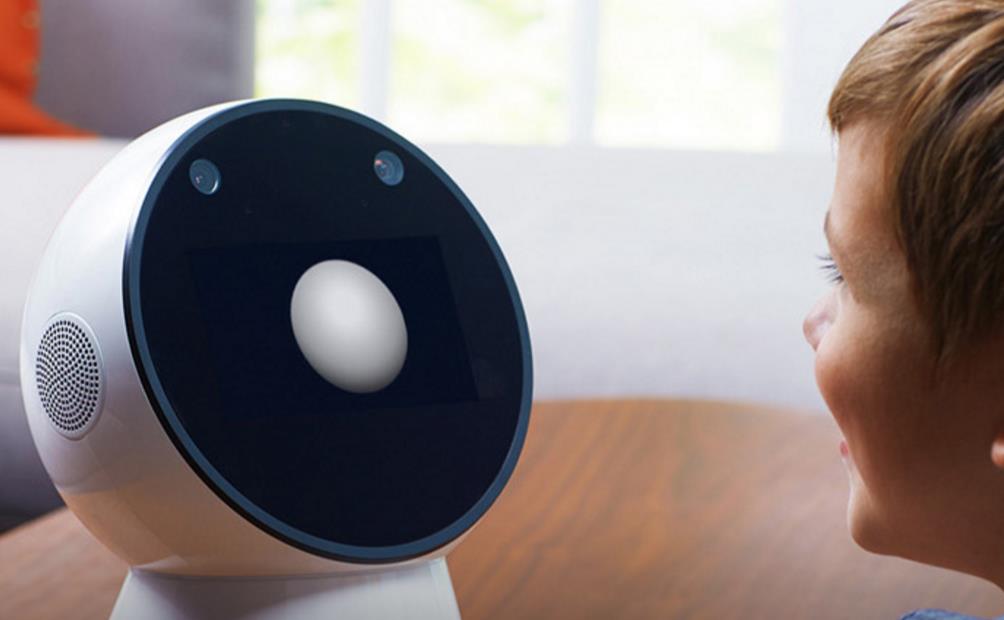
▲Jibo
IoT combined with AI is blossoming into Home IoT. Existing manual monitoring and control functions are set to transform into the automatic and intelligent operation of home devices. Intelligent Home IoT devices will be able to operate autonomously based on factors such as weather, time, and events. For instance, while home devices and smartphones connected via Wi-Fi were previously controlled manually via remote, AI-based Home IoT enables devices to learn autonomously from past data patterns and control themselves intelligently. Consequently, 2017 is expected to see a clash among global AI-based Home IoT companies. Competition for voice recognition-based Home IoT services is projected to intensify among companies such as Amazon (Echo + Alexa) and Google (Google Home + OK Google). Furthermore, the role of AI voice recognition-based assistants for both inside and outside the home is also expected to expand.
What happens when drones and AI meet? While services were previously limited by manual operation, autonomous navigation that recognizes terrain and obstacles enables the provision of new services such as exploration and parcel delivery. As drone regulations are relaxed in countries around the world, including the United States, the commercial drone market is set to take off in earnest in 2017. High-definition camera analysis technology can diagnose the causes of communication failures in transmission towers by analyzing images captured by drones. In particular, detection drones can monitor the site for radiation leaks and respond immediately to accidents, thereby minimizing damage.
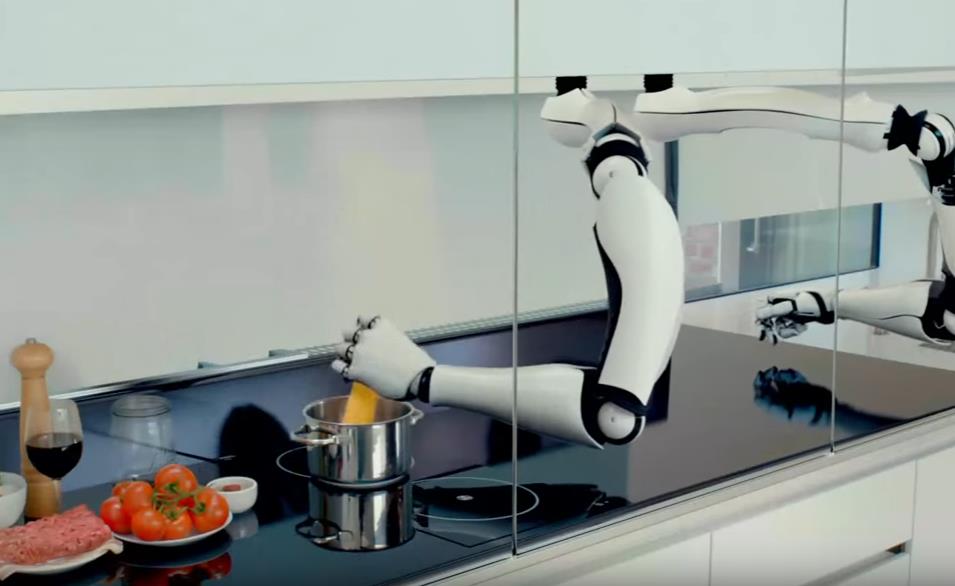
▲Moley Kitchen Robot
Interactive AI-based intelligent robots will also emerge next year. The evolution and utilization of human-communicating robots will expand. Robot services are increasing in various fields, such as customer service, home assistants, logistics, and crop harvesting. In 2017, the commercialization of 'Robochef,' capable of cooking over 2,000 recipes, is scheduled for the kitchen. Equipped with 20 motors, 24 joints, and 129 sensors, this robot has learned the chef's movements and entire cooking process through AI. AI robots are also being expanded into precision production tasks. The Japanese industrial robot manufacturer Fanuc performs precision production tasks by learning with 90% accuracy in just eight hours using deep learning.
Finally, the convergence of AI and automobiles is expected to accelerate the development of driverless vehicles. 2017 marks a turning point for driverless cars, and Google is accelerating the development of autonomous driving technology, including plans to commercialize self-driving cars next year. In addition, the development of autonomous driving technology by global companies such as Tesla is also expected to become more active. Tesla commercialized the Autopilot function for the first time in the world, while BMW, Companion, and others are also developing autonomous control technology. It supports driving with AI-based Alive Geometry and supports personalized driving with the AI interface 'Companion'.
Executive Director Baek, who presented the 2017 industry outlook as described above, pointed out, “The global ICT market based on the Fourth Industrial Revolution is expected to grow to the size of $3.5 trillion,” adding, “However, compared to major countries such as the U.S. and Europe, domestic investment in Fourth Industrial Revolution technologies is insufficient, and the level of preparedness ranks only 25th in the world, so it is urgent to foster the 10 major strategic businesses, including the intelligent information industry, through the government’s KICT strategy.”
Comments
Related news

What are the top 10 predictions to watch out for since 2017?
Gartner Inc., a leading global IT advisory firm, has announced its top 10 strategic predictions to watch beyond 2017. Gartner's key predictions for 2017 evaluate the fundamental impact of secondary effects resulting from three ongoing digital revolutions: ▲experience and engagement ▲business innovation ▲and digital capability enhancement. Daryl Plummer, Executive Vice President and Gartner Fellow and Chief Research Officer, stated, "Gartner's strategic technology predictions continue to provide provocative insights into emerging possibilities in the most critical areas of technology evolution. The concept of digital disruption, which has transformed into a wave of constant change that redefines markets and entire industries, is key to future performance." He added, "Last year, Gartner forecasted that digital change would arrive rapidly. This year, acceleration will continue, and secondary effects that broadly impact people and technology may occur."
2016.10.20by 김수지 기자
[2017 Outlook] Leading the Way as a Smart Company by Leading IoT and Artificial Intelligence
Korea IDC (CEO Hong Yoo-suk) introduced "Korea IDC's Top 10 Predictions for 2017," highlighting major issues and trends expected in the domestic IT market for 2017. Jang Soon-yul, Senior Managing Director overseeing the research group at Korea IDC, stated, "While the low-growth trend in the IT market continues, the traditional IT market faces difficulties in growth. However, the third-platform-based technology market driving digital transformation—including cloud, mobility, big data analytics, and social—is leading IT investments." He added that digital transformation (DX) is exerting significant impact on the macroeconomy through the digital economy (DX Economy).
2016.12.05by 김수지 기자
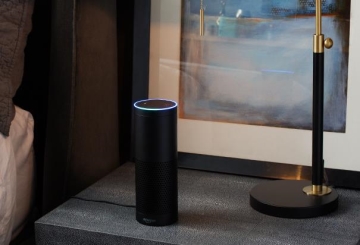
[2017 Outlook] Artificial Intelligence Begins Realizing the 'AI First' Era with Voice Assistant Services at the Forefront
KT Economic and Management Research Institute announced the 10 major ICT issues to watch in 2017. In outlook on the 10 major ICT issues for 2017, it stated, "Artificial intelligence is expected to be applied to our daily lives and industries through advanced algorithms, implementing an 'AI First' era, and 5G, which is drawing attention as a next-generation network, will appear before us as concrete services along with standard establishment." It also noted that MR (mixed reality) will provide entirely different experiences and enjoyment compared to VR and AR, autonomous vehicles are expected to fundamentally overturn the automotive industry paradigm of 130 years of history, and biometric authentication will become a new alternative to increasingly growing personal information threats.
2016.12.05by 홍보라 기자
Nvidia invests $5 billion in Intel
NVIDIA and Intel, leaders in global AI computing technology, are now forging ahead in providing cutting-edge solutions through NVLink-based architecture integration. NVIDIA and Intel have officially announced a strategic partnership and stated that they will jointly develop customized data center and personal computing products to accelerate diverse applications and workloads ranging from hyperscale to enterprise and consumer markets, thereby laying the foundation for the next generation computing era.
2025.09.22by 배종인 기자
.jpg)
Applied Materials Launches Environmental Protection Campaign to Mark World Cleanup Day
Applied Materials Korea (CEO Park Kwang-seon) is carrying out environmental cleanup activities with employees and their families around the Dongtan Sinricheon area on the occasion of World Cleanup Day, evolving into a company that engages with the local community beyond technological innovation.
2025.09.22by 명세환 기자











