


Personalized healthcare service, protect my body
 Published2016.12.19 16:18
As big data and artificial intelligence technologies advance, learning and accuracy are improving.
The smart healthcare industry, featuring personalized healthcare services utilizing data, is expected to expand significantly next year.
The smart healthcare industry is expected to enter into a relationship of both complementarity and competition with traditional medical information platforms as data generated from increasingly diverse devices grows. Furthermore, personalized solutions utilizing big data and artificial intelligence technologies, along with standardization and ensuring reliability, are anticipated to be key issues.
First, amidst the development of various wearable smart devices in addition to smartphone apps, Canada's OMsignal has developed a smart shirt equipped with a heart rate sensor, and Google is developing a smart lens that measures blood glucose levels in tears. In Korea, ETRI has developed a bio-shirt that monitors biosignals such as electrocardiograms, respiration, and exercise levels.

▲ OMsignal's OMbra provides a comfortable fit while monitoring various health information, including the user's heart rate. (From the OMsignal blog)
Smart healthcare is situated at the intersection where healthcare and AI (artificial intelligence) meet. Personalized data utilizing AI and big data is being provided because the increasing volume of personalized medical information is driving growing interest from both governments and companies in utilizing big data and creating added value. For example, the United States provides the National Institutes of Health's Pillbox service, while Taiwan provides anonymized personal health information to research institutions. GE's e-Health solution and IBM Watson are representative solutions.
As these are devices that come into contact with the body, it is necessary to ensure reliability and standardization. Since they are electronic products, there are doubts regarding their impact on the human body and the accuracy of measured data, requiring verification. Recognizing the need for testing and certification of wearable smart devices, the Korean Agency for Technology and Standards has developed a strategic roadmap.
It appears that smart healthcare cannot avoid not only complementary functions with traditional medical information platforms but also some competition. As traditional medical information systems and the latest smart healthcare platforms evolve in a mutually competitive and complementary manner, Microsoft (MS) in the United States utilizes HealthVault to provide PHR-based personalized healthcare services, offering a foundation for deriving accurate diagnoses and treatment methods for individual patients.
Evolving through AI analysis of individual genetic information
As smart healthcare evolves, personalized cancer treatments are being developed through AI analysis of individual genetic information. Cancer-causing cells are identified from personal DNA analysis of blood samples, and treatment is achieved by reprogramming these cancer cells into healthy ones using molecular computing. For example, actress Angelina Jolie is famous for having undergone a mastectomy and ovarian removal after early detection of a genetic defect predicted an 87% probability of breast cancer and a 50% probability of ovarian cancer. Microsoft predicts that cancer control technology based on genetic analysis and AI programming will become mainstream within five years.
Smart healthcare, which improves the accuracy of disease diagnosis by learning from vast medical records, is also expected to play a role in preventive health management by preventing diseases such as diabetes based on DNA and wearable information.
Comments
Related news
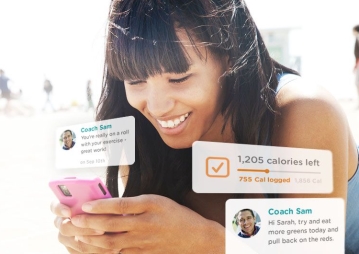
Smart healthcare, do you have a 'medical assistant' just for you?
The wellness industry is a sector supported as part of the 19th Future Growth Engine customized investment strategy, encompassing mobile-based healthcare including wearable devices and health-related applications. The wellness investment strategy supports the development of wellness IT programs and platforms linking hospitals and companies, cultivates specialized personnel for wellness device services, and supports the acquisition of international standards for devices. Additionally, it promotes the development of testing and certification methods and service guidelines. This includes pilot projects for mobile healthcare at public health centers.
2016.04.04by 신윤오 기자
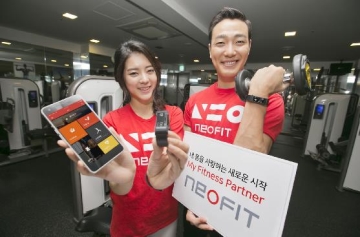
KT Launches Wearable Device-Based Healthcare Service Specialized in Strength Training
KT has launched 'NEOFIT,' a wearable device-based healthcare service specialized in fitness strength training, and will begin online sales starting Thursday, the 17th. Existing wearable services were only capable of measuring basic activity levels such as walking and running in daily life, but NEOFIT is a wearable product essential for strength training. With NEOFIT worn alone, the device automatically measures the type of exercise, number of repetitions, duration, and calories burned, recording the data in the app.
2016.11.14by 신윤오 기자

[Venture Startup Competition] Olpin, a pet healthcare service available anywhere in the world
The pet total healthcare service from Allfin Inc. is a differentiated device from the repeater-based services launched by domestic telecommunications carriers. For people who want to always be with their pets, regardless of which country they travel to, they only need GPS and an app with no roaming charges—completely free.
2016.12.02by 김수지 기자
.jpg)
SalePoint Signs Multi-Year Partnership Agreement with AWS… Promoting Identity Security that Integrates Even AI Agents
Sailpoint has entered into a multi-year strategic partnership agreement with AWS and is moving forward with establishing an integrated governance system that manages both human and non-human identities together. The plan is to consistently manage access permissions in an environment where AI agents are increasing as work execution entities, while applying the principle of least privilege and automated policy enforcement. The two companies plan to jointly expand capabilities to manage the identities of various entities, including AI agents, within a single layer in the AWS environment. This collaboration is interpreted as a move to design security and governance together in corporate environments where AI adoption is expanding.
2026.03.26by 배종인 기자
.png)
Databricks Unveils Open AI Security Monitoring 'Lakewatch'
Databricks entered the security market on March 24 by unveiling LakeWatch, an open-source agentic SIEM. The core functionality of this product is to integrate and analyze security, IT, and business data in a single environment to support AI-based threat detection and investigation. The company explained that it reduces the limitations of existing security operations centers, which have had to forgo some data due to high cost structures, and enables large-scale data analysis and automation based on open formats and ecosystems. LakeWatch is currently offered as a private preview, with Adobe and Dropbox mentioned as early customers. Databricks also announced an expanded partnership with Anthropic as well as the acquisition of Antimatter and SiftD.ai.
2026.03.26by 배종인 기자











