



Artificial Intelligence, 5G, Autonomous Driving, VR/MR, and Intel's Vision for the Future After 2017
 Published2016.12.26 17:04
In 2016, as everyday objects, commercial and industrial equipment, and cities become smarter and connected to the cloud, people are experiencing the convergence of the digital and physical worlds. Analysts predict that by 2020, more than 50 billion devices, including wearables, store inventory sensors, autonomous vehicles, medical equipment, and urban infrastructure, will be interconnected to the Internet.
In addition, the relationship between people and technology has begun to change rapidly, including how it is used, how such experiences are possible, and what benefits can be obtained.
This is the first time since the transition from the analog to the digital era that such a potential for change has been shown. With the increasing number of always-on connected devices for accessing, analyzing, and sharing data in real time, networks are evolving faster than ever before to meet diverse and powerful demands.
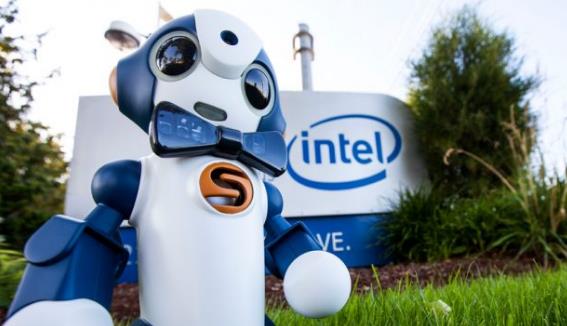
▲ Intel
In 2016, Intel has collaborated with policymakers, industry leaders, and industry leaders to focus on four areas leading to new opportunities for industry and consumers: artificial intelligence, 5G networks, autonomous driving, and virtual and converged reality. This will accelerate innovation and support rapid change.
Artificial intelligence is expected to grow to a total of $152 billion.
Artificial Intelligence (AI) is already widely used in a wide range of fields, from everyday life such as text messaging, photo tagging, and fraud detection to cutting-edge areas like precision medicine, injury prediction, and autonomous vehicles. Artificial intelligence will help machines enhance human capabilities, automate simple or dangerous tasks, enable scientific discoveries, and solve difficult social problems.
The global robot and AI market is expected to grow to a total of $152 billion by 2020, including $83 billion in robotics and $70 billion in AI-based analytics technology.
Accordingly, Intel agreed to acquire Nervana Systems, a widely recognized player in the field of deep learning, on August 6, and on November 17, announced an integrated strategy including new products, technologies, and investment plans to support the expansion of AI utilization and accelerate growth across the entire spectrum from devices to data centers. Intel announced the Intel Nirvana™ platform to reduce the time required for deep learning model training to one-hundredth of that of GPU solutions over the next three years.
In 2017, technology will become more cost-effective and widely utilized, and new applications will emerge across various industries to create efficiency for businesses and consumers. Technologies supporting some early AI applications, such as natural language processing and robotics, will improve significantly to help facilitate the broader adoption of AI, while machine learning and deep learning will be more tightly integrated into IoT-connected devices to provide more detailed insights.
Intel will support many data professionals in solving problems with industry-standard technologies through the launch of three Intel Nirvana platform products for speed and convenience. Nirvana Systems' groundbreaking technology is scheduled to be delivered to customers at the end of the year, following the testing of the first silicon, codenamed Lake Crest, in the first half of 2017, along with neural networks that provide the best performance for deep learning and unprecedented computing density, including high-bandwidth interconnects.
The new product (codename Knights Crest) tightly integrates the best Intel Xeon processors with Nirvana Systems' technology. The next-generation Intel Xeon Phi processor (codename Knights Mill) delivers up to 4x performance improvement over the previous generation of deep learning.
5G is predicted to support approximately 100 billion devices.
5G, more than just a faster network, features low latency (lo) combined with high bandwidth.It is expected to provide low latency. This means it can manage unprecedented demand for data and a larger number of connected devices. A powerful and agile network intelligently routes network traffic to prioritize safety-critical devices, such as autonomous vehicles and medical wearable devices.
5G will make possible things that are currently impossible in areas where connected infrastructure is not fast or stable. Global 5G networks are predicted to support approximately 100 billion devices.
Intel unveiled the Intel 5G Mobile Trial Platform at the Mobile World Congress (MWC) last February. Intel recently launched the second-generation platform, which is currently being used by multi-channel service providers for 5G network testing. The Federal Communications Commission (FCC) unanimously approved plans for the rollout of 5G in the United States.
On the 6th, Intel announced a collaboration with AT&T and Ericsson* for the first 5G business customer testing. Intel has agreed to acquire Nervana Systems, a widely recognized deep learning company.
5G will move beyond the conceptual and testing phases into concrete plans for deployment, and support will accelerate across the industry. The demand for faster connectivity will increase industry pressure to comply with global standards such as IEEE and 3GPP, and will address key challenges such as information processing interoperability, backward compatibility, and future proofing.
By 2035, autonomous vehicles will account for 20% of global car sales.
Automated driving will change our lives and society. The automobile of the future means reduced accident rates, mobility for many people, and a reduction in congested urban density.
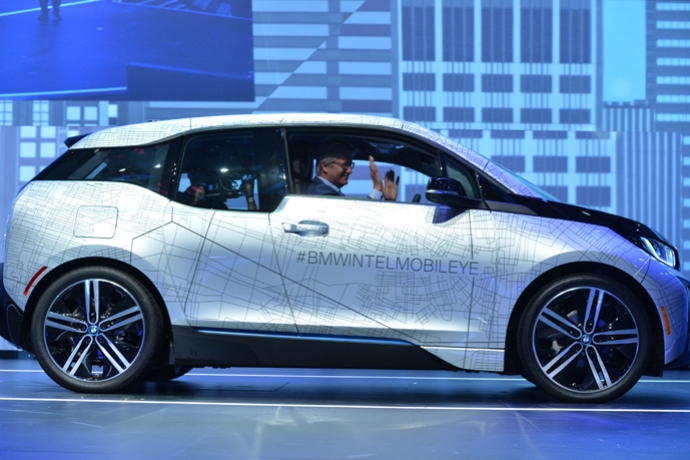
Intel Developer Forum 2016
The global market for fully autonomous vehicles will reach $4.2 billion in 2025, and by 2035, autonomous vehicles will account for 20% of global car sales.
On July 1, Intel announced a collaboration with the BMW Group and Mobileye to produce advanced fully autonomous driving solutions by 2021. On November 15, Intel Capital announced plans to invest an additional $250 million over the next two years to make fully autonomous driving a reality.
The development of autonomous driving technologies will not only expand the scope of driverless vehicle utilization but also improve every aspect of infrastructure, from connectivity and AI applications to data processing. More companies will enter the autonomous driving market, new partnerships and collaborative efforts will emerge, and standardization will be required across the industry.
The industry will continue to grow through trial and error. However, 2017 is expected to be the first year that autonomous driving systems, such as Advanced Driver Assistance Systems (ADAS) or autonomous public transportation, emerge as mainstream.
We will provide a fully immersive experience using the latest technologies, VR and MR.
If today's experiences focus on the relationship with the screen, future users will be completely immersed in sight, sound, and senses. Future computing will empower people to build, solve, create, and live in an environment where the boundaries between the physical and virtual worlds are blurring. While virtual technology holds tremendous potential, its industrial application is still in its early stages.
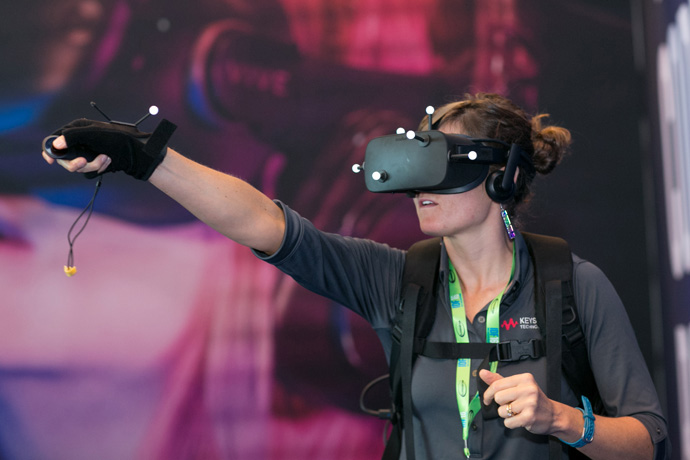
Intel Developer Forum 2016
On August 16, Intel unveiled Project Alloy, an all-in-one virtual reality solution. On November 3, Intel acquired VOKE, a leader in live and VR experiences, to provide immersive sports experiences to athletes, enthusiasts, and content creators. On the 7th, Intel and Microsoft announced the specifications for Windows Holographics.
In 2017, VR experiences will move beyond the early stages of industries such as healthcare, education, and travel to provide fully immersive experiences using the latest VR technology. As the integration of technology and sports deepens in 2017, the way sports training, viewing, and interaction are conducted will change.
Converged reality, a new way of experiencing physical and virtual interactions and environments, will lead the way with five technological advancements related to mobility, integrated tracking, more natural manipulation, wireless technology, and digitized real-world content, and is scheduled to be released to the market in 2017.
Comments 1
1 Comments:
Related news

[e4ds Tech Day 2026 ⑨] Sim Sang-gyu, Autocrypt CTO: "In the Physical AI Era, Automotive Security Must Extend Beyond the Vehicle"
At e4ds Tech Day 2026, Sim Sang-gyu, CTO of Autocrypt, explained automotive cybersecurity strategies in the era of Physical AI and SDV (Software-Defined Vehicle). Automobiles are evolving as part of an ecosystem connected to AI, cloud, chargers, IoT, and robots, and he emphasized that the scope of security must expand beyond the vehicle interior to the entire connected environment. In particular, AI model tampering, adversarial attacks, OTA updates, and EV charger hacking were identified as major threats. He explained that response measures require zero trust, AI model integrity protection, intrusion detection, Security by Design and Default, and full lifecycle security management, and that proactive security system establishment beyond regulatory compliance is critical for securing future mobility competitiveness.
2026.10.12by 배종인 기자
NVIDIA to Invest $1 Billion in U.S. Science Over Next Five Years
NVIDIA has announced plans to invest $1 billion over the next five years to strengthen U.S. scientific and technological competitiveness. The company will enhance cutting-edge artificial intelligence research and development capabilities in key areas including quantum computing, healthcare, and energy security, while expanding support for higher education research institutions and cloud service providers. NVIDIA is participating as a major industry partner in the White House Office of Science and Technology Policy's Genesis Mission, and is promoting supercomputer construction in collaboration with national laboratories including Argonne and Los Alamos.
2026.10.12by 배종인 기자
ETRI Unveils 3 Next-Generation Media Technologies Including AI-Dedicated Video Compression
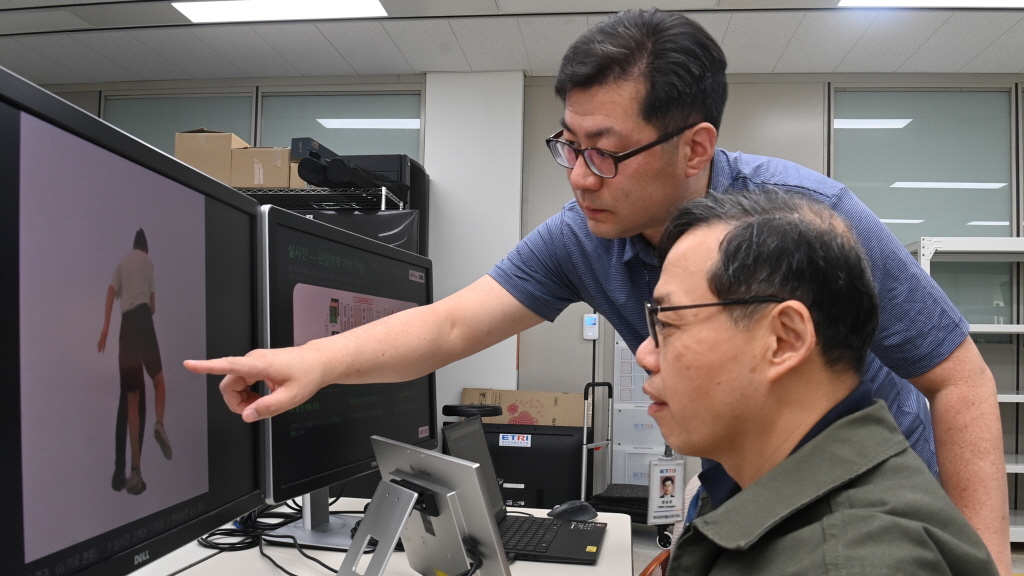
ETRI has unveiled three next-generation media technologies optimized for AI. These include AI-based video encoding (VCM), 3D human generation based on sparse cameras, and generative AI-based pre-visualization technology. In environments where AI directly processes video such as autonomous vehicles, robots, and drones, these technologies enable efficient compression and transmission of large-scale data, and can be applied across various industrial sectors including smart cities, video security, and sports broadcasting.
2026.10.12by 배종인 기자
KETI Connects Domestic and Uzbekistan Museums Through Robot Telepresence for Remote Exhibition
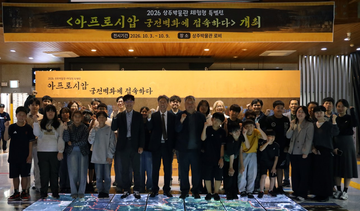
The Korea Electronics Technology Institute (KETI) has hosted a remote experiential exhibition that connects domestic museums with an Uzbekistan museum in real-time using robot telepresence technology. Elementary school students in the Sangju area were able to directly operate autonomous robots to remotely view 7th-century Goguryeo envoy palace murals at the Afrasiab Museum in Samarkand, and the exhibition provides spatial experience comparable to on-site visits by combining real-time high-quality video transmission, AI docent, and autonomous driving technologies.
2026.10.12by 배종인 기자

Arduino UNO Q Technical Whitepaper: MPU·MCU Hybrid Board for Cloud-Free Edge AI
Arduino UNO Q is a product that integrates a Qualcomm Dragonwing QRB2210 microprocessor (MPU) running Debian Linux and an STM32U585 microcontroller (MCU) executing Arduino sketches on Zephyr RTOS into a single UNO form factor board. The two processors do not share RAM and resources, exchanging data only through remote procedure calls (RPC) of Arduino_RouterBridge, and the development environment Arduino App Lab and apps reside within the board. This whitepaper describes the design intent of this hybrid architecture, development workflow, hands-on verification results, and limitations in industrial application based on webinar presentation materials and technical Q&A.
2026.10.09by 편집부












ㅋㅋㅋ 2016년 기사네요.. 요즘 기사인줄 알았다는..