


LoRa semiconductors for IoT-exclusive networks launched successively, will endpoint devices expand?
 Published2017.01.16 19:40
ST Micro succeeds in location tracking demo using LoRa
Following the establishment of LoRa (IoT-exclusive network) network infrastructure centered around SK Telecom last year, dedicated devices are expanding, and interest in core semiconductor solutions is rising.
STMicroelectronics (hereinafter ST) announced that at CES 2017, which concluded on the 9th, it successfully demonstrated the world's first real-time, multi-target location tracking using the LoRaWAN LPWAN protocol together with IoT solution providers myDevices and Senet.
The demo consisted of ST's LoRaWAN-enabled radio technology and automotive navigation chip, myDevices' customized application dashboard, and Senet's LPWAN connectivity and services. ST implemented a LoRa network using its STM32 microcontroller and other related components. The company integrated the LoRaWAN network stack into its STM32 Cube firmware infrastructure, and by installing the TESEO III automotive navigation IC in a limousine, was able to transport guests to multiple CES event venues around Las Vegas. GPS data is converted into encrypted packets and transmitted via LoRaWAN-enabled radio devices for location tracking.

▲SK Telecom demonstrated monitoring technology for weather information, fine dust, water level observation, soil information, and indoor temperature/humidity information using a LoRa network, an IoT-exclusive network, at an Internet of Things exhibition.
ST previously launched a low-cost development kit (P-NUCLEO-LRWAN1) in September last year that enables development of IoT prototypes based on LoRa LPWAN connectivity by leveraging the STM32 microcontroller ecosystem. This kit consists of an ultra-low-power STM32L073 NUCLEO (NUCLEO-L073RZ) board and an RF expansion board based on Semtech LoRa transceiver SX1272 (I-NUCLEO-SX1272D). The STM32L073 MCU features an ARM Cortex-M0+ core with excellent power efficiency and its own ultra-low-power capabilities. To further expand functionality, expansion boards such as the X-NUCLEO-IKS01A1 sensor board for motion, humidity, and temperature sensing can be added.
Microchip introduces MiWi enabling communication between endpoint devices using LoRa format
Microchip also provides LoRa modems. Microchip, which offers two LoRa modems (RN2483 and RN2903), will sequentially launch LoRa single-chip and module solutions in the first and second quarters of this year respectively.
Among modem products with identical hardware structure, the RN2483 is the European version covering 400MHz and 800MHz bands, while the RN2903 is the North American version covering the 900MHz band. Domestically, since the LoRa frequency is confirmed as 13 channels totaling 920.9~923.3MHz, the RN2903 product can be selected.
Microchip's LoRa module contains a Semtech transceiver and Microchip MCU, with the LoRa communication stack running inside the MCU. Applications can be directly loaded onto this MCU, or if larger capacity is desired or separate external sensor monitoring development is needed, an external MCU can be used separately.
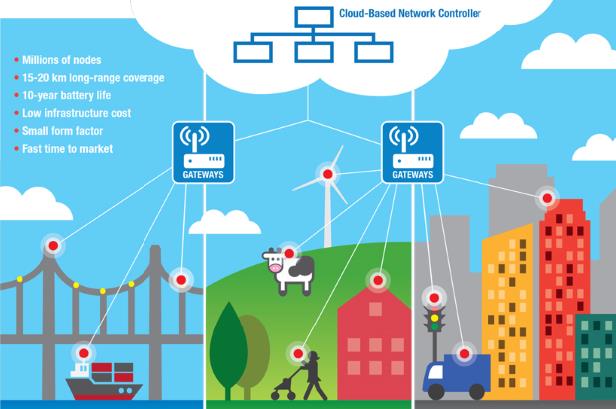
▲Microchip will sequentially launch LoRa single-chip and modules in the first half of the year.
The company will launch a single-chip combining MCU and transceiver in the first quarter. The single-chip basically has a 6x6 size and uses an ARM Cortex M0+ core. A Microchip official explained that the flash memory of this single-chip is 128KB, and approximately 96-100KB capacity is available for applications after excluding the LoRa stack capacity. Firmware matching Korean frequency specifications will be announced in February, and the modem product in module form will be sampled in the second quarter.
Microchip also introduces a solution that borrows the LoRa format to enable communication between endpoint devices. This solution, named MiWi, applies Microchip's own proprietary Zigbee stack. In other words, since it is proprietary technology, separate Zigbee certification costs are not required.
MiWi has the particular advantage of eliminating the need for gateways that must be individually installed in applications such as street lights, water pipes, and gas pipes that stretch out in long lines. Consequently, there is no need to purchase all expensive gateways. Microchip substitutes the Zigbee stack for the LoRa stack in existing LoRa modules to enable mesh structure communication between endpoint devices while achieving longer distances through LoRa wireless modulation.
A Microchip official stated, "SK Telecom actively worked on LoRa network construction last year, and it is expected that many more endpoint devices will be added this year," and added, "Beyond this, considerable interest is being shown in livestock, defense, Korea Electric Power Corporation, and water utility companies, so with just ideas, competitive products can be created through LoRa."
Comments
Related news
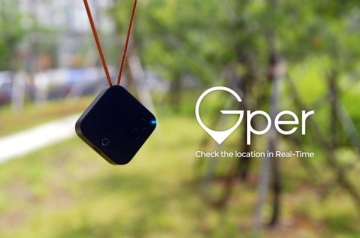
First service utilizing LoRa IoT dedicated network launched
SK Telecom has unveiled services utilizing its LoRa network, a dedicated IoT network that is uniquely constructed and operated as a nationwide network in Korea. SK Telecom has launched 'Gper,' a LoRa-based location tracking terminal, through Sparco, a positioning service startup. The company announced that the product has received strong response from both B2B markets such as daycare centers and individual consumers, nearly exhausting the first production batch of 2,000 units, and plans to move forward with second-round production.
2016.11.07by 김수지 기자
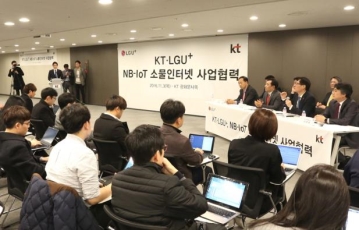
[Reporter's Notebook] What is 'Lora'? The war of nerves among the three telecommunications companies over the IoT communication network is accelerating
It appears that competition among telecommunications companies is heating up again over dedicated Internet of Things (IoT) network methods. KT and LG Uplus notified on the 3rd that they would jointly hold a press briefing regarding IoT strategy without advance notice. Although telecommunications companies have individually held IoT-related briefings in the past, it is uncommon for them to openly emphasize joint collaboration like this.
2016.11.07by 신윤오 기자
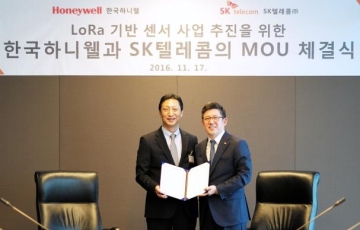
In case of fire, smartphone is immediately notified via the IoT 'LoRa' network
SK Telecom announced that it will develop products linking a hybrid IoT network with Korea Honeywell, a leading company in automatic control fields including advanced sensor business divisions. The two companies signed a Memorandum of Understanding (MoU) on "Honeywell Sensors and IoT Dedicated Network (LoRa) Interoperability" on the 17th, and plan to launch products in the market in the first half of 2017 by applying LoRa to various sensors supplied to office and residential buildings. Going forward, the companies plan to apply LTE-M to sensors and control devices supplied to the manufacturing industry, such as factories.
2016.11.17by 홍보라 기자
Korea Instrument, KOLAS Accredited Calibration Agency First to Simultaneously Acquire ISO/IEC 27,001·27,701
Korea Instrument has become the first among KOLAS accredited calibration agencies to simultaneously acquire ISO/IEC 27,001 and ISO/IEC 27,701 certifications. Through its proprietary platforms CWIZ Enterprise and CWIZ Partners, the company has embedded information security and personal data protection requirements across all business processes including customer information, equipment data, and calibration reports, with plans to continuously advance its management system through regular audits and security inspections.
2026.10.12by 배종인 기자
TeamViewer One, IT Incident Automation Workflow and Resolution Center Enhanced
TeamViewer has added IT incident automation capabilities and an advanced Resolution Center to its integrated digital workplace management platform 'TeamViewer ONE'. Recurrent service disruptions, configuration errors, and capacity shortages are automatically handled according to preset policies, and device status verification through script deployment can be managed in a unified interface, significantly reducing repetitive tasks for IT teams.
2026.10.12by 배종인 기자











