



Intel's Struggle: Will 5G Be Different?
 Published2017.01.19 19:32
This year, we will focus on modem production, autonomous vehicle testing, and strengthening our IoT solutions.
There are no painful mistakes from the past in the 5G market.
Intel is determined to embrace 5G. It's determined not to repeat the mistakes it made in the LTE market. This is understandable, as 5G represents a fundamentally different transition from previous generations of communication. 5G is a near-future technology that will blur the lines between the physical and digital worlds, enabling new experiences and services that will transform the way we conduct our daily lives.
This is why Intel is leading the transition to 5G, building expertise in wireless, networking, cloud computing, and data analytics for the 5G era. The recently announced 5G modem is a prime example of this commitment.
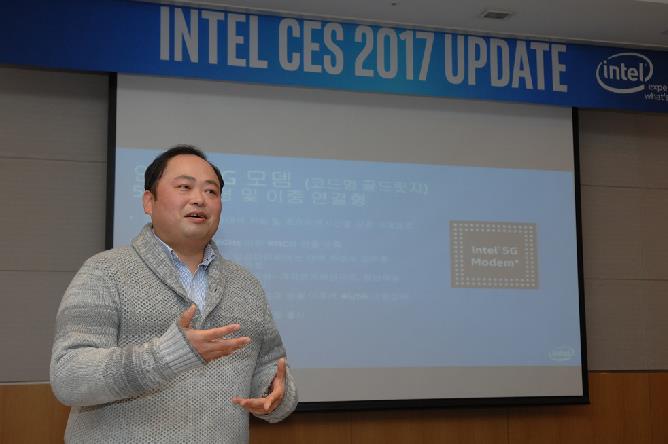
▲Intel Korea took time to summarize the technologies announced at CES 2017. Kang Seung-hyun, Intel Korea's director, explains the 5G modem.
Intel said the modem is the world's first global 5G modem, featuring a baseband chip that supports both sub-6GHz bands and high-frequency millimeter wave (mmWave) bands, enabling trial services and deployment of 5G spectrum anywhere in the world. Supporting ultra-wideband operation and enabling gigabit throughput with ultra-low latency, this modem combines Intel's sub-6GHz 5G RFIC (radio frequency integrated circuit) and 28GHz 5G RFIC, supporting all major 5G candidate bands worldwide.
5G RFIC samples to be announced in the first half of 2017
Intel's new 5G transceiver is the first 5G RFIC to support both sub-6 GHz and higher-frequency millimeter wave spectrum. This transceiver works in conjunction with the 28 GHz RFIC announced at Mobile World Congress (MWC) last year as part of the Intel® Mobile Trial Platform. Samples of the Intel 5G RFIC are expected to begin in the first half of 2017, with samples of the Intel 5G modem expected in the second half of 2017, followed by production shortly thereafter.
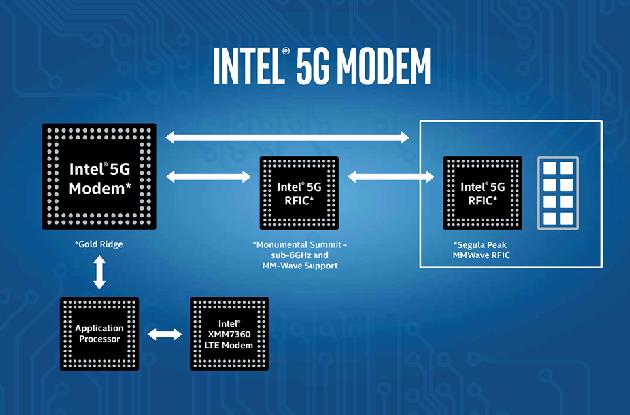
▲Intel 5G modem.
Kang Seung-hyun, director of Intel Korea, said, “Although 5G standards have not yet been established, technology development is actively underway with the goal of commercialization before 2020,” and “Intel is currently creating a 5G ecosystem and making thorough preparations for commercialization.”
5G is the core technology that can make self-driving cars, an increasingly hot topic, a reality. Transmitting the massive amounts of data generated and consumed by faster autonomous vehicles requires faster networks. Ultra-low latency 5G provides the connectivity needed for autonomous vehicles to make critical decisions in an instant, without having to transmit or receive data from servers hundreds of kilometers away. 5G also aims to enable connectivity that will allow cars to communicate and learn from each other and their surroundings beyond line of sight.
To support 5G and autonomous driving, Intel has developed the Intel® GO™ Automotive 5G Platform, the industry's first 5G-ready platform for autonomous driving and a fully scalable end-to-end system. Expected to launch in 2017, the platform is expected to enable automakers to develop and test a wide range of use cases, including uploading sensor data from the vehicle for machine learning, downloading real-time high-resolution maps, and over-the-air firmware and software updates, as well as applications that will be needed beyond 2020 when wide-area 5G becomes commercially available.
The Intel GO autonomous driving solution is designed to deliver exceptional scalability and accelerate time to market. It integrates high-performance in-vehicle computing, software development tools, 5G connectivity, a robust data center platform, and advanced artificial intelligence (AI) technologies.
Self-driving cars equipped with Intel GO autonomous driving solutions
Test runs on actual roads in the second half of this year
The Intel GO autonomous driving solution will be implemented in actual self-driving cars this year. At CES, Intel, along with BMW and Mobileye, announced that approximately 40 autonomous vehicles would be on the road by the second half of 2017. This announcement builds on the partnership between Intel, BMW, and Mobileye announced in July of last year, which saw the three companies develop a scalable architecture that other automakers and developers can apply to create cutting-edge designs and differentiated brands.

▲BMW engineer André Müller testing technology on a self-driving car.
Through partnerships, Intel delivers innovative, high-performance computing components from vehicles to data centers. The newly launched Intel GO solution for autonomous driving features world-class processor and FPGA technology, balancing the vehicle's power with the most efficient power usage while meeting the automotive industry's stringent thermal and safety requirements.
Within the vehicle, Intel GO solutions provide a scalable development and computing platform for key functions such as sensor fusion, driving policy, environmental modeling, path planning, and decision-making. In the data center, Intel GO delivers AI capabilities based on high-performance Intel Xeon processors, Intel Arria 10 FPGAs, Intel Solid-State Drives, and the Intel Nervana platform, along with powerful machine learning and deep learning simulation infrastructure required by the autonomous driving industry.
Acquiring a stake in HERE to develop safer and more predictable driving solutions.
Intel's progress in developing autonomous vehicle technology is unstoppable. Intel recently announced that it has agreed to acquire a 15% stake in global digital map and location-based services company HERE from Audi, BMW, and Daimler.
The two companies plan to jointly research and develop a highly scalable proof-of-concept architecture. This proof-of-concept architecture is designed to update high-definition maps for real-time fully autonomous driving. The two companies announced that they will explore strategic opportunities by developing cutting-edge computing devices that leverage location data.
The proof-of-concept architecture the two companies will jointly develop will support autonomous vehicles to drive as safely and predictably as possible. For example, while today's navigation technology can pinpoint a vehicle's location within meters, next-generation high-definition maps can help locate it within centimeters. Therefore, leveraging this technology will enable autonomous vehicles to navigate more accurately, significantly improving their reliability. HERE's real-time high-definition maps and cloud-based services will enable autonomous vehicles to perceive traffic and their surroundings in real time, enhancing their ability to "see."
7th generation Intel Core processor family based on the latest 14nm process technology
Intel Compute Card, a credit card-sized computing platform, brings the Internet of Things era forward.
Additionally, the 7th generation Intel Core processor family announced by Intel this time is designed based on Intel's latest 14nm+ process technology, providing a new level of performance and stability.
Working with compatible chipsets, this product brings a new level of rich, immersive experience to individuals, businesses, and performance-driven gaming and media enthusiasts. Additionally, the streamlined design, ease of use, increased battery life, and expanded I/O support enhance user productivity and foster creativity. With expanded smart features, stylish designs, and a variety of sizes, computers based on the 7th Generation Intel Core processor are designed to support every individual's lifestyle and work style. The new 7th Generation Intel Core processor and Intel Xeon processor families include new processors to suit a variety of systems and needs.
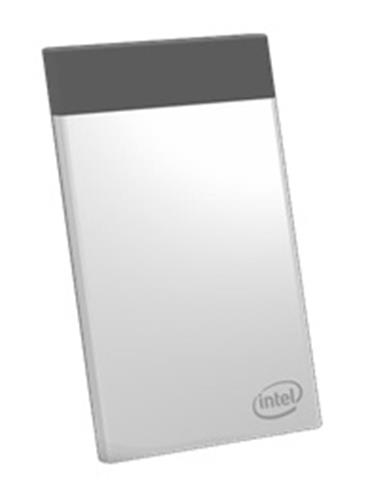
▲Intel Compute Card
Intel has unveiled a new modular computing platform, the Intel® Compute Card. This product is part of Intel's ongoing commitment to unlocking the benefits of the Internet of Things and enabling smarter, more connected devices. The Intel Compute Card is built on the idea that transforming how computing and connectivity are integrated can transform how future devices are used and integrated.
The Intel Compute Card features all the components of a computer, including the Intel SoC, memory, storage, and wireless connectivity with flexible I/O options. Manufacturers can design their products into a standard Intel Compute Card slot and then use the Intel Compute Card that best suits their performance and price requirements. This means products like interactive refrigerators, smart kiosks, security cameras, and IoT gateways can be optimized for their unique needs. With the Intel Compute Card, manufacturers can accelerate their innovation by reducing the time and resources required to design and validate computing blocks while leveraging intelligence across a wide range of devices.
Comments
Related news
Intel CEO Makes Massive Investments in Technology and Developers to Enhance AI Technology
Intel announced a comprehensive strategy including new products, technologies, and investment plans to support the expansion of AI (Artificial Intelligence) adoption and accelerate growth across all domains from devices to data centers. Intel recognizes that AI is fundamentally changing not only how businesses operate but also how people interact with the world, and is developing the broadest set of technology options in the industry to leverage AI technology across all fields ranging from smart factories to drones, sports, fraud detection, and autonomous vehicles.
2016.11.21by 신윤오 기자
Intel's influence is limited in hyperscale data centers, Xilinx FPGAs are superior
Xilinx announced last month a new technology that enables cloud service providers to rapidly develop and deploy accelerated platforms. Through a reconfigurable acceleration stack powered by FPGAs designed for cloud-scale applications, it can deliver more than 40 times greater computing efficiency compared to x86 server CPUs, and the company emphasized that it provides up to 6 times greater computing efficiency compared to competing FPGA vendors.
2016.12.09by 신윤오 기자
Artificial Intelligence, 5G, Autonomous Driving, VR/MR, and Intel's Vision for the Future After 2017
In 2016, Intel collaborated with policymakers, industry leaders, and industry pioneers to focus on four key areas leading to new opportunities for the industry and consumers: artificial intelligence, 5G networks, autonomous driving, and virtual and augmented reality, which will accelerate innovation and support rapid transformation.
2016.12.26by 홍보라 기자

Signal-level HIL Solution for EV Power Conversion Controllers, NI ITS
EV power conversion circuits are becoming faster and more complex with SiC and GaN application and X-in-1 functional integration, and ECU verification requires the capability to simulate circuit behavior at nanosecond-level resolution in real time. This white paper organizes the position of signal-level HIL (sHIL) in the development flow and describes the hardware and software architecture, model implementation workflow, and application boundaries of NI ITS (Inverter Test System), which responds to this requirement through FPGA-based real-time simulation, based on webinar materials.
2026.10.16by 편집부
Microchip and Elektrobit Join Hands on AUTOSAR Solution
Microchip Technology and Elektrobit have unveiled a collaborative solution with pre-integrated automotive hardware and AUTOSAR software. With MCAL software based on EB tresos, the solution can reduce development effort for OEMs and Tier 1 suppliers and accelerate time-to-market. The two companies will employ an "Integration-as-Code" automation method to lower integration risk while beginning support in the Asian two-wheeler market.
2026.10.16by 배종인 기자











