



This year's government R&D will focus on investing in AI, IoT, and other areas to prepare for the Fourth Industrial Revolution.
 Published2017.01.23 17:37
The Ministry of Trade, Industry and Energy focuses on the advancement of new and key industries.
The Ministry of Science, ICT and Future Planning and the Ministry of Trade, Industry and Energy held a briefing session to announce the R&D investment strategies finalized for this year.
The Ministry of Science, ICT and Future Planning projected that the global ICT market will grow by 2.9% this year, forecasting that software and IT services will grow primarily in developed and emerging markets. In particular, high growth is expected for the second consecutive year in ICBM sectors such as IoT, cloud computing, and big data due to expanding market demand. According to market research firms, IoT is projected to increase by 35.1%, cloud computing by 18.2%, and big data by 32.6%, while mobile devices—specifically smartphones and tablets—are expected to grow by 6.1% and 3.2%, respectively.
The domestic market is projected to see a slight annual increase driven by the recovery of global demand, improved supply and demand across sectors, and base effects from the previous year. Fintech is expected to flourish as capital investment expands due to growing demand for memory semiconductors, OLEDs, and SSDs. The market is expected to rise slightly, centered on telecommunications convergence services such as the expansion of O2O services. Although export competition for key export items is expected to intensify, the market is projected to rise slightly by leveraging technological superiority in areas such as 3D NAND, AI-equipped phones, foldable and flexible displays.
An official from the Ministry of Science, ICT and Future Planning stated, “Looking at the current position and implications of our ICT, the slowdown in ICT growth must be resolved through the nurturing of new industries, the shortage of high-tech enterprises through regulatory innovation, the spread of a sense of crisis in ICT through the expansion of market demand, and the inadequacy of the intelligent information ecosystem through the development of the intelligent information industry.”
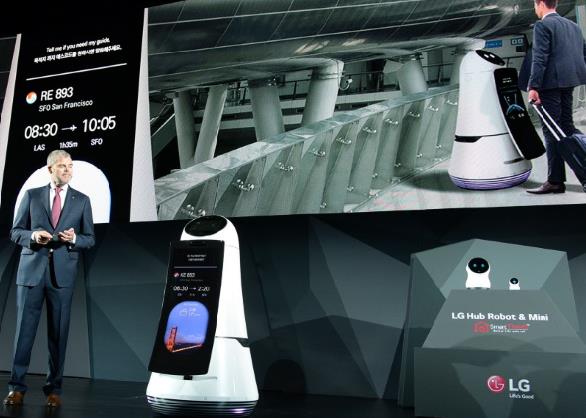
At CES 2017, LG Electronics unveiled a portfolio of AI-based robots, including a home hub robot that acts as a smart butler, a garden maintenance robot, and an airport robot.
The K-ICT 2016 strategy implemented last year focused on investing in 5G mobile communication, UHD, digital content, and smart devices (service devices); intelligent information, IoT, cloud, and big data (general-purpose technologies); and software and information security (infrastructure). Accordingly, the Ministry of Science, ICT and Future Planning analyzed the achievements of the K-ICT 2016 strategy and concluded that immediate challenges such as technology development standardization, technology commercialization, workforce training, and foundation building must be addressed.
Accordingly, the 2017 ICT R&D promotion strategy was organized into a broad framework that includes strategic preparation for promising future fields, accelerating the creation of R&D outcomes, strengthening researcher-centered research support, and revitalizing communication with the research site. First, the strategic preparation for promising future fields involves timely responses to the intelligent information society and the Fourth Industrial Revolution, as well as the identification of promising future technologies in the ICT sector and the securing of core source technologies for these promising technologies. In addition, the amount of ICT R&D voucher support will be expanded to accelerate the creation of R&D outcomes, and researcher-centered research support will be strengthened by enhancing the autonomy of universities and SMEs.
New investment in ICT R&D this year is 309.3 billion won, down 1.1% from the previous year.
Accordingly, the total investment in ICT R&D this year amounts to 989.6 billion won, of which new investment is 309.3 billion won. This represents a 1.1% decrease compared to the previous year. Specifically, 680.9 billion won will be invested in technology development, 25 billion won in standardization, 38.1 billion won in technology commercialization, 73.3 billion won in workforce training, and 172.3 billion won in infrastructure development.
In particular, this year, we will focus investment on the top 10 strategic industries, including AI and IoT, to proactively respond to the Fourth Industrial Revolution. The top 10 strategic industries include artificial intelligence (42.1 billion KRW), IoT (30.3 billion KRW), smart devices (4.9 billion KRW), and information security (57.5 billion KRW), which is a 26% increase compared to the previous year.
Specifically, the total budget for the top 10 technology development projects is 680.9 billion won, of which 219.9 billion won is new funding. First, a total of 65.3 billion won will be invested in the convergence services sector, with 21.3 billion won being new funding. The scale of mobile telecommunications R&D is 38.5 billion won, with 11.6 billion won being new funding. The scale of network R&D is 17.5 billion won, with 4.8 billion won being new funding, and the broadcasting and smart media sector is 24.6 billion won in total, with 16.9 billion won being new funding.
The radio satellite sector has a total budget of 14.8 billion won, of which 8.2 billion won is new budget, and the scale of basic SW computing R&D is a total of 73.7 billion won, of which 28.5 billion won is new budget. The scale of software R&D is a total of 53.6 billion won, of which 20.3 billion won is new budget, and digital content has a total of 44.4 billion won, of which 13.8 billion won is new budget. The information security sector has a total of 57.4 billion won, of which the new budget is 22.3 billion won, and the ICT device sector has a total R&D scale of 46.3 billion won, of which the new budget is 6.2 billion won.
The Ministry of Science, ICT and Future Planning announced its future schedule, stating that it will begin project announcements and accept project proposals at the end of January, close applications in February, evaluate the selection of new projects in March, and proceed with project agreements and full-scale research starting in April.
Ministry of Trade, Industry and Energy Aims to Transition to 'First Mover' Type R&D Process
Meanwhile, in addition to technology development, a total of 38 billion won is invested in technology commercialization projects, of which 33.6 billion won is for new initiatives. The significant increase in the budget for technology commercialization is intended to enhance the technological competitiveness of small and medium-sized enterprises (SMEs) and venture companies by supporting the development and commercialization of short-term commercialization technologies that reflect the technological demands of the ICT sector. Accordingly, the core of the projects consists of support for ICT startups and technology development for re-entrepreneurs (3 billion won), support for core ICT convergence technology development (13.5 billion won), and ICT R&D voucher support (21.5 billion won). Furthermore, 73.3 billion won is invested in workforce training projects, and a total of 172.3 billion won is allocated to infrastructure development projects.
The Ministry of Trade, Industry and Energy, which is providing full support for new growth engine sectors, will continue to invest 7 trillion won this year in the creation of new industries and the advancement of key industries, following last year's trend. This includes five major new industries—ICT convergence, advanced new materials, new energy industries, high-end consumer goods, and bio-healthcare—as well as the advancement of key industries. Following the restructuring of R&D investment centered on new growth engine sectors in the first phase last year, the Ministry believes that a transition to a 'First Mover' type R&D process is necessary in the second phase to support the creation of new growth engines.
The Ministry of Trade, Industry and Energy's R&D budget for this year totals 3.3382 trillion won, with 3.0587 trillion won allocated to support new growth engines. The proportion relative to the total budget increased from 86.5% last year to 91.6%. 68 billion won will be invested in 3 projects for the development of future growth engine technologies, 897.9 billion won in 14 projects for the development of core industrial technologies, and 803.2 billion won in 21 projects for the development of energy safety technologies.
An official from the Ministry of Trade, Industry and Energy stated, “As a result of identifying issues in government project planning, there were calls to adjust the R&D planning portfolio and strengthen the openness of government project planning. We plan to improve these issues and reflect them in the projects.”
Comments
Related news
[A Close Look at ICT R&D] ⑨ The Domestic Software Industry in a Precarious Situation: Find a Breakthrough for the Era of ICT Convergence
We are in an era where securing software-centric industrial competitiveness is inevitable as the intelligent information society emerges and smart industrialization advances. The demand for high-performance, low-power, high-capacity software core technologies for ultra-high-speed data processing based on next-generation hardware such as heterogeneous manycore, non-volatile memory, and GPGPU is growing. Furthermore, next-generation mobile software core technologies that will fundamentally reshape the ecosystems of nation's key industries such as automotive, aerospace, and defense are gaining prominence. As intelligent customized services expand, including multi-image recognition, real-time multilingual interpretation and translation, and high-quality VR technology, the importance of software continues to increase.
2016.09.26by 김수지 기자
[ICT R&D In-depth Look] ⑩Rapidly Expanding Big Data, Core SW Technology Competitiveness Remaining Stagnant
SW-computing technology that provides large-scale, high-performance, real-time, and intelligent functions as a platform, commonly required for explosive growth in computing devices and data and hyperconnected smart services, is attracting attention. SW-computing technology includes four core areas: big data, cloud computing, computing systems, and artificial intelligence technology. Performance improvements of systems through SW technology innovation are being attempted, and with changes in the ICT paradigm, future SW computing technology is also developing in forms of convergence and intelligence.
2016.10.04by 홍보라 기자
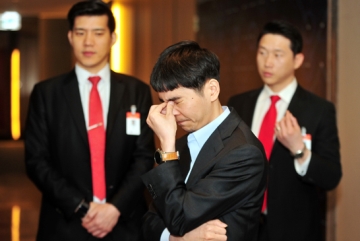
[A Close Look at ICT R&D] 11. The AI Industry Sparked by AlphaGo: A Long and Difficult Road Ahead
At the beginning of the year, the historic Go match between Google's AlphaGo and Lee Sedol brought an artificial intelligence boom to our society. In response, the government added a technology roadmap for the artificial intelligence sector in addition to the 10 major ICT R&D fields. Artificial intelligence is an ICT technology for implementing high-level information processing capabilities of humans, such as cognitive ability, learning ability, reasoning ability, and comprehension ability. It is recognized as a leading player in the Fourth Industrial Revolution, which is projected as an 'evolution toward a society where everything is connected and more intelligent.' Intelligent information technology refers to the convergence of intelligent information processing software and hardware that realizes new intelligent services by combining 'intelligence' implemented through artificial intelligence technology and 'information' based on big data, IoT, and cloud.
2016.10.10by 신윤오 기자
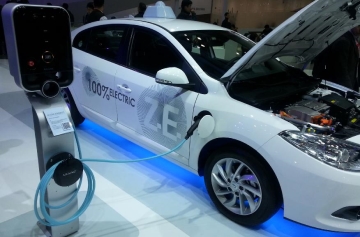
[Journalist's Notebook] Is Selective Concentration Really Wrong for Eco-Friendly Vehicle R&D?
The largest trade surplus industry in the domestic trade balance (53 billion dollars). Added value of 10.7% of total manufacturing. Tax revenue of 37.7 trillion won, representing 14.7% of total tax revenue, with manufacturing employment of 330,000 people (6.9% of total employment of 1.77 million). These figures represent the current status of Korea's automotive industry. Since 2009, the Korean automotive industry has been ranked in the top 5 globally in automobile production. It is truly a foundational sector of Korea's domestic industry.
2016.11.14by 신윤오 기자
Nvidia invests $5 billion in Intel
NVIDIA and Intel, leaders in global AI computing technology, are now forging ahead in providing cutting-edge solutions through NVLink-based architecture integration. NVIDIA and Intel have officially announced a strategic partnership and stated that they will jointly develop customized data center and personal computing products to accelerate diverse applications and workloads ranging from hyperscale to enterprise and consumer markets, thereby laying the foundation for the next generation computing era.
2025.09.22by 배종인 기자











