


[Promising Future Technologies⑥] Korea is strong in robot vacuum cleaners, the US in manufacturing, and Japan in personal robots.
 Published2017.02.06 14:27
# Mr. K's home is guarded by a 24-hour security robot, both inside and out. Furthermore, a housekeeping robot, which assists with household chores like cooking and cleaning, has increased his leisure time. Robots are also in charge of his children's education. Educational robots provide children with a variety of immersive audiovisual materials. His parents, who live in the countryside, also have less to worry about thanks to the robots. A health assistant robot monitors his parents' health and prevents, diagnoses, and treats various diseases. Any abnormalities are immediately reported to Mr. K and his attending physician via smartphone. In the rural area where his parents live, using agricultural robots to farm has become a daily routine. If someone is injured during farming, a surgical robot is dispatched. The surgical robot captures images of the injured area, transmits them, and a remote doctor activates the robot to begin the surgery. Near the end of the surgery, a drone dispatched in advance transports the patient to a larger hospital.
An era is approaching in which intelligent robots that recognize the external environment, judge situations on their own, and act autonomously will become commonplace.
This is because intelligent robots are evolving into technologies that can perform collaborative work with humans or support highly specialized services along with the development of artificial intelligence.
Currently, robots lack the freedom and safety of humans and are only capable of performing simple tasks. However, in the future, personal/professional service robots and smart production systems will be highly developed. Personal robots aim to improve the quality of life by supporting individuals in their daily activities, such as health, maintenance, education, and entertainment. Professional robots are non-manufacturing robots that provide specialized services useful for human welfare, such as healthcare and national defense, or for specific facilities or special purposes. Smart production systems consist of systems that monitor and control the production process, encompassing unmanned factories for product ordering, design, quality inspection, material management, and warehouse management.
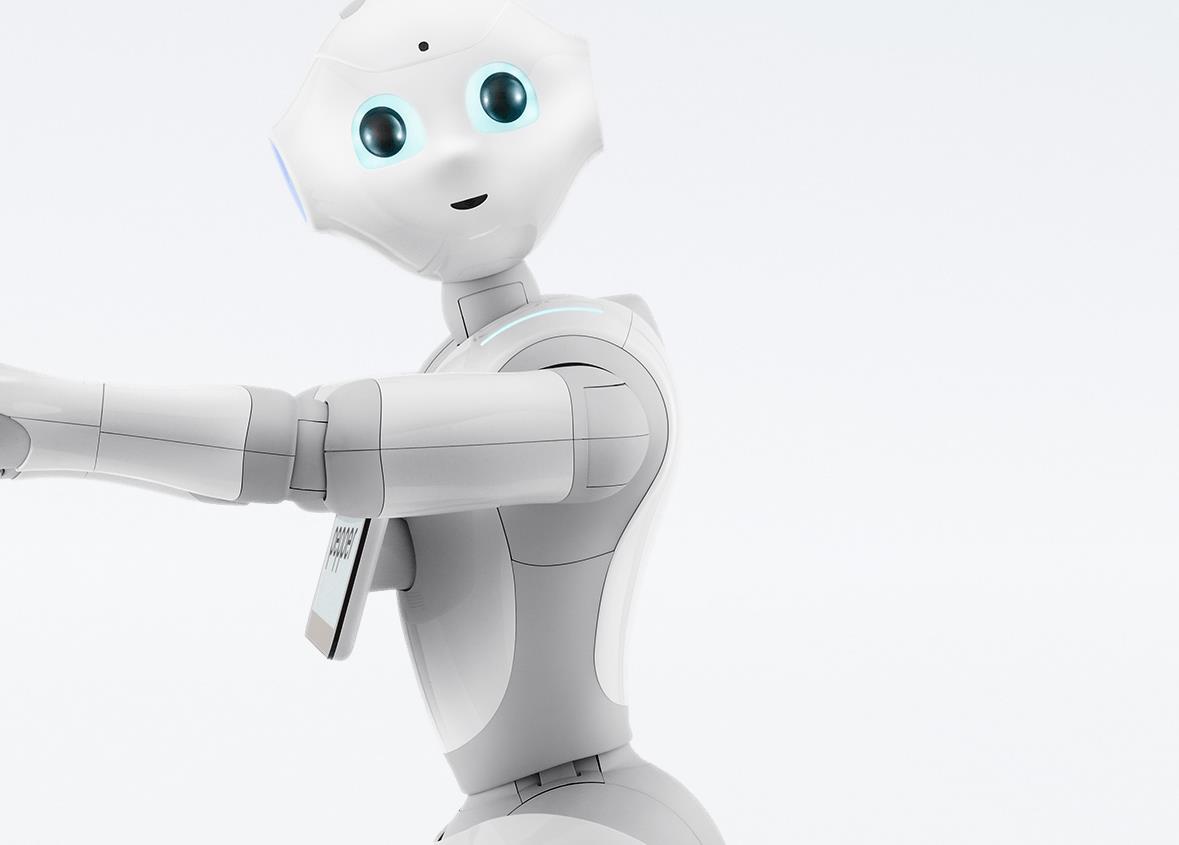
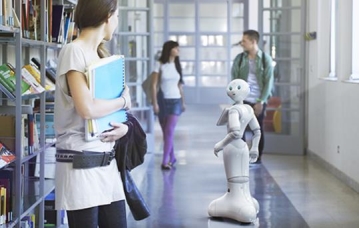
▲ SoftBank's Pepper has a patent for an 'emotion engine' that determines actions based on emotional values and user status that express emotions.
(Capture from SoftBank website)
The development of these intelligent robots is closely aligned with the development of artificial intelligence. A prime example is Google's AlphaGo, which emerged last year and sparked tremendous interest in AI. AlphaGo combines deep learning with the Monte Carlo algorithm to learn Go on its own, much like a human. To achieve this self-learning, AlphaGo utilizes two fundamental neural networks: a policy network and a value network. Rather than simply increasing computer hardware capacity, such as CPUs, AlphaGo's performance is enhanced by improving its algorithms.
Intelligent robots are expected to flourish in 2020, fueled by the expansion of the service robot market. Amazon is already leveraging robotics technology for its logistics systems, and Google has acquired several robotics companies. In Korea, Samsung Techwin unveiled the mobile surveillance robot "Star M" in 2014 and has also filed a patent for an autonomous driving algorithm. Boston Dynamics' BigDog, a dog-riding robot, participated in large-scale military exercises, but was not adopted by the US Army due to its loud noise. SoftBank's Pepper, the first humanoid robot aimed at the consumer market, heralded the era of cloud-connected robotic assistants. Pepper's built-in emotion engine allows it to recognize and simulate human emotions.
Patent Trends: The U.S. Leads the Intelligent Robotics Field
The US dominates the intelligent robotics field, with 10,360 patent applications, representing 46% of the total. Annual filing trends show a global upward trend in patent applications, with Korea ranking second only to the US in filings since 2009. Patents related to robot vacuum cleaners, particularly those from Samsung Electronics and LG Electronics, are on the rise. The US Patent Office (USPTO) receives the most patent applications across all technological fields, while the Korean Patent Office (KIPO) receives the most patents in personal robots, professional robots, and smart production systems, in that order.
Looking at annual trends by subcategory of intelligent robots, patent applications for personal robots are increasing, while those for professional robots and smart production systems remain at a steady level, with no significant increase or decrease. The United States holds the highest market share in personal robots and smart production systems, while Japan holds the highest market share in professional robots. Korea was found to have the smallest gap with leading countries in specialized robots, while it had the largest gap with leading countries in smart production systems.
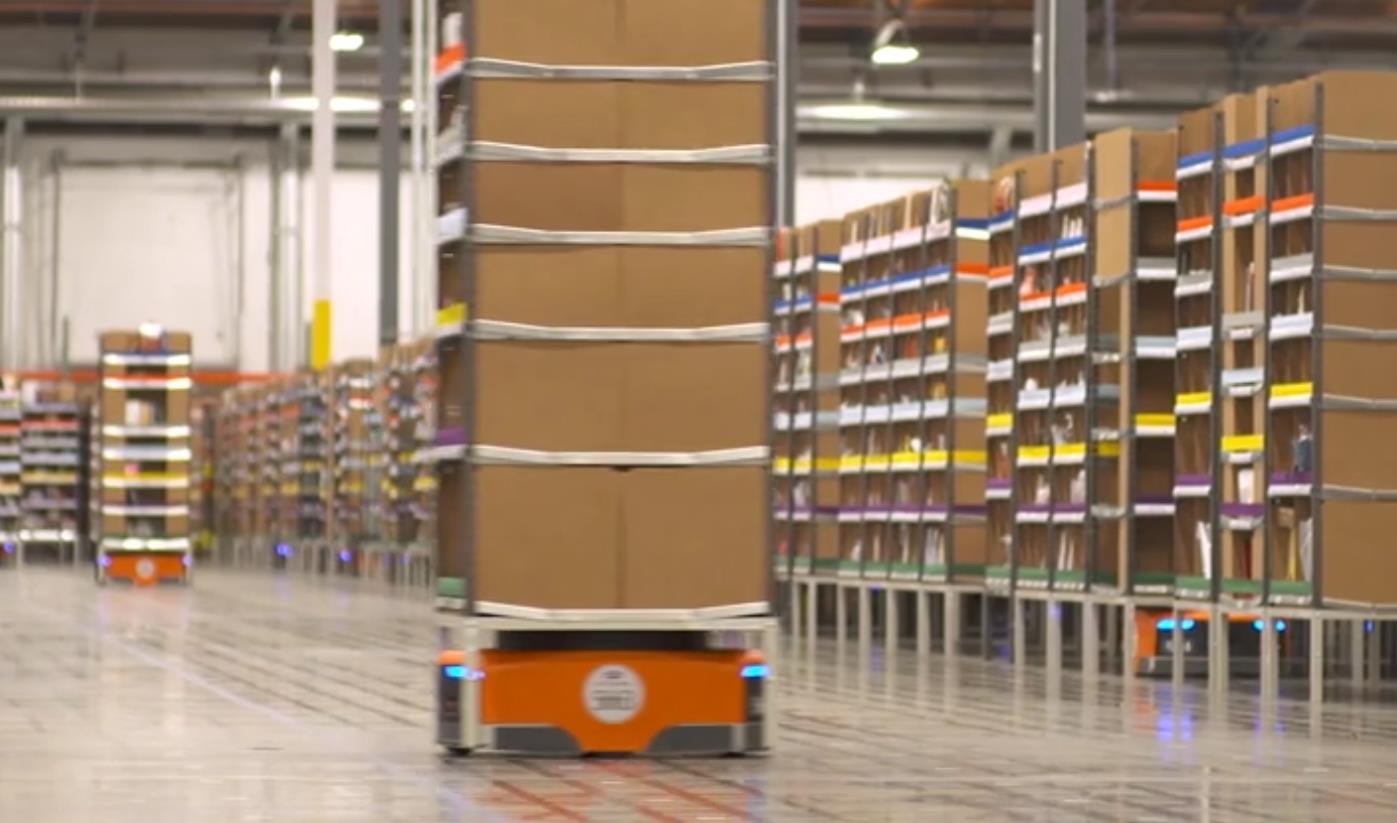
▲ In future logistics robot scenarios, Amazon plans to deploy robots that automatically pick products or package items at high speeds in a supply system by detecting product information with sensors rather than wirelessly transmitted commands . ( Video capture of Amazon logistics robot Kiva)
This patent share is similarly reflected in the analysis of key market penetration rates. US applicants had the highest key market penetration rate at 38.7%, while Korean applicants had the highest penetration rate at 14.7%, ranking third after the US and Japan. Examining litigation by subcategory in the intelligent robot field, personal robots had the most litigated patents at 55, followed by professional robots at 30 and smart production systems at 4. Among litigated patents, professional robots had the most patents with current rights holders being NPEs at 8, followed by personal robots at 6, and smart production systems at 0.
Examining patent transactions, the most common category was personal robots, with 591 patents, followed by professional robots (266), and smart production systems (96). Among these patents, NPEs acquired the most patents, with 19 for personal robots, 18 for professional robots, and 0 for smart production systems. The intelligent robot industry, which has now entered a mature phase, is expected to enter a period of decline by 2026, as technologies related to intelligent robots, including artificial intelligence technology, battery technology, actuator technology, sensing technology, and component technology, are rapidly developing across all industries.
Evolving toward increasing the autonomy of robots through integration with artificial intelligence.
An analysis of major applicants over the past five years reveals that Korea focuses on personal robots, the US is strong in smart production systems, and Japan has achieved a balanced development of both personal and professional robots. Samsung Electronics and LG Electronics sell robot vacuum cleaners, so they hold a large proportion of robot vacuum cleaner-related patents among personal robots. Samsung Heavy Industries holds the largest number of patents for inspection and maintenance robots among professional robots. In the US, IROBOT holds a large number of patents for personal robots, focusing on robot vacuum cleaners. IBM holds a large number of patents for professional robots, particularly logistics robots. Apple holds a large number of patents for smart production systems. In Japan, Toyota and Sony hold patents for both personal and professional robots, while YASKAWA holds the largest number of patents for smart production systems, albeit with a smaller number.
Intelligent robots are currently commercialized in the early stages of service robots, primarily providing specialized services. From a patent-based perspective, technological development is currently focused on improving the hardware and software capabilities of current robots. In the long term, the industry is expected to evolve toward greater autonomy through integration with artificial intelligence. (This article is based on a report analyzing promising future products and services from the Korea Intellectual Property Strategy Institute (KISTA).)
Comments 10
10 Comments:
Related news
If selected for the soft robot research team, a total of 12.5 billion won will be provided over 7 years.
The Ministry of Science, ICT and Future Planning announced that it will solicit research teams starting July 19th (Tuesday) to support the soft robotics field as an Engineering Research Center (ERC). Soft robotics is one of the future promising technologies identified by the Ministry of Science, ICT and Future Planning as a follow-up measure after the 2015 New Year policy briefing, which includes soft robotics, brain-inspired chips, biomimetic sensory sensors, and diagnostic and therapeutic nanomachines. Soft robotics, in which all or part of existing robots are replaced with flexible and elastic structures, is a new type of robot based on the principles of movement and interaction of living organisms in unstructured environments.
2016.07.21by 신윤오 기자
[Outlook] What would a dish made by a robot taste like?
2017 was expected to see ICT convergence services take off in earnest across healthcare, media, finance, robotics, and automotive sectors. The seven major ICT convergence trends for 2017 were identified as ▲smart healthcare ▲virtual reality ▲fintech ▲home IoT ▲drones ▲robotics ▲autonomous vehicles.
2016.12.12by 신윤오 기자
Future products and services found in smart car, drone, and robot patents
Analysis of patent application trends in representative future convergence industry sectors including smart cars, drones, and robots has revealed the emerging outline of products and services that will gain prominence in the future. Smart cars, which refer to vehicles that combine automotive and IT technologies and are continuously connected to networks, center on products and services that contribute to user safety and convenience through enhanced connectivity both inside and outside the vehicle. This includes autonomous driving systems, HMI (Human Machine Interface) systems, sensing/accident prevention/avoidance systems, and driving assistance/occupant support systems.
2016.12.19by 신윤오 기자
[e4ds Tech Day 2026 ⑨] Sim Sang-gyu, Autocrypt CTO: "In the Physical AI Era, Automotive Security Must Extend Beyond the Vehicle"
At e4ds Tech Day 2026, Sim Sang-gyu, CTO of Autocrypt, explained automotive cybersecurity strategies in the era of Physical AI and SDV (Software-Defined Vehicle). Automobiles are evolving as part of an ecosystem connected to AI, cloud, chargers, IoT, and robots, and he emphasized that the scope of security must expand beyond the vehicle interior to the entire connected environment. In particular, AI model tampering, adversarial attacks, OTA updates, and EV charger hacking were identified as major threats. He explained that response measures require zero trust, AI model integrity protection, intrusion detection, Security by Design and Default, and full lifecycle security management, and that proactive security system establishment beyond regulatory compliance is critical for securing future mobility competitiveness.
2026.10.12by 배종인 기자
NVIDIA to Invest $1 Billion in U.S. Science Over Next Five Years
NVIDIA has announced plans to invest $1 billion over the next five years to strengthen U.S. scientific and technological competitiveness. The company will enhance cutting-edge artificial intelligence research and development capabilities in key areas including quantum computing, healthcare, and energy security, while expanding support for higher education research institutions and cloud service providers. NVIDIA is participating as a major industry partner in the White House Office of Science and Technology Policy's Genesis Mission, and is promoting supercomputer construction in collaboration with national laboratories including Argonne and Los Alamos.
2026.10.12by 배종인 기자












농촌 고령화에 따른 농사일에 도움되는 로봇이 있으면 좋겠네요.
청소, 설겆이, 빨래 등 집안일 잘하는 로봇이 있었으면 좋겠습니다. 그리고 아이들도 돌봐줄 수 있는 보모 로봇이면 더욱 좋겠네요. ^^
자동차 자율주행을 대신할 운전로봇이 있었으면 좋겠네요. 운전안할때는 개인 심부름꾼으로 사용.ㅋㅋㅋ
바쁜 개일 일정을 최적화해주는 로봇이 있으면 좋겠습니다.
관건은 AI 기술인듯 합니다.. 대부분의 기술이 AI와 접목된 기술이네요.
특허 점유율이 주요 시장 점유율과 유사하게 나타나는 것에 주목할 필요가 있네요. 결국, 기업에서 주도하는 시장이 기술의 발전을 가져옵니다.
사람의 안전과 아주 밀접한 관련이 있는 자동차를 제어 할수 있는 자동차내 AI(인공지능)로봇이 있었으면 합니다. 가령 자동차 탑승시 안전벹트 착용여부를 말로 안내해 주고, 음주여부도 자동으로 측정해 주고, 자동차의 타이어압과 엔진오일,밋션오일등의 교환 시기도 알려 주고, 출발전에 자동차의 앞뒤의 상황도 모니터로 보여주고, 주행시에 휴계소의 위치나 도로상황등을 알려 주고, 주차도 자동으로 시켜주고, 등등,,, 자동차에 IBM 왓슨등과 AI(인공지능) 요소가 가미된 AI로봇이 조만간 나올것 같네요. 꿈은 이루어 진다!! 화이팅!! 힘!! ^^*
AI가능을 탑재한 페퍼를보면서 향후 얼마나 더 로봇이 발전되어갈까?궁금도하고 걱정도됩니다.미래지능형 로봇이 인간에게 많은도움을줄수있도록 데이타구축을래나아갔으면합니다
씻겨주는 로봇도 있으면 좋겠어요.
미래의 지능형 로봇이 희망인 것 같습니다~~