


I heard this year's AI budget has increased by 47% compared to last year, but where is it being spent?
 Published2017.03.13 14:21
A total of 163 billion won will be invested in artificial intelligence-related budgets this year, a 47% increase compared to last year.
The Ministry of Science, ICT and Future Planning announced that it will fully pursue R&D related to artificial intelligence technology this year, focusing on AI software (73.9 billion won), AI hardware (25.8 billion won), and basic technologies (63.3 billion won).
Specifically, AI software is being intensively expanded in core source technology fields such as language/visual intelligence, learning, and next-generation reasoning (40.7 billion won in 2016), and major projects include the AI National Strategy Project (23.9 billion won), Flagship Project (14.5 billion won), AI Robot Convergence (10 billion won), and other major AI R&D projects (25.5 billion won).

The 'AI National Strategic Project' advances the development of source technologies (Exobrain, DeepView, GenieTalk, etc.) in the fields of language, vision, and speech intelligence, which have high industrial demand, and conducts leading research on AI technologies such as next-generation learning inference to secure mid-to-long-term technological superiority. First, we decided to recruit a project director by the end of this month, form a project team by the second week of April, and then proceed with project planning and business.
Artificial intelligence hardware will continue to expand research in fields that serve as the foundation for AI development, such as intelligent semiconductors and supercomputing (19.2 billion KRW in 2016). Major projects include intelligent semiconductors (16.6 billion KRW), supercomputing (6.2 billion KRW), and neuromorphic chips (3 billion KRW).
Exobrain's Key Language Processing Technologies Scheduled for API Release in September
The plan for supercomputing technology development is to enable the smooth execution of high-capacity AI software through high-performance computing infrastructure, and efforts are also being made to develop core technologies for intelligent semiconductors and neuromorphic chips that optimize machine learning software execution at the chip device level.
Basic technology provides long-term expanded support (50.7 billion KRW in 2016) for fields such as brain cognition/brain engineering and industrial mathematics, which provide the theoretical foundation for artificial intelligence technology. Projects are being carried out in fields such as brain cognition/brain engineering (61.8 billion KRW) and industrial mathematics (1.5 billion KRW). In addition, the total budget for AI-related initiatives, including the expansion of application services (20 billion KRW) and the establishment of industrial infrastructure such as workforce training (42.7 billion KRW), amounts to 225.7 billion KRW (a 63% increase compared to last year).

To this end, key language processing element technologies of Exobrain, which is being developed as a core technology for natural language analysis and question answering, will be released in API form this coming September so that industry, academia, and research institutes can freely utilize them. The seven types of Korean analysis APIs to be released this year include morphology, named entity recognition, polysemous word analysis, dependency syntax analysis, semantic role recognition, lexical similarity analysis, and homonym analysis. Exobrain, which will proceed with commercialization technology development in the legal, patent, and financial fields until January 2020, is planned to be developed into a professional question-and-answer system at a commercialization level.
DeepView, which has been developing since 2014 as a source technology for visual intelligence that recognizes and understands objects (40 nouns) and actions (15 verbs) in photos and videos, also discloses visual knowledge representation technology that expresses the content of videos as knowledge and data for visual intelligence training.
An official from the Ministry of Science, ICT and Future Planning stated, “We will participate in a global competition (ImageNet) to verify our technological capabilities and pursue the application of visual intelligence technology to real-world problems for industrialization,” adding, “We plan to verify performance by applying large-scale CCTV content analysis technology to urban video and other environments.”
Comments 2
2 Comments:
Related news
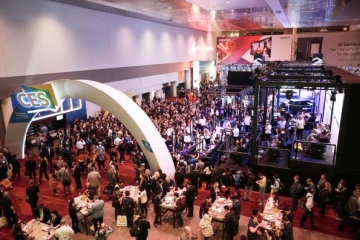
[Reporter's Notebook] Basic Act on Intelligent Information Society! Are we making another law?
A legislative seminar on the Basic Act on Intelligent Information Society was held at the National Assembly on the 24th. The legislative seminar, hosted by Rep. Kang Hyo-sang, included an explanation of the draft Basic Act on Intelligent Information Society, followed by heated discussions among related experts. In his opening remarks, Rep. Kang stated, "As AI technology surpassing humans and robots, along with supporting intelligent information technologies such as IoT, cloud, and big data continue to evolve, the intelligent information society we once only imagined is becoming reality," and added, "From now on, not only job creation issues but also profit distribution and welfare issues, ethics and legal responsibility issues regarding AI and robots, as well as personal information protection and copyright issues are expected to bring numerous side effects."
2017.01.31by 신윤오 기자
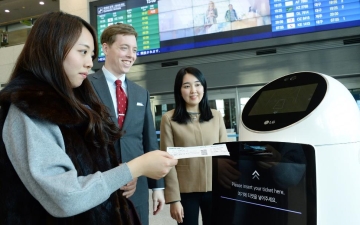
[Critical IT Scene] LG Electronics' AI robot appears at the airport.
LG Electronics has begun on-site testing of airport guide robots and cleaning robots at Incheon International Airport this month. On the 20th, LG Electronics' airport guide robot undergoing functional testing to provide flight boarding information to Incheon International Airport visitors.
2017.02.21by 김지혜 기자
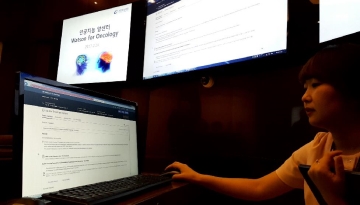
Gil Hospital, which adopted Watson, says, “Humans have started to trust artificial intelligence.”
If a patient chose Watson over a human doctor when comparing diagnostic prescriptions between a human physician and IBM's artificial intelligence Watson? One media outlet reported this result as if it were an 'victory' for artificial intelligence. In response, Ian Lee, director of Gachon University Gil Hospital's AI-Based Precision Medicine Initiative (professor of neurosurgery), stated, "While there are somewhat exaggerated aspects, the important thing is that people have unconsciously developed trust in artificial intelligence. This is a very important signal." He emphasized, "The river that artificial intelligence must cross is gaining human trust. The fact that a patient changed their mind to follow Watson's treatment method is not an ordinary event."
2017.02.21by 신윤오 기자
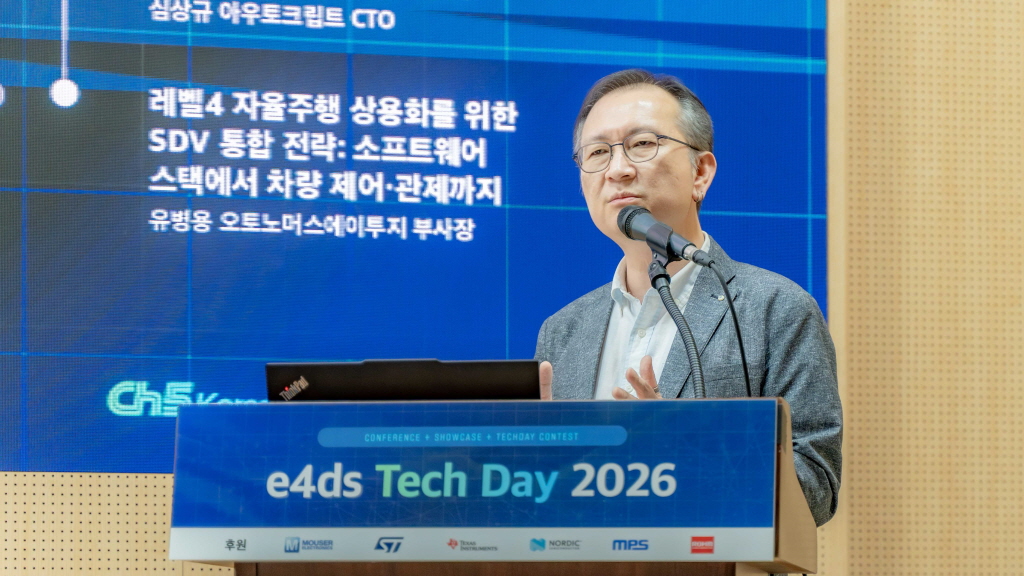
[e4ds Tech Day 2026 ⑨] Sim Sang-gyu, Autocrypt CTO: "In the Physical AI Era, Automotive Security Must Extend Beyond the Vehicle"
At e4ds Tech Day 2026, Sim Sang-gyu, CTO of Autocrypt, explained automotive cybersecurity strategies in the era of Physical AI and SDV (Software-Defined Vehicle). Automobiles are evolving as part of an ecosystem connected to AI, cloud, chargers, IoT, and robots, and he emphasized that the scope of security must expand beyond the vehicle interior to the entire connected environment. In particular, AI model tampering, adversarial attacks, OTA updates, and EV charger hacking were identified as major threats. He explained that response measures require zero trust, AI model integrity protection, intrusion detection, Security by Design and Default, and full lifecycle security management, and that proactive security system establishment beyond regulatory compliance is critical for securing future mobility competitiveness.
2026.10.12by 배종인 기자
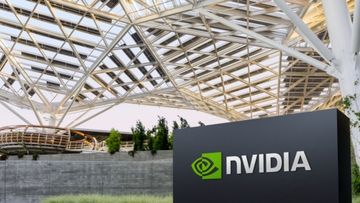
NVIDIA to Invest $1 Billion in U.S. Science Over Next Five Years
NVIDIA has announced plans to invest $1 billion over the next five years to strengthen U.S. scientific and technological competitiveness. The company will enhance cutting-edge artificial intelligence research and development capabilities in key areas including quantum computing, healthcare, and energy security, while expanding support for higher education research institutions and cloud service providers. NVIDIA is participating as a major industry partner in the White House Office of Science and Technology Policy's Genesis Mission, and is promoting supercomputer construction in collaboration with national laboratories including Argonne and Los Alamos.
2026.10.12by 배종인 기자












AI 기대해 봅니다.
한국어 음성인식 기술 관련 API가 상용화 수준이 되어야 할텐데..