



[Promising Future Technologies ⑨] EV Technology: Into an Era of Wireless and Driving Charging
 Published2017.03.27 12:23
Domestic technology levels for motors, inverters, converters, etc., excluding batteries are weak.
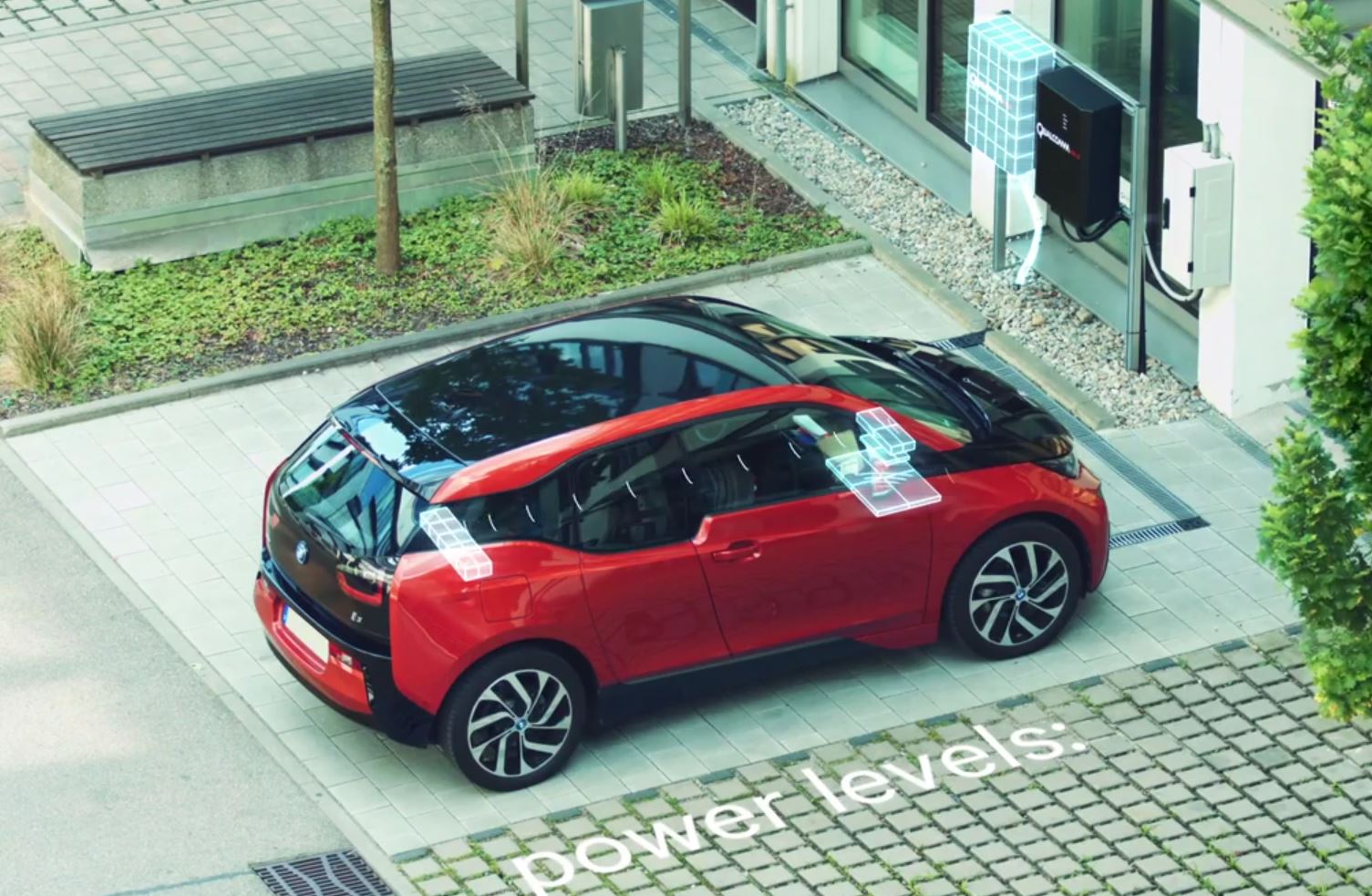
Mr. K goes out in his electric car. After driving for a while, a red light suddenly illuminates on the charging dashboard. He had forgotten to charge the car battery the night before. To charge the battery, the electric vehicle accesses location and map data to detect areas where wireless charging is possible. A signal has been received indicating that charging is available at a nearby cafe. Solar energy collected through the cafe's rooftop and exterior windows is transmitted to the wireless charging device installed in the vehicle. The charging status can be checked on Mr. K's smartphone while he drinks his coffee. He can also conveniently charge at former gas stations that have now been converted into charging stations. This is thanks to a wireless battery charging system that charges automatically simply by parking. Now, he can drive anywhere.
The era of electric vehicles, powered by batteries and electric motors using electricity as a power source, is coming.
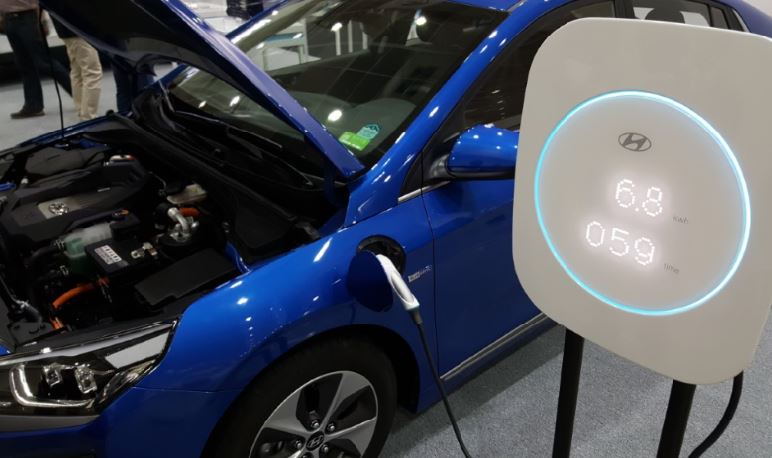
This is because the development of infrastructure technologies, such as wireless charging devices, is being prioritized alongside the development of vehicle technologies, including battery performance improvements and vehicle weight reduction. Current contact-based battery charging and stationary charging are set to be replaced by contactless charging and road charging systems.
Stricter global environmental regulations are driving the eco-friendly paradigm in the automotive market. To meet carbon dioxide emission and fuel efficiency regulations, existing automakers are expanding research and development, including improving the fuel efficiency of internal combustion engines and producing and selling eco-friendly vehicles.
While an average annual fuel efficiency improvement of 4–6% is required by 2020, it is impossible to meet regulations solely through improvements in the fuel efficiency of internal combustion engines. Consequently, automakers are increasing their production of HEVs (hybrid vehicles), PHEVs (plug-in hybrid vehicles), EVs (electric vehicles), and FCVs (hydrogen fuel cell vehicles). Recently, the leadership in eco-friendly vehicles has been concentrating on electric vehicles.
The three major countries of the United States, China, and Japan account for 80.1% of the global electric vehicle market share. The market is projected to reach 2.4 million units in 2020 (6 million units including hybrid cars), and based on this, the market size is expected to be 40 trillion won for batteries, 15 trillion won for powertrains, 8 trillion won for control systems, and 38 trillion won for vehicle bodies.
In the United States, the BEV (49.2%) and PHEV (50.8%) markets are evenly distributed, while in China, battery-based electric vehicles are dominant with BEVs (82.8%). In major European countries, electric vehicles in the form of BEVs are predominantly being adopted. A notable point is that in Sweden, PHEVs are prevalent, whereas in Norway, BEVs account for over 98%.
For electric vehicles, fuel cell technology, fluctuations in fuel prices, charging infrastructure policies, vehicle prices, and changes in battery technology are critical factors. Fuel cell technology and fuel prices are considered to be the most influential issues. Excluding batteries, the technological level of domestic electric vehicles—specifically motors, inverters, and converters—is weak. Materials technology is at only 30–40% of that of advanced nations, making the localization of core materials urgent to strengthen the competitiveness of the lithium-ion battery industry. Major corporations such as Hyundai Mobis, Hyundai Motor, and LG Chem possess key modules, while other parts suppliers play only partial roles.
Japan has the highest major market securing rate… followed by Germany and the U.S.
Leading countries were found to have a high rate of securing EV drive systems.
Electric vehicle technology can be categorized into EV drive systems, EV battery systems, EV electronic components, EV body and chassis platforms, and EV charging systems. First, a total of 1,876 patents have been filed with the U.S. Patent and Trademark Office, accounting for 35% of all patents; patents filed with the Japanese Patent Office account for 31% of the total; and patents filed with the Korean Patent Office account for 21% of the total. Looking at yearly trends, there appears to be a continuous upward trend in applications worldwide; in particular, as applications have surged since 2010, it appears that research and development has been actively underway in recent years.
It was found that the most frequently filed technologies at the U.S. Patent Office are in the field of EV bodies and chassis platforms, while at the Korean Patent Office, the majority of patents are filed in the order of EV electronic components, EV charging systems, and EV drive systems. When analyzing Korea's patent share relative to leading countries, Japanese applicants were leading all five technology fields, with the leading country's share in the EV drive system field being the highest at 62% and the leading country's share in the EV charging system field being the lowest at 29.7%.
This pattern was similar in the major market securing rate. Japanese applicants had the highest major market securing rate at 46.2%, followed by German applicants at 13.5% and U.S. applicants at 13.4%. Korean applicants ranked fourth among all countries with a major market securing rate of 11.2%. Leading countries in the EV drive system sector showed the highest major market securing rate at 64.9%, while leading countries in the EV charging system sector showed the lowest at 28.6%.
Regarding patent litigation, lawsuits occurred only in the fields of EV electronic components and EV charging systems. The patents involved in the lawsuits were filed in 2003 and 2014, with a particularly high concentration of litigation in 2012. The average number of patents held by NPEs in the electric vehicle sector was found to be approximately 3, and NPE activity is active in the fields of EV body and chassis platform and EV charging systems, which are higher than the overall average. On the other hand, the number of patents held by NPEs in the fields of EV drive systems, EV battery systems, and EV electronic components was relatively low.
Continuous patent filing activity by Toyota, Bosch, Denso, and others stands out.
The analysis of applicants revealed that Toyota Motor was included in the top 10 applicants across six periods (1995–2016), indicating continuous patent filing activity. Additionally, Hyundai Motor, Honda, and Nissan were included in the top 10 applicants across five periods, while Robert Bosch, Hitachi, and Denso also engaged in continuous patent filing activities. Major applicants in the fields of EV battery systems and EV charging systems, where R&D has recently expanded, included Toyota Motor, LG Chem, Qualcomm, Hyundai Motor, and Ford. Notably, the entry of Qualcomm, Ford, and Tesla as new major applicants suggests that R&D in related technologies has expanded in recent years.
For example, Qualcomm filed a patent in the field of charging systems for a wireless power transmission system (2013) including an inductive circuit for receiving wireless power from a magnetic field associated with a wireless power transmitter, and a wireless charging system for charging an electric vehicle while driving (2014). Tesla filed a patent in 2015 for a battery exchange system for an electric vehicle, a battery pack system equipped with a hollow portion for absorbing and dispersing lateral impact energy, and a battery cooling system with an air inlet and a cooling pipe installed on the opposite side of the battery.
As such, electric vehicles are expected to expand in the future through the utilization of solar cell technology (commercialized by Toyota), battery replacement (Tesla pilot program), wireless battery charging (technology under development), and in-driving battery charging (developed by Qualcomm). Consequently, the day is not far off when eco-friendly smart cities will be realized through the ultimate convergence with smart grid technology. <Reference: Korea Intellectual Property Strategy Institute (KISTA) Analysis Report on Promising Future Products and Services>
Comments 1
1 Comments:
Related news
[2016 KES Keynote Speech] Woojong Lee, Head of LG Electronics' VC Business Division, "LG Electronics' Vision as a Key Electric Vehicle Component Partner"
Lee Woo-jong, Head of VC Business Division at LG Electronics, "LG Electronics' Vision as a Core Components Partner for Electric Vehicles"
2016.11.14by 명세환 기자
[2016 KES Keynote Speech] Martin Murray, GM Executive in Charge of Electric Vehicle Development, "Expanding Chevrolet Electric Vehicle Portfolio"
Martin Murray, GM Executive in Charge of Electric Vehicle Development, "Expanding Chevrolet Electric Vehicle Portfolio"
2016.11.14by 명세환 기자
Is China's 'racing' electric vehicle market thanks to severe air pollution?
Global electric vehicle (EV) sales are projected to grow by 21.9% through 2020. Breaking down by EV type, HEV (hybrid) is expected to account for 3.33 million units, PHEV (plug-in hybrid) 1.43 million units, BEV (battery electric vehicle) 1.74 million units, and others, totaling approximately 6.54 million units in sales. Through 2020, HEV sales are expected to maintain mainstream status in the electric vehicle market; however, market share is projected to decline from 95% in 2011 to 51% in 2020. In contrast, PHEV and BEV are anticipated to grow at compound annual growth rates of 66.8% and 51.8% respectively, warranting close attention to future shifts in the electric vehicle market.
2016.11.28by 신윤오 기자
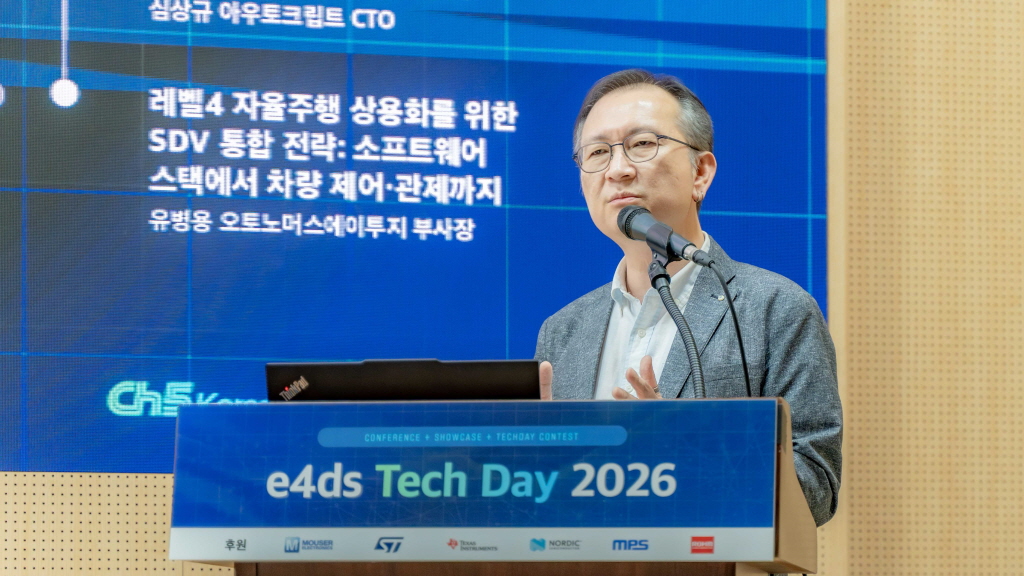
[e4ds Tech Day 2026 ⑨] Sim Sang-gyu, Autocrypt CTO: "In the Physical AI Era, Automotive Security Must Extend Beyond the Vehicle"
At e4ds Tech Day 2026, Sim Sang-gyu, CTO of Autocrypt, explained automotive cybersecurity strategies in the era of Physical AI and SDV (Software-Defined Vehicle). Automobiles are evolving as part of an ecosystem connected to AI, cloud, chargers, IoT, and robots, and he emphasized that the scope of security must expand beyond the vehicle interior to the entire connected environment. In particular, AI model tampering, adversarial attacks, OTA updates, and EV charger hacking were identified as major threats. He explained that response measures require zero trust, AI model integrity protection, intrusion detection, Security by Design and Default, and full lifecycle security management, and that proactive security system establishment beyond regulatory compliance is critical for securing future mobility competitiveness.
2026.10.12by 배종인 기자

Practical HIL Construction Strategy for Automotive and Off-Highway Controller Validation
As vehicle E/E architecture transitions to zonal structures and shifts to software-defined vehicles (SDV), the number of controllers (ECUs) requiring validation and software complexity are surging dramatically. Meanwhile, real vehicle testing cannot provide repeated verification under identical conditions and entails lead time and safety concerns. This white paper explains the principles of HIL (Hardware-in-the-Loop) validation and the structure of the NI platform composed of PXI, SLSC, and VeriStand, and through two actual implementation cases—Camera Record & Replay HIL for In-Cabin Monitoring Controller (ICMU) and Forklift Controller (VCU) HILS—describes how controller-level regression testing becomes possible. Additionally, it explicitly states application boundaries and limitations, such as lack of A2B support.
2026.10.12by 편집부












에너지 관리 시스템의 고효율화 수요도 많이 상승할듯하네요.