


Why the Semiconductor Market, Benefiting from DRAM and NAND Memory, Is a Worry in 2019
 Published2017.04.17 06:45
Factors of market instability also exist due to parts supply shortages and rising raw material prices.
Gartner Inc. projected that global semiconductor sales in 2017 would reach $386 billion, an increase of 12.3% from the previous year.
In the second half of 2016, the market showed strong performance with growth momentum centered on general-purpose memory, leading to upward revisions in the outlook for 2017 and 2018. However, due to the volatility of the memory market and the increase in production volume of DRAM and NAND flash memory, these forecasts are expected to be revised in 2019.
“The outlook for the overall semiconductor market will be revised upward due to price increases in DRAM and NAND flash memory,” said Jon Erensen, a principal research analyst at Gartner. “At the same time, system suppliers for smartphones, PCs, and servers will face pressure on profits,” he said, adding that “the semiconductor market will become unstable in 2017 and 2018 due to component supply shortages, rising raw material prices, and the resulting increase in average selling prices (ASP).”
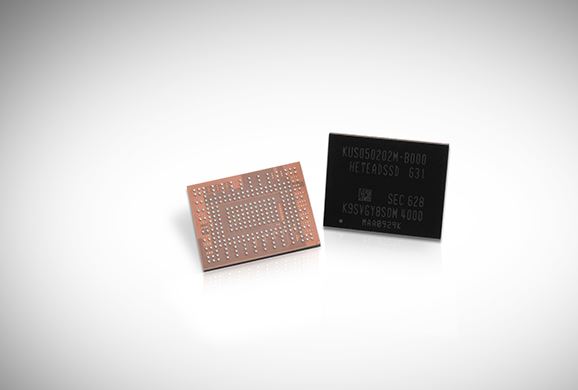
Samsung Electronics unveiled a next-generation V-NAND solution at the 'Flash Memory Summit 2016' last August and presented new possibilities for flash memory.
PC DRAM prices have nearly doubled since mid-2016. 4GB modules, which averaged only $12.50, have now surged to just under $25. The average selling price of NAND flash was found to have increased consecutively in the second half of 2016 and the first quarter of 2017. Although the prices of both DRAM and NAND are expected to reach their peak in the second quarter of 2017, it is predicted that prices will be difficult to stabilize until the end of the year as companies engage in fierce competition over supply due to the increase in content for major applications such as smartphones.
Researcher John Erensen said, “The biggest concern for memory suppliers looking to increase profits in 2017 will be expanding production capacity,” adding, “In addition, as China struggles to enter the memory market, we expect the semiconductor market to enter a downturn driven by supply incentives in 2019.”
The market outlook for 2017 is expected to be even brighter as production forecasts for premium smartphones, graphics cards, video game consoles, and automotive applications are being revised upward. Additionally, semiconductor revenue estimates have also increased due to electronic devices that rely heavily on DRAM and NAND flash. These include PCs, ultra-mobile devices, servers, and Solid State Drives (SSDs).
Researcher John Erensen predicted, “Since semiconductors for the Internet of Things (IoT) and wearable devices are still in the early stages of development, the outlook for new opportunities remains unstable. Furthermore, because their share is insignificant, they will not have a major impact on the overall semiconductor sales growth in 2017.”
Comments
Related news
Last year's semiconductor equipment market, Taiwan maintains top sales for fifth consecutive year
SEMI, the international semiconductor equipment and materials association, disclosed this in its World Wide Semiconductor Equipment Market Statistics (WWSEMS) report and announced that total equipment orders in 2016 increased 24% compared to 2015.
2017.03.17by 신윤오 기자
Taiwan has become a 'big player' in the semiconductor material consumption market, while Korea ranks second.
The Semiconductor Equipment and Materials International (SEMI) announced that the global semiconductor materials market increased by 2.4% compared to 2015. Previously, SEMI disclosed that global semiconductor sales increased by 1.1% in 2016.
2017.04.04by 신윤오 기자
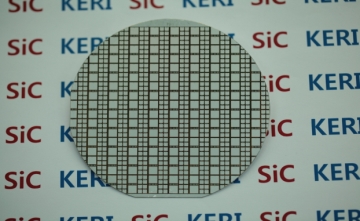
Can domestic power semiconductors with 1% global market share be increased to 10%?
The Ministry of Trade, Industry and Energy will conduct commercialization projects from 2017 to 2023 over a 7-year period with an investment of approximately 83.6 billion won, targeting power semiconductor research and development (56.4 billion won) and research platform construction (27.2 billion won). Power semiconductors, which are key semiconductors that improve energy efficiency by processing or regulating electrical power, are becoming increasingly important in line with global trends emphasizing eco-friendliness and energy efficiency. High-efficiency power semiconductors that enable efficient utilization of electrical power and minimize power loss are gaining attention, as the adoption of power semiconductors in hybrid electric vehicles is increasing and the demand for low-power consumption in electronic devices such as Internet of Things and wearables is also rising.
2017.04.04by 김지혜 기자

Intel Unveils Next-Generation 'Core Ultra Series 3' and vPro Platform for Enterprise PCs
Intel has officially unveiled the "Intel Core Ultra Series 3" for next-generation enterprise PCs and the latest vPro platform, addressing a wide range of demands from enterprise notebooks to high-performance workstations.
2026.03.26by 배종인 기자

ROHM Launches ESD Protection Diode Compatible with High-Speed Interfaces of 10Gbps or Higher
Semiconductor specialist ROHM has developed the 'RESDxVx series' of ESD (electrostatic discharge) protection diodes capable of responding to next-generation high-speed data communication environments exceeding 10Gbps, simultaneously enhancing both signal quality maintenance required in high-speed interfaces and IC protection performance.
2026.03.26by 배종인 기자











