



[Feature - Autonomous Vehicles ②] Radar IC Market Seeing More 'Players'; Will Competition Heat Up Among Semiconductor Companies?
 Published2017.04.17 17:30
24GHz is for low-cost use, while 77 and 79GHz ranges are also increasing with the expansion of autonomous vehicles.
If there is a technology that best embodies the phrase "dreams have become reality," it is undoubtedly the autonomous vehicle. When summoned, it comes running on its own and drives to its destination autonomously. Autonomous vehicles recognize and avoid obstacles while driving, and provide their owners with various conveniences and information. While the commercialization of fully autonomous vehicles may take some time, so-called "semi-autonomous" technology is becoming increasingly sophisticated. It has now become so deeply integrated into our daily lives that advertisements for cars equipped with autonomous driving features are a common sight. This publication will run an 11-part series on autonomous vehicles. Starting with industry trends, the series will cover semiconductor components such as radar, lidar, and camera sensors, as well as telecommunications, precision maps, software platforms, artificial intelligence, security, and K-City services. We ask for your continued support. <Editor's Note>
The market for radar ICs, one of the core sensors for autonomous driving, is heating up.
Recently, as the issue of autonomous vehicle development has grown, related semiconductor companies are reportedly moving swiftly to accelerate radar chip development, engage in mergers and acquisitions, and form partnerships. The market for radar is expanding as there is a trend toward mandatory installation due to high casualties, and since its installation directly impacts vehicle safety ratings. The automotive radar market is projected to grow at an annual rate of 23% and reach a market size of 42 million units and $18 billion in 2020. In the case of autonomous vehicles, at least six radars per vehicle are expected to be installed and used for object detection, free space recognition, and vehicle positioning. When these systems are combined, they can provide a 360-degree all-around view function, enabling new features such as intersection assistance and parking assistance.
The allocated frequency bands include 24GHz (200MHz), 77GHz (1GHz), and 79GHz (4GHz); among these, the 24GHz band is used for low-cost radar, while the 79GHz market is expected to grow with the proliferation of autonomous vehicles. RF semiconductors for radar require ultra-high frequency analog circuit design technology, and long-range RF semiconductors, in particular, have been commercialized based on compound semiconductors (SiGe). For this reason, the only companies that have commercialized 77GHz RF ICs are Infineon and NXP Semiconductors (which acquired Freescale and was subsequently acquired by Qualcomm). Latecomers are focusing their efforts on developing CMOS-based RF semiconductors for radar.
The 'Infineon Radar Chip' used in one out of every 15 new cars
Infineon Technologies (Korea CEO Seung-soo Lee) provides SiGe and CMOS-based 77GHz and 24GHz products and system expertise. Based on this, the company announced that its chips were adopted in more than half of the automotive 77GHz radar systems produced last year. Statistically speaking, this means that one out of every 15 new cars is equipped with a driver assistance system featuring Infineon's 77GHz radar chip. Infineon has shipped 20 million radar chips over the past few years and plans to ship 30 million chips for driver assistance systems this year alone.
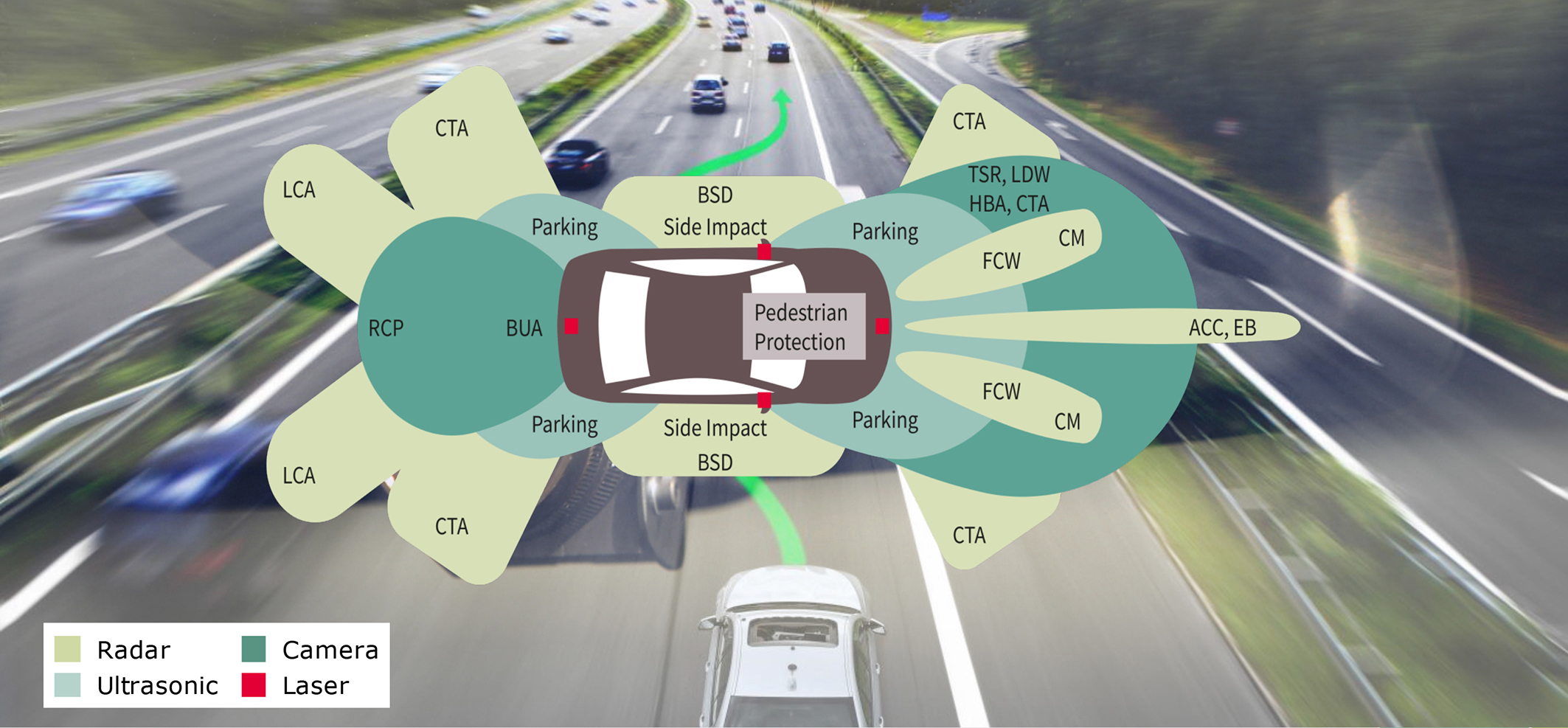
An official from Infineon Technologies stated, “Four of the world’s top five radar system manufacturers are already using Infineon’s 77GHz radar chips. As a result, Infineon’s radar chip sales have been doubling every year over the past five years,” adding, “Using Infineon’s sensor chips can create a kind of safety shield around the vehicle, which is an essential requirement for autonomous driving.”
Kim Yeon-ju, Manager (Wireless Technology Marketing) at Infineon Technologies Korea, stated at an e4ds webinar on the 21st of last month, “Infineon’s 24GHz automotive products account for more than 40% of the global market share as of 2016.” "In addition, 60GHz (7GHz band) products are in preparation, and samples are scheduled to be released at the end of this year," they stated.
NXP Implements Stamp-Sized Radar Sensor
NXP Semiconductors once again demonstrated its radar chip technology by winning the Best Innovation Award at the 2017 Automotive Innovation Awards held in The Hague, Netherlands, last February.
It was stated that the NXP radar chip (TEF810X), built on RFCMOS for ultra-compact system design, was installed in Google's autonomous vehicles and underwent field testing, and was also installed in the automotive CompactRadar solution of Hella, a radar specialist.

This small radar sensor from NXP Semiconductors is used in active safety functions such as adaptive cruise control, blind spot monitoring, and automatic emergency braking (AEB). To achieve high-resolution performance, such as when the radar sensor detects pedestrians, signals at very high frequencies (76-81 GHz) are required. To implement this function, 3-4 different chips are required and the size increases, but NXP solved this problem with RFCMOS (40nm).
The company stated that this allowed them to reduce the radar sensor size by 50%, from the size of a standard card to that of a postage stamp (7.5 x 7.5 mm), and that power consumption is only 40% of that of existing radar ICs. In addition, the sensor hardware has been greatly simplified, making it possible to integrate various sensors.
NXP Semiconductors stated, “Autonomous vehicles need to secure a reliable, high-resolution 360-degree view of their surroundings, but this has been a significantly difficult task due to the bulkiness of existing radar hardware. The automotive industry can improve performance and functionality by replacing existing ultrasonic-based parking distance control systems with 'invisible' radar sensors.”
STMicroelectronics Supplies New 77 GHz Radar IC to Key Customers
Analog Devices Collaborates with Renesas on 77/79GHz RADAR Technology
STMicroelectronics (hereinafter ST) recently announced that Beijing Autoroad Technology, China's largest supplier of millimeter wave (MMW) radar, has unveiled a module containing its radar chip.
The automotive radar solution exhibited at the International Automotive Technology Expo held in Chongqing, China is a second-generation solution based on ST's MMW products. ST stated that its latest 77GHz MMW broadband radar IC is a highly integrated, compact solution based on a multi-channel architecture that provides excellent object recognition and resolution for Forward-Collision Warning, Adaptive Cruise Control, Autonomous Emergency Braking, and other safety functions, and can significantly improve driving experience and reliability.
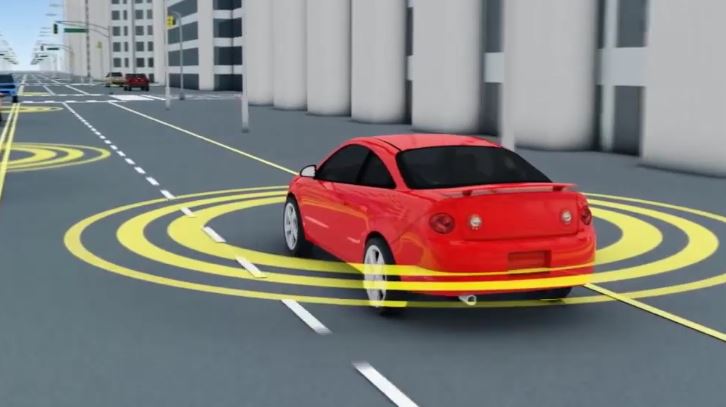
In addition, Autoroad has achieved a breakthrough in 79GHz SAR imaging. SAR technology, implemented using ST's 79GHz RF front-end IC, can generate high-resolution 2D and 3D images by utilizing the relative movement between the installed radar and the target. This enables the detection, recognition, location, and size estimation of vehicles, pedestrians, and other objects around the vehicle under all weather and lighting conditions.
Prior to this, ST announced early last year that it was supplying its latest long-range (77 GHz) radar chips to key customers. As of March 2016, ST had supplied over 35 million 24 GHz radar transceiver ICs and developed a new highly integrated 77 GHz transceiver based on this foundation. This device integrates three 77GHz transmitters and four receivers on a single chip.
Analog Devices (ADI) is collaborating with Renesas Electronics on system-level 77/79-GHz RADAR sensor test units to enhance ADAS and enable autonomous vehicles.
It was announced that the new test unit incorporates the cutting-edge technologies of both companies, including Renesas Autonomy Platform's RH850/V1R-M microcontroller (MCU) and ADI's Drive360 28nm CMOS RF-to-bits technology. ADI emphasized, "The two technologies, operating seamlessly at the system level, enable safer driving by allowing early detection of small, fast-moving objects from longer distances. Additionally, the integration of radar systems has become significantly more convenient."
Collaboration among sensor companies expected to increase to implement complex ADAS technologies
The Analog Devices Drive360 28nm CMOS RADAR technology platform is built upon ADI's portfolio of ADAS, MEMS, and radar technologies. Supporting superior target detection and classification capabilities, Drive360 is a 28nm CMOS-based automotive RADAR technology that enables the earlier detection of smaller, faster-moving objects. High power output expands the range for recognizing smaller objects, while phase noise is minimized, allowing for the clear detection of small objects even in the presence of large ones.
As IHS Research forecasts that radar-based ADAS will expand to 50 million units by 2021, it appears that mergers and acquisitions by semiconductor companies to secure related technologies will increase. This is because leading companies will further advance radar chip technology by integrating it, while latecomers will choose to acquire related technology to catch up. In particular, as the industry anticipates that alliances and collaborations among radar, LiDAR, and camera sensor manufacturers will be inevitable to implement complex ADAS technologies, market movements are drawing attention.
■ Interview
Choi Jae-hong, Senior Vice President / Head of Technology, Automotive Business Division
Infineon Technologies Korea
“The trend in radar MMICs is integration and low price; Infineon leads the market”
Direction for simply designing radar using two chips, MCU and MMIC
Infineon SiGe Bi-CMOS is based on stable mass production yields

Q. I understand that Infineon holds a 40% global market share in 24GHz automotive products and possesses superior technology in the 77GHz sector. Could you briefly introduce the background of this technology?
A. Infineon has been leading the market since starting production of 77GHz SiGe radar MMICs in 2009. Through the development of technology capable of operating up to 400GHz, the company designed and developed fab processes to maintain product performance in automotive environments, ensuring not only robust reliability but also robust reliability. Furthermore, by being the first to apply eWLB (Embedded Wafer Level Ball) packaging in addition to AEC Q100 compliance, the company has facilitated mass production processes for its customers.
Through the Infineon Radar Companion Chip, which includes PLL and ramp sequencer functions, the performance of the radar module has been enhanced via precise signal control. Through continuous industry-academia collaboration (JKU, Johannes Kepler University), we are conducting not only technical research but also product development to respond to market demands and evolving technologies.
Q. The development of CMOS-based radar semiconductors has also advanced significantly recently. I understand that Infineon also has products in this area; could you explain the differentiation and superiority between compound semiconductor-based radar ICs and CMOS-based products?
A. Although Infineon is also developing CMOS-based products, they are not superior to Bi-CMOS in terms of transmit power or various performance aspects, so they are being developed for the purpose of integrated short-range radar applications. Infineon’s SiGe Bi-CMOS technology enables applications in long-range (LRR) radar, short-range (SRR), and medium-range (MRR) radars based on stable mass production yields and excellent performance. Radar chips implemented with CMOS require a small process, so the mask cost is very high, but this is not the case for Bi-CMOS.
Q. Please explain Infineon's radar IC roadmap and future development direction.
A. The future trends for radar MMICs are integration and low cost. From 77GHz to 81GHz, a single MMIC implements MIMO and fast chirp algorithms. Through a Product-to-System (P2S) policy, radar modules can be simply designed using two main chips: an MCU and a radar MMIC. We are developing products that enable scalable designs by cascading two MMICs, not only for low-resolution radars but also for radars requiring high resolution.
Comments
Related news

Where Are We in Core Sensor Element Development? ② “Development of 79GHz Automotive Radar Sensor to Preempt the Autonomous Vehicle Market”
Following last week's updates on smart motion sensors, metabolic rate measurement sensors, harmful gas sensors, and optical sensors, we introduce the following technologies: ▲automotive shunt resistance current sensors ▲lidar sensors for autonomous vehicles ▲automotive 79GHz radar sensor technology.
2015.11.23by 신윤오 기자
[Planning-Autonomous Vehicles①] Domestic Technology 'Cannot Stand Alone' - Strategic Collaboration Ecosystem Must Be Established
The most striking aspect of the 2017 Seoul Motor Show that concluded last week was the first-time participation of NAVER, a leading domestic IT company. While IT companies developing automobiles is no longer an unfamiliar sight, the appearance of a leading domestic IT company at Korea's representative auto show holds significant symbolic meaning for the automotive sector. NAVER became the first domestic IT company to receive temporary road-driving approval from the Ministry of Land, Infrastructure and Transport for autonomous vehicles. Presenting a Level 3 autonomous vehicle, NAVER is developing autonomous vehicles as part of environmental implementation with 'living environment intelligence' as its technological direction. Prior to this, Hyundai Motor presented a Level 4 vehicle where the system can safely operate without driver intervention. Hyundai achieved autonomous driving by adding only minimal sensors such as radar and LiDAR to sensors already applied in mass-production vehicles.
2017.04.10by 김지혜 기자

"We will realize fully autonomous vehicles with a design platform that comprehensively manages sensor data"
Mentor (Siemens Business), which has demonstrated outstanding software technological capabilities in the automotive field through Linux, AUTOSAR and other solutions, has unveiled a hardware platform with self-developed architecture, expressing confidence in the autonomous vehicle market. By utilizing innovative technologies applied to 'DRS360', an autonomous vehicle design platform, raw data can be captured and integrated in real time from a wide range of sensing methods including radar, LIDAR, vision and other sensors. The DRS360 platform significantly reduces the latency required for SAE Level 5 autonomous vehicle design verification and dramatically improves sensing accuracy and overall system efficiency.
2017.04.13by 신윤오 기자

[e4ds Tech Day 2026 ⑨] Sim Sang-gyu, Autocrypt CTO: "In the Physical AI Era, Automotive Security Must Extend Beyond the Vehicle"
At e4ds Tech Day 2026, Sim Sang-gyu, CTO of Autocrypt, explained automotive cybersecurity strategies in the era of Physical AI and SDV (Software-Defined Vehicle). Automobiles are evolving as part of an ecosystem connected to AI, cloud, chargers, IoT, and robots, and he emphasized that the scope of security must expand beyond the vehicle interior to the entire connected environment. In particular, AI model tampering, adversarial attacks, OTA updates, and EV charger hacking were identified as major threats. He explained that response measures require zero trust, AI model integrity protection, intrusion detection, Security by Design and Default, and full lifecycle security management, and that proactive security system establishment beyond regulatory compliance is critical for securing future mobility competitiveness.
2026.10.12by 배종인 기자

Practical HIL Construction Strategy for Automotive and Off-Highway Controller Validation
As vehicle E/E architecture transitions to zonal structures and shifts to software-defined vehicles (SDV), the number of controllers (ECUs) requiring validation and software complexity are surging dramatically. Meanwhile, real vehicle testing cannot provide repeated verification under identical conditions and entails lead time and safety concerns. This white paper explains the principles of HIL (Hardware-in-the-Loop) validation and the structure of the NI platform composed of PXI, SLSC, and VeriStand, and through two actual implementation cases—Camera Record & Replay HIL for In-Cabin Monitoring Controller (ICMU) and Forklift Controller (VCU) HILS—describes how controller-level regression testing becomes possible. Additionally, it explicitly states application boundaries and limitations, such as lack of A2B support.
2026.10.12by 편집부











