



To shorten the charging time of electric vehicle batteries
 Published2017.06.02 10:08
MCU-based reference design for shortened charging time
The biggest concern with electric vehicles is whether they can drive long distances without running out of fuel. Electricity, of course, is the fuel for electric vehicles. The fuel issue is related to battery capacity and the availability of charging stations.
Electric vehicles, while somewhat different in form, have been around since the 1800s and faced fundamentally similar challenges to those we face today. In fact, in the early 1900s, one-quarter of all vehicles produced in the United States were electric. Demand declined because gasoline was easier to distribute and supply than electricity. It took another 60 years for the need for electric vehicles to emerge, despite environmental concerns.

Electric vehicles still face challenges, including increased battery capacity, high-efficiency motors, and public awareness of environmental pollution. Easily accessible public charging stations and fast charging remain significant challenges. To meet market demand, charging stations, including DC fast chargers, must be as widespread as regular gas stations. Furthermore, all electric vehicles must be compatible with these charging stations.
TI has joined the CharIM eV Consortium, which works to establish standards for charging battery-powered electric vehicles. This will create a common platform across the industry, enabling consumers to verify that charging stations are compatible with their vehicles.
Another important step is to reduce charging times for batteries that are getting bigger as Level 3 chargers become more widespread. TI offers several reference designs based on C2000™ microcontrollers to help charger manufacturers with their development.
TI has leveraged decades of expertise in high-voltage rectifiers used in network servers to develop reference designs for the electric vehicle charger market. The first is a Vienna Rectifier-Based Three-Phase PFC Reference Design Using C2000 MCUs. This reference design is based on TI's latest Delfino™ TMS320F28377D dual-core C2000 MCU, achieves 98% peak efficiency, and is supported by TI's powerSUITE software library. This reference design provides an AC/DC solution for Level III chargers.
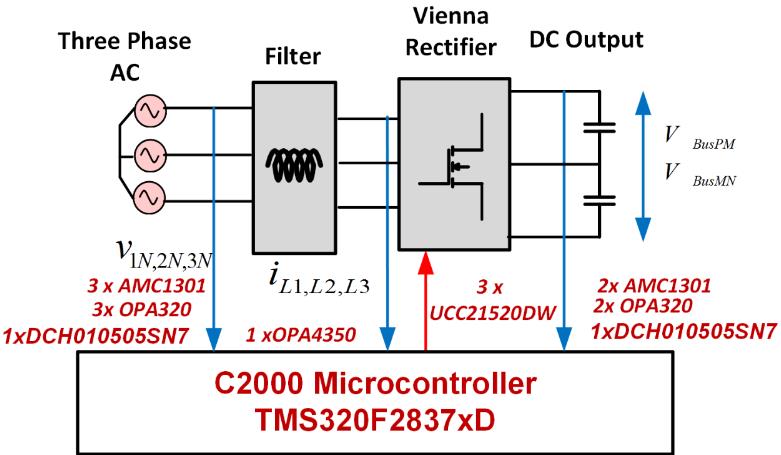
The C2000 MCU-based 2-phase interleaved LLC resonant converter reference design is a DC/DC solution that converts DC output from a Vienna rectifier to a DC bus voltage suitable for electric vehicle batteries. This design also uses the TMS320F28377D MCU and supports features such as current sharing, synchronous rectification, and phase shedding.
Increasing the footprint of electric vehicle charging equipment (EVSE) is crucial for electric vehicles to become a mainstream mode of transportation. This requires common compatibility and rapid charging solutions. TI solutions enable designers to address these challenges.
Comments
Related news
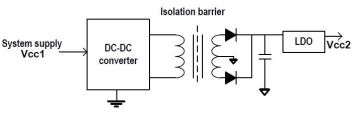
Methods to lower industrial system design temperatures
Excessively high temperatures are not only harmful to people. Machines also easily suffer damage from temperatures that are too high. As demand for industrial applications such as factory automation and grid infrastructure equipment increases, there is a growing need to add more functionality to systems. Accordingly, the burden of achieving optimal performance while not raising the temperature of power management systems that supply power to various circuits is increasing. Data isolators can easily provide signal isolation, but data isolation alone is not sufficient. Power must also be isolated together. In some cases, two isolated power supplies are provided to directly supply power to the primary and secondary sides of the isolator, but some applications do not have a secondary power source. In these cases, a secondary power source that is isolated from the primary power must be generated.
2017.05.11by 김지혜 기자
Power Scaling, Sequencing, and Analog Implementation
Power sequencing is an essential part of every design. It becomes even more critical in complex systems that utilize multiple power rails. Modern high-performance processing devices such as FPGAs, ASICs, PLDs, DSPs, ADCs, and microcontrollers require multiple voltage rails to supply power to internal circuits such as cores, memory, and I/O. Specialized voltage rail power up/down sequencing is necessary to operate reliably and achieve higher efficiency. Voltage and power scaling technologies are highly effective for small, high-density integrated circuits, enabling the implementation of diverse power management systems that reduce power loss and optimize device temperature while maintaining high system performance. AVSO (Adaptive voltage-scaling optimization) is one of the voltage scaling implementation techniques. AVSO implementation can be accomplished through various methods, including digital or analog approaches. The most commonly used method is employing a PMBus or I2C interface, which allows initial power supply voltage to be programmed to operate ASICs, FPGAs, or microprocessors with appropriate accuracy. Once the processor completes the boot-up sequence, it communicates with the voltage regulator through PMBus or I2C command sets. This communication instructs the regulator to adjust the output voltage level in accordance with the host's performance requirements. The most well-known standard commands are VOUT_COMMAND and VOUT_MARGIN. To facilitate smooth data exchange between them, both the host and voltage regulator must implement the same digital communication protocol.
2017.05.19by 김지혜 기자
Try using MCU and RF solutions on a single chip.
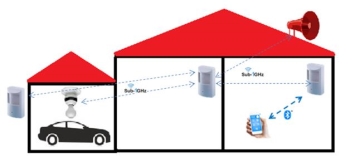
A motion detector is a device that detects and alerts when a person is present in a designated area. It is used in residential homes, office buildings, and other facilities. The detector can transmit notifications via sound, light, or wired/wireless signals to various devices such as control panels, alarm units, and cloud systems. Wireless motion detectors are easy to install and expand because they do not require wiring through walls. Common detection techniques include PIR (passive infrared), ultrasonic emitters, and microwave emitters. Wireless motion detectors installed indoors or outdoors are primarily used in intrusion detection systems. They employ Sub-1GHz wireless technology because of superior radio frequency (RF) performance, low power consumption, and cost-effectiveness. TI's system-on-chip (SoC) Sub-1GHz solution (CC13x0 wireless MCU) integrates a low-power, feature-rich MCU and RF solution on a single chip. In a sensor system (Figure 1), this low-power wireless MCU can operate as the main MCU of the system, interfacing directly with sensors or operating through amplifiers, filters, and comparators. Additionally, the CC1350 and CC1310 wireless MCUs integrate I2C, UART, and SPI for peripheral control, and include an embedded 12-bit analog-to-digital converter (ADC) for analog signal sampling.
2017.05.26by 김지혜 기자
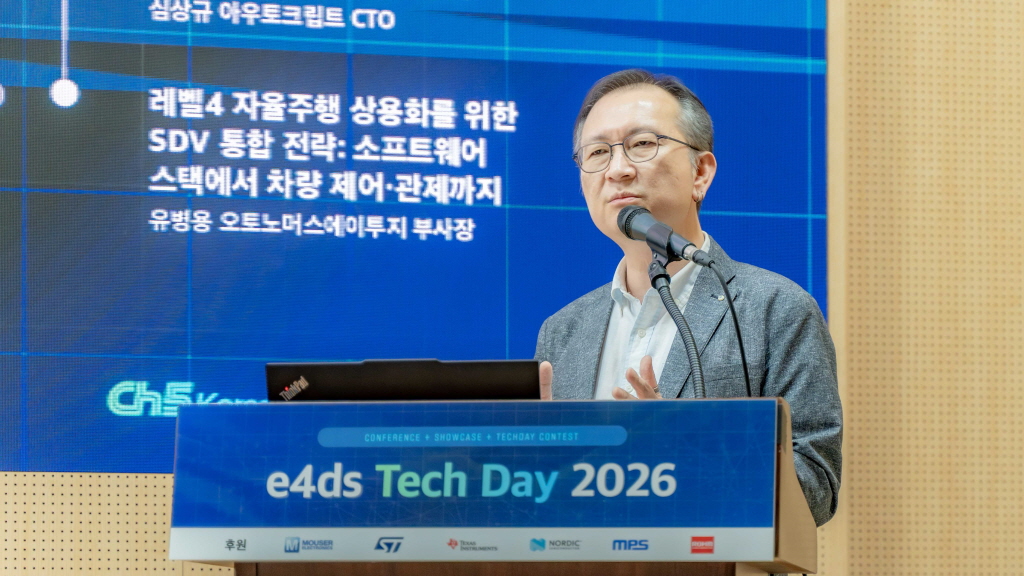
[e4ds Tech Day 2026 ⑨] Sim Sang-gyu, Autocrypt CTO: "In the Physical AI Era, Automotive Security Must Extend Beyond the Vehicle"
At e4ds Tech Day 2026, Sim Sang-gyu, CTO of Autocrypt, explained automotive cybersecurity strategies in the era of Physical AI and SDV (Software-Defined Vehicle). Automobiles are evolving as part of an ecosystem connected to AI, cloud, chargers, IoT, and robots, and he emphasized that the scope of security must expand beyond the vehicle interior to the entire connected environment. In particular, AI model tampering, adversarial attacks, OTA updates, and EV charger hacking were identified as major threats. He explained that response measures require zero trust, AI model integrity protection, intrusion detection, Security by Design and Default, and full lifecycle security management, and that proactive security system establishment beyond regulatory compliance is critical for securing future mobility competitiveness.
2026.10.12by 배종인 기자

Practical HIL Construction Strategy for Automotive and Off-Highway Controller Validation
As vehicle E/E architecture transitions to zonal structures and shifts to software-defined vehicles (SDV), the number of controllers (ECUs) requiring validation and software complexity are surging dramatically. Meanwhile, real vehicle testing cannot provide repeated verification under identical conditions and entails lead time and safety concerns. This white paper explains the principles of HIL (Hardware-in-the-Loop) validation and the structure of the NI platform composed of PXI, SLSC, and VeriStand, and through two actual implementation cases—Camera Record & Replay HIL for In-Cabin Monitoring Controller (ICMU) and Forklift Controller (VCU) HILS—describes how controller-level regression testing becomes possible. Additionally, it explicitly states application boundaries and limitations, such as lack of A2B support.
2026.10.12by 편집부











