


Would you get an eye exam and brain surgery from an AI doctor?
 Published2017.07.05 14:12
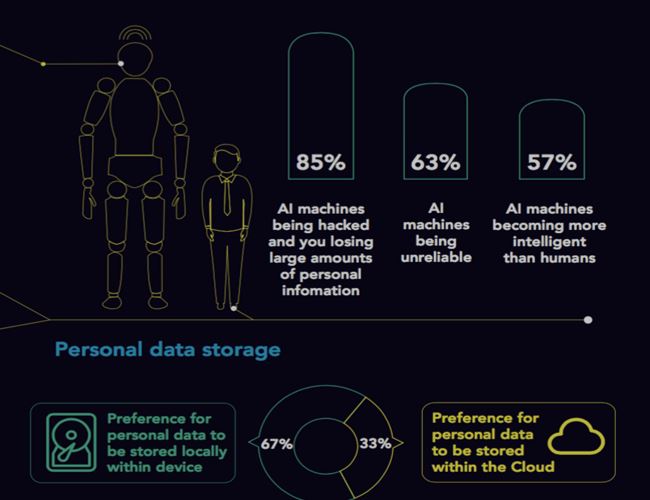
30% of respondents concerned about job losses… 55% trust autonomous vehicles if safety is proven
When asked about the biggest concern as AI gradually increases its role in human life in the future, 30% of respondents cited 'job losses and the emergence of new job categories.'
According to a survey of approximately 4,000 consumers commissioned by ARM to an independent global research firm, only a minority of respondents believed that Artificial Intelligence (AI) would cause disruption by intervening in human lives and replacing jobs. However, most respondents presented a positive outlook, believing that rather than replacing the workforce, AI would increasingly enhance capabilities and take over monotonous and dangerous tasks.
Joyce Kim, Vice President of Global Marketing, Brand and Communications at ARM, said, “It is encouraging that this survey highlighted positive views and opportunities regarding AI, but this is just the tip of the iceberg. While AI will have a significant impact on jobs, it will realize very positive and manageable innovations in terms of improving quality of life and providing opportunities.” "For example, if we can expand investment in STEM (Science, Technology, Engineering, and Mathematics) and support AI technology education for the next generation of workers, we will not fall behind in the robot economy," he said.
This survey was conducted jointly by Northstar Research Partners and ARM, targeting approximately 4,000 respondents with AI-related knowledge in countries including the United States, the United Kingdom, Sweden, Germany, China, Taiwan, Japan, and Korea.
70% express willingness to drive self-driving cars within the next 10 years
Respondents predicted that workers in the manufacturing and banking industries would be most significantly impacted by new AI technologies, while fields such as cooking, firefighting, and agriculture would continue to require human management. It was found that the majority of respondents shared this view regarding the outlook for AI robots. Respondents in Asia showed the most positive response to AI, followed by the United States and Europe.
Overall, approximately 61% of respondents answered that the expansion of AI and automation would lead to "a better society," indicating a very positive perception of AI. Particularly as AI is expected to play a significant role in the medical and scientific fields, respondents indicated a readiness to trust machines to diagnose diseases, drive vehicles, or act as personal assistants.
Comments 1
1 Comments:
Related news
ARM, IP Online Portal Program Expansion "Cortex-M0, M3 Licenses Free"
ARM has added several improvements to the DesignStart program to provide a foundation for easy access to embedded processor technology for developing IoT, intelligent, and connected solutions. Through this, it provides the fastest method to evaluate and design custom SoCs and bring them to market. The improvements provided by the DesignStart program announced this time are as follows: ▲Addition of access to Cortex-M3 ▲Maintenance of existing access to Cortex-M0 to enable application to a wide range of smart embedded applications ▲Provision of a success-based royalty model with low risk by eliminating upfront licensing and evaluation costs ▲Enabling rapid IP access to commence CPU commercialization development within days. More than 20 billion semiconductor chips are equipped with Cortex-M0 and Cortex-M3 processors, with approximately half of them shipped within just a few years. These processors continue to gain popularity due to their diverse features, ultra-compact size, and excellent power efficiency, and can even implement battery-free energy harvesting applications. For example, the Cortex-M0 processor boasts an ultra-compact size that can be mounted on a cross-section of human hair. Innovative cases implemented using the processor can be found at the ARM Innovation Hub.
2017.06.20by 김자영 기자

ARM Computer Vision Calculates Calories 'Right' Even with Just Volume Detected
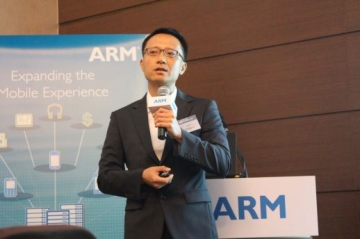
ARM, a semiconductor design intellectual property (IP) company, held its annual 'ARM Tech Forum 2017' on the 28th (Wednesday) at El Tower in Yangjaedong, Seoul. At this ARM Tech Forum event, various solutions were introduced, centered on the latest CPU and GPU products supporting the newly announced DynamIQ technology. In the presentations, ARM's Chris Turner introduced premium mobile experiences through the ARM Cortex-A73, and Anand Patel presented on the topic of 'ARM GPU Technology'.
2017.06.28by 신윤오 기자
ARM Announces New DesignStart Program Adds Cortex-M3
ARM has announced a new DesignStart program with the addition of Cortex-M3. With this program, DesignStart Eval provides immediate free access for evaluation, design, and prototyping of custom SoCs based on Cortex-M0 or Cortex-M3 processors. DesignStart Pro enables the design of commercial SoCs with only a straightforward success-based royalty model, without upfront licensing fees.
2017.06.29by 신윤오 기자
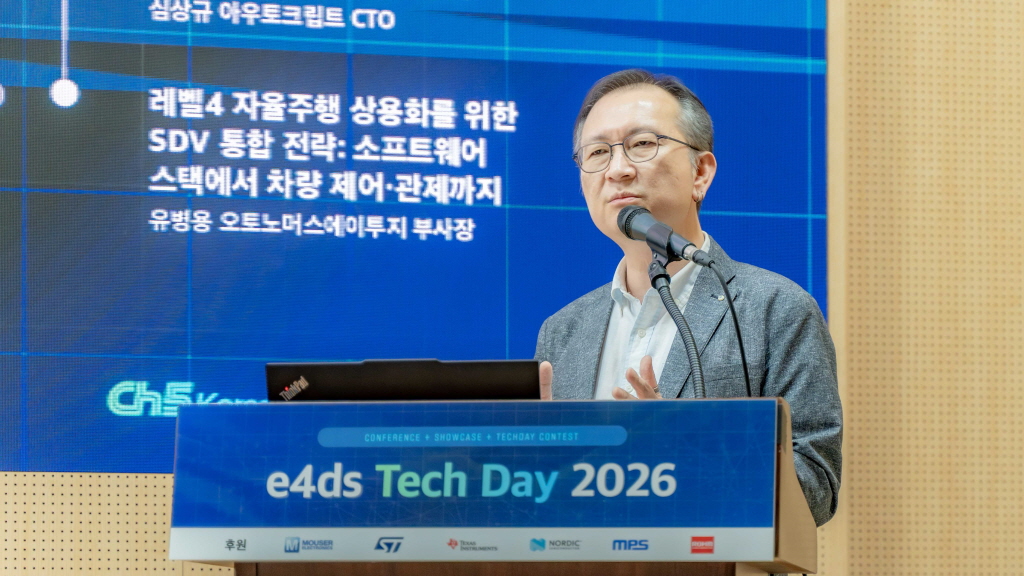
[e4ds Tech Day 2026 ⑨] Sim Sang-gyu, Autocrypt CTO: "In the Physical AI Era, Automotive Security Must Extend Beyond the Vehicle"
At e4ds Tech Day 2026, Sim Sang-gyu, CTO of Autocrypt, explained automotive cybersecurity strategies in the era of Physical AI and SDV (Software-Defined Vehicle). Automobiles are evolving as part of an ecosystem connected to AI, cloud, chargers, IoT, and robots, and he emphasized that the scope of security must expand beyond the vehicle interior to the entire connected environment. In particular, AI model tampering, adversarial attacks, OTA updates, and EV charger hacking were identified as major threats. He explained that response measures require zero trust, AI model integrity protection, intrusion detection, Security by Design and Default, and full lifecycle security management, and that proactive security system establishment beyond regulatory compliance is critical for securing future mobility competitiveness.
2026.10.12by 배종인 기자
NVIDIA to Invest $1 Billion in U.S. Science Over Next Five Years
NVIDIA has announced plans to invest $1 billion over the next five years to strengthen U.S. scientific and technological competitiveness. The company will enhance cutting-edge artificial intelligence research and development capabilities in key areas including quantum computing, healthcare, and energy security, while expanding support for higher education research institutions and cloud service providers. NVIDIA is participating as a major industry partner in the White House Office of Science and Technology Policy's Genesis Mission, and is promoting supercomputer construction in collaboration with national laboratories including Argonne and Los Alamos.
2026.10.12by 배종인 기자












좋은 정보 감사합니다