


Revenue from next-generation industries such as IoT, robotics, and AR/VR has started to generate in earnest.
 Published2017.07.18 14:37
IoT, 로보틱스 및 AR/VR을 비롯한 새로운 기술 발전이 정보통신기술(ICT) 산업의 차세대 성장 동력을 이끌고 있다.
IT 시장 분석 및 컨설팅 기관인 IDC(www.idc.com)의 최근 연구분석 자료에 의하면, 이들 혁신 기술을 통한 시장 기회를 포함할 경우 2020 년 전세계 ICT 지출 규모는 5조5천억달러 규모로 확대될 것으로 예상된다. 이 예측은 실제로 자기잠식 및 대체, 클라우드 기반 솔루션으로의 전환에 직면해 전통적인 매출이 감소하기 시작함에 따라, ICT 업계가 향후 몇년간 새로운 기술 혁신에 의존하게 되는 정도를 보여준다.
‘이노베이션 엑셀러레이터(Innovation Accelerators)’로 부르는 여섯가지 혁신 기술은 IoT, 로보틱스, AR/VR, 차세대 보안, 인지/인공지능, 3D프린팅 등의 부문이다. 이 기술들에서 2015년부터 2020년까지 총 7조4천 억 달러의 산업 매출이 발생할 것으로 예상된다.

이에 따라 기존 ICT 산업(약 3조7천억 달러)에 새로 추가되는 매출 규모가 2020년 1조8천억 달러에 이를 것으로 전망된다. 이 지출의 상당 부분은 2020 년 약 1조 3천억 달러의 매출이 예상되는IoT 시장에서 나올 것으로 예상되는 가운데, 그 중 1조 달러 이상이 전통적인 기술 시장 범주(디바이스, 인프라, 소프트웨어, 서비스 및 텔레콤) 이외의 새로운 기회 시장을 통해 발생할 것으로 전망된다. 로보틱스, AR/VR, 차세대 보안, 인지/인공지능 및 3D프린팅 부문 또한 ICT 시장의 성장에 기여할 전망이다.
IDC의 고객 인사이트 및 분석 연구그룹의 스티븐 민튼 (Stephen Minton) 부사장은 "데이터센터 인프라, 클라이언트 디바이스, 소프트웨어, 서비스 및 통신과 같은 전통적인 ICT 시장은 현재 실질 GDP보다 빠른 속도로 성장하고 있지 못하며 전체 경제 측면에서 성숙된 영역과 점차 유사해지고 있다"면서, 사실상 전통적인 기술 및 서비스에서 발생하는 성장 역시 IDC가 제3의 플랫폼(The 3rd Platform)이라고 부르고 있는 클라우드, 모빌리티, 빅데이터/분석 및 소셜 비즈니스의 영역에서 발생하고 있다고 설명했다. 이어 민튼 부사장은 “사실상 나머지 영역은 이미 감소하고 있으며 이는 레거시 시장과 기술에 의존하는 공급 업들에게 커다란 도전이 되고 있다"고 말했다.
이노베이션 엑셀러레이터 부문에서 가장 큰 시장은 아태지역
전망 기간(2015-2020년) 동안 혁신 기술을 제외한 기존 ICT 지출은 연평균 1%(고정환율 기준)의 성장률로 사실상 성장 정체가 예상되고 있다. 그러나 혁신 기술(Innovation Accelerators)를 포함할 경우 ICT 지출은 같은 기간 5%의 연평균 성장률이 예상된다. 혁신 기술 부문만 볼때는 연평균 18%의 높은 성장세를 보일 전망이다. 아시아/태평양(일본 제외) 지역은 2020 년 6천억 달러를 넘어서며 혁신 기술 부문의 최대 시장이 될 전망이며, 미국이 그 뒤를 이을 것으로 보인다. 같은 기간 가장 빠른 성장률이 예상되는 지역은 라틴 아메리카, 중부 및 동유럽, 중동 및 아프리카 지역이 될 것으로 보인다.
민튼 부사장은 "디바이스 판매는 현재 모바일 디바이스에 의해 주도되고 있으며 클라우드 서비스 제공업체의 수요가 모든 인프라 하드웨어 및 소프트웨어 판매 증가의 대부분을 차지하고 있으며 빅데이터/분석 부문이 가장 빠르게 성장하는 기회의 핵심이고, 통신 시장의 성장은 이미 전적으로 모바일에 의존하고 있다"고 말했다.
퍼블릭 클라우드 서비스가 두자릿수 성장률로 증가세를 지속함에 따라 클라우드가 인프라, 소프트웨어 및 IT 서비스에 대한 전통적인 지출을 지속적으로 잠식할 것으로 보인다. 빅데이터 및 분석 또한 두 자릿수 성장세를 지속하면서 2015년에서 2020년까지 연평균 12%로 성장할 전망이다. 한편, 지난 몇 년간 스마트폰 판매가 폭발적으로 증가하고 모바일 데이터 서비스가 지속적으로 성장함에 따라 모빌리티 부문의 연간 매출 규모가 이미 1조 5천억 달러를 상회하는 것으로 나타났다.
Comments
Related news

[Foreign Press Briefing] Apple Unveils Self-Driving Cars, Chatbot for Banking, and More
It will take some time, but simply Reuters "Facebook Receives Pokémon GO, Heads Toward Augmented Reality (AR)" At Facebook's 10th annual developer conference F8 on the 18th, CEO Mark Zuckerberg announced that the company is building an augmented reality (AR) platform utilizing cameras. "It will take some time to bring apps to the camera, but it's not simply about catching Pokémon in a designated area," he said, adding "You can leave notes in a virtual notebook when you go to a bar with friends, or leave virtual street art without painting a white wall." "Apple Begins Autonomous Driving in Earnest" Apple is beginning autonomous vehicle testing in California. Apple applied for and received approval to test an autonomous driving system with 3 Lexus 2015 RX450h models and 6 drivers to operate the vehicles in emergency situations for road-driving tests. "Wells Fargo to Conduct Banking via Chatbot" Wells Fargo & Company (WFC.N) announced on the 18th that it is testing a chatbot that can communicate with bank customers on the Facebook messaging platform. Hundreds of employees are serving the role of virtual assistants in testing, with plans to expand to thousands of customers by spring this year. BBC "Catching Thieves at Rock Festival Using 'Find My iPhone' Feature" Local police revealed that over 100 iPhones were found in a single bag at the Coachella rock festival held in California. They utilized the 'Find My iPhone' app connected to notebooks and other devices linked to the iPhones. Police added that some mobile phones were returned to their owners at the scene. "iRobot Sues Hoover and Black & Decker Over Robot Vacuum" Robot vacuum company iRobot filed a lawsuit claiming that Hoover and Black & Decker engaged in unauthorized use of its technology. The features of Roomba that change direction to avoid obstacles and detect dirty areas are the subject of iRobot's intellectual property claims, marking another instance of such litigation. "AI Recruitment Market, Amazon in 1st Place, Apple Far Behind" Chris Bolte, CEO of IT job search site PAYSA, said "We have the highest expectations for AI," adding "The scale of AI investment by Amazon and Google shows a clear difference compared to other markets." In the AI investment spending list released by PAYSA, Amazon ranked 1st with an average annual investment of $227.8 million, and Google ranked 2nd with $131 million. Meanwhile, Apple ranked 98th. Forbes reported that Apple's AI
2017.04.24by 김자영 기자
Future Growth Industries: Robots and Drones, How Far Have We Come?
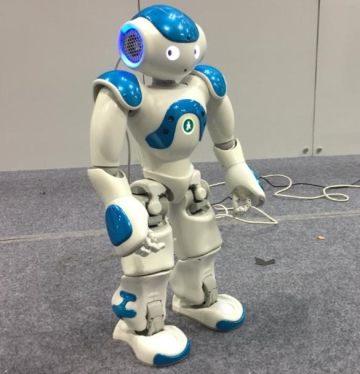
An opportunity has been created to see at a glance how robots and drones are being used across various fields. The 'RoboUniverse & K Drone Summit' will be held at Ilsan KINTEX from the 28th to the 30th. The RoboUniverse Summit is an international exhibition that tours seven cities worldwide, comprehensively covering IOE (Internet Of Everything)-based robot technology, marking the second edition following last year. This year will feature the Mayor of Jeonju Cup National Drone Soccer Tournament, KT Drone Racing Tournament, robot competition and other events, as well as exhibitions of various drones and robots including agricultural drones, maritime drones, and unmanned delivery drones. Over four days, conferences will be held on the themes of artificial intelligence, robots and drones.
2017.06.28by 김지혜 기자
Adult VR Industry: "Exhibition Experiences Also Making Tremendous Progress; Deregulation Is Necessary for Further Development"
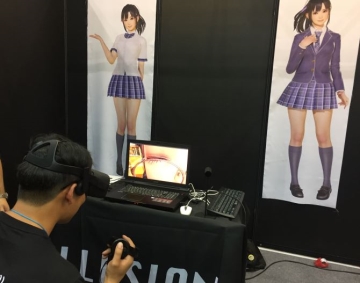
The method is the same as existing VR. Users simply wear an HMD and view 360-degree video content. Content varies by company, but there are approximately 50 options available where users can select between first-person and third-person perspectives, as well as Japanese, Korean, and Western performers. To access higher-rated premium content, additional fees must be paid. Imagine VR, the only Japanese company among the booths, was the sole provider to support controller functionality among the three companies. Two contents were showcased as representative offerings: 'VR Kanojo' and 'Play with Nana Iwa'. By attaching a mobile phone to an inflatable doll, sensors recognize the front and back of the doll, and the video reflects the user's movements accordingly. VR Kanojo allows users to interact with the on-screen character using a controller.
2017.07.03by 김자영 기자
ESP32 Development Environment Selection and GPS Application Implementation
The ESP32 is a microcontroller that integrates Wi-Fi, Bluetooth, 12-bit ADC, capacitive touch, PWM, DAC, and UART in a single SoC. However, the abundance of features does not by itself solve the designer's problems. The real challenges lie in selecting the appropriate development environment, determining which pins can be used and which must be avoided, and converting raw data from modules into usable information. This document addresses ESP32 peripheral constraints (ADC2 and Wi-Fi coexistence limitation, UART1 occupancy, ADC non-linear regions), the trade-offs between Arduino IDE and ESP-IDF, and the process from connecting NEO-6M/NEO-M8N GPS modules to UART2, parsing NMEA sentences, and visualizing routes in Google Earth, all organized based on documented references.
2026.10.12by 편집부
MIPI CSI-2, DSI-2, C-PHY, D-PHY Test Solution Technical White Paper
The MIPI interface adopts a burst mode that transitions between low-power (LP) and high-speed (HS) states for low-power consumption, and in return, strict timing rules are imposed on state transitions. Additionally, the high-speed section operates as a packet-based protocol with headers, ECC, and CRC, so verification engineers must handle waveforms and protocols simultaneously. Traditional configurations combining general-purpose oscilloscopes and AWGs reveal limitations in setup complexity, measurement uncertainty, and lack of reproducibility when faced with these requirements. This white paper, based on webinar materials, organizes the structure of this problem and describes how the SV5C-DPTXCPTX generator for receiver testing and SV5C-DPRXCPRX analyzer for transmitter testing integrate state transition testing, stressed eye testing, and protocol analysis into a single bench, along with their application boundaries.
2026.10.12by 편집부











