


[Interview] Bluetooth 5.0, “Widely applicable from Home IoT to Advertising”
 Published2017.07.25 06:43
TI Mass-producing Bluetooth 5.0 with a maximum range of 1.5km and low power consumption
Debate is in full swing regarding where Bluetooth 5.0, featuring low power consumption and extended reception range, will be first introduced: homes, factories, buildings, or automobiles. There is no set answer. However, if we prioritize tangible convenience, it will likely be adopted first in Home IoT, just as the Galaxy 8 quietly incorporated Bluetooth 5.0.
When Bluetooth 5.0 is integrated into 1:1 beacon-based door locks that previously relied on a gateway, the intermediate step is eliminated. This allows users to control and monitor the door lock from anywhere in the house using a mobile phone. This connectionless approach of Bluetooth reduces the number of retransmissions and current consumption, enabling operation even on coin cell batteries. So, what are the hurdles that must be overcome to promote IoT utilizing Bluetooth? There are currently no standards related to IoT applications.

Bang Jun-wan, General Manager / Texas Instrument Korea
"If beacons were connection-based data transmission, Bluetooth 5.0 is a broadcasting method. "These features are suitable not only for sensor networks used in home IoT but also for control, monitoring, and security networks, and can be expanded to a form where personalized information is broadcast to receive appropriate advertisements," he said.
Bluetooth 5.0 offers the flexibility to adjust between high-speed and long-range modes according to application requirements. This is because increasing the TX power increases reception sensitivity while keeping current consumption the same, and using a coding method increases the range while keeping current consumption the same. However, when using a coding method, the speed is reduced by half, so high-speed and long-range modes cannot be supported simultaneously.
TI began mass production of the fully certified Bluetooth 5.0 chip CC2640R2F and the automotive CC2640R2F-Q1 last December. Manager Bang stated, “The transmission range of the CC2640R2F is 1.5 km in long-range mode, which is the industry’s highest level,” and added, “With multi-role capabilities, a single device can support both a central device and peripheral devices simultaneously.”
Furthermore, although the CC2640R2F is equipped with an ARM Cortex M3, the sensor controller engine operates independently using the Cortex M0. It consumes low current by operating in a 'sleep-current' mode, waking up the Cortex M3 only when sensor data is received periodically or an event occurs.
TI supports Apple's iBeacon and Google's Eddystone beacon SDKs and provides a Launchpad for application in home IoT devices. It also plans to provide future software updates.
Comments
Related news
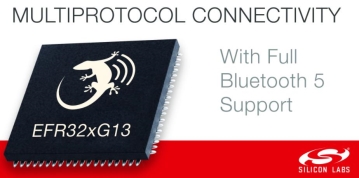
Silicon Labs Launches Bluetooth 5-Supporting SoC with Expanded Memory Options
Silicon Labs has announced the expansion of its Wireless Gecko system-on-chip product family by introducing a new multi-band SoC that supports complete Bluetooth 5 connectivity and expanded memory options. The new EFR32xG13 SoC delivers greater flexibility and performance for application developers using single wireless protocols, as well as those requiring larger memory capacity for multi-protocol solutions, high-capacity applications, or over-the-air (OTA) image storage. It also provides advanced on-chip oscillators and security accelerators that can reduce bill of materials (BOM) costs, along with capacitive sensing, low-power sensing, and enhanced RF performance. The EFR32xG13 product family supports all Bluetooth 5 features and characteristics, delivering 4x the range, 2x the transmission speed, and 8x the broadcasting performance compared to Bluetooth 4, as well as improved coexistence performance with other wireless protocols. The EFR32xG13 SoC is equipped with a 2Mbps PHY, which enables improved throughput with shorter transmit (Tx) and receive (Rx) times or reduces power consumption. Additionally, the SoC incorporates 125kbps and 500kbps PHYs to support extended communication, enabling 4x greater Bluetooth connection range compared to existing devices running Bluetooth 4.
2017.06.15by 김지혜 기자
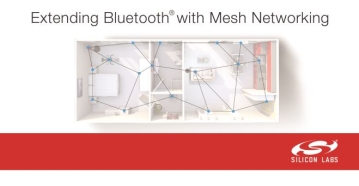
Silicon Labs Accelerates IoT Product Launch with Bluetooth Mesh Solution
Silicon Labs announced that it is providing a comprehensive software and hardware suite based on the new Bluetooth Mesh specification that enables developers to simplify the design of mesh network devices for the Internet of Things and accelerate time-to-market. The new Bluetooth Mesh solution is based on Silicon Labs' proven mesh networking expertise and includes development tools, software stack, and mobile applications that support Silicon Labs' wireless SoC devices and certified modules. Through the combination of Silicon Labs' patented network analysis tools and Bluetooth Mesh stack for smartphones, IoT developers can now accelerate product launch timelines by up to six months compared to when using conventional wireless development tools and technologies.
2017.07.19by 김자영 기자
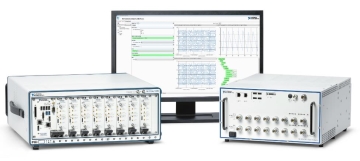
NI Updates System for Wireless Device Testing
National Instruments (NI) announced an update to its Wireless Test System (WTS), a solution for multi-site automated testing of wireless devices. WTS version 1.3 includes support for 8x8 multi-channel configuration with Device Under Test (DUT) control functionality and custom 802.11ax test steps to enable efficient parallel testing of new connected devices based on the IEEE 802.11ax standard (draft 1.1). Additionally, WTS 1.3 improves parallel testing of Bluetooth 5 and low-power Internet of Things (IoT) standards such as Zigbee and Z-Wave. The new 802.11ax standard includes major changes to the physical layer (PHY) that deliver higher average data throughput per user in complex environments. Due to these changes, characterization, design verification, and production test efforts have become more complex. However, engineers can leverage WTS to automate 802.11ax measurement solutions that are accurate and suited for the expanded new design test scope.
2017.07.20by 김지혜 기자
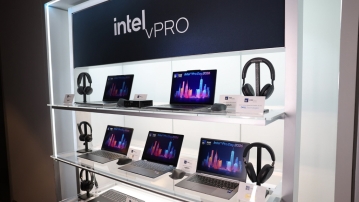
Intel Unveils Next-Generation 'Core Ultra Series 3' and vPro Platform for Enterprise PCs
Intel has officially unveiled the "Intel Core Ultra Series 3" for next-generation enterprise PCs and the latest vPro platform, addressing a wide range of demands from enterprise notebooks to high-performance workstations.
2026.03.26by 배종인 기자
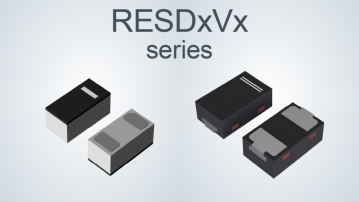
ROHM Launches ESD Protection Diode Compatible with High-Speed Interfaces of 10Gbps or Higher
Semiconductor specialist ROHM has developed the 'RESDxVx series' of ESD (electrostatic discharge) protection diodes capable of responding to next-generation high-speed data communication environments exceeding 10Gbps, simultaneously enhancing both signal quality maintenance required in high-speed interfaces and IC protection performance.
2026.03.26by 배종인 기자











