


When it comes to IoT business, LPWA technology is essential.
 Published2017.07.26 09:21
Low power consumption and low price of communication chips and modules
The Internet of Things (IoT) is now expanding beyond the home IoT to occupy a significant role in industrial applications such as smart cities and smart farms. With smartphone technology advancing, the market has reached saturation, and the IoT is emerging as a latecomer.
Home IoT services have been able to utilize short-range wireless communication like Bluetooth and Wi-Fi. However, as the service range expands, it becomes necessary to move beyond "short-range." Beyond simply ensuring high speed and short-range, the communication chips and modules must also be inexpensive. Furthermore, they must also consume less power.
To address these challenges, low-power wide area (LPWA) Internet of Small Things (IoST) technology utilizing Long Term Evolution (LTE) frequencies is emerging. This concept stems from the idea that high-speed, high-capacity data transmission isn't necessarily required. By providing small amounts of data across wide areas, it can be used for tracking, sensing, and metering applications such as remote metering, streetlights, and vending machines.
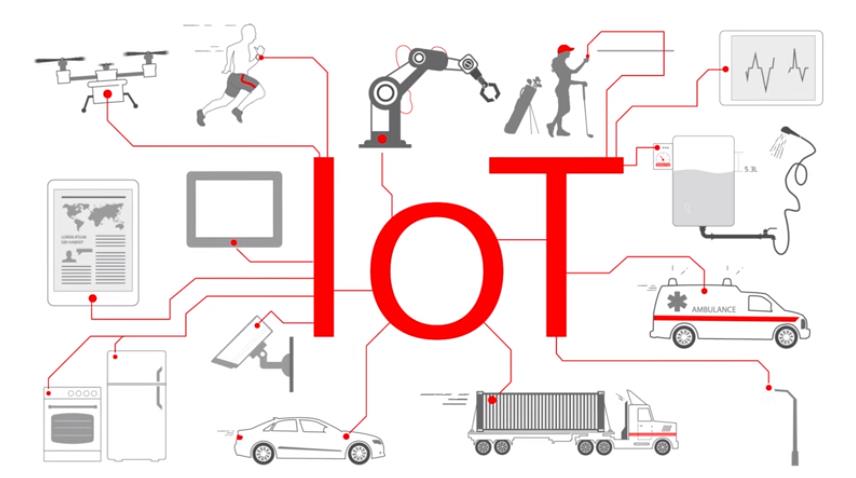
Representative LPWA technologies include the standard technology 'NB-IoT' and non-standard technologies 'LoRa', 'Sigfox', and 'Wi-SUN'. In Korea, KT and LG U+ have built NB-IoT networks, while SK Telecom has built a LoRa network. Wi-Sun was first introduced in Gochang County for water metering. While Sigfox hasn't yet finalized its domestic business, it's exploring its potential.
Kim Hee-chul, Managing Director of Telit Wireless Solutions, said, “By 2021, the number of connections based on Non-Cellular LPWA technology will reach approximately 297 million. This will surpass the number of LTE-M and NB-IoT lines during the same period.” He also forecasted the future market, saying, “The unit price of NB-IoT modules will fall from $9.7 in 2017 to $4.7 in 2021. This is about one-third the price of LTE.”
According to the 3GPP standard, LTE-M is divided into Category 1, Category 0, and Category M1. In 2016, the three major carriers launched nationwide Category 1 services. While still a bit high-end for transmitting small amounts of data, it's likely to be VoLTE, as it's a mandatory option if voice services are to be included. There are no commercialization plans for Category 0. KT and LG U+ plan to launch nationwide NB-IoT services starting this year. SK Telecom, which owns a LoRa network, has not yet chosen it.
Future domestic IoT network competition is expected to center around NB-IoT and LoRa. However, some argue that LoRa, as a non-standard technology, is disadvantageous in terms of ecosystem development. Given its disadvantage compared to standard technologies, it is expected to converge with NB-IoT in the long term.
LoRa uses the 900MHz band. Because it's an unlicensed band, unlike licensed bands, it has the advantage of having nearly identical frequencies across countries. This also allows for low usage fees and low initial deployment costs. However, it suffers from significant interference and difficulty guaranteeing QoS. Additionally, there is a structural security vulnerability problem.
Most IoT devices upload more data than they download. Consequently, NB-IoT's downlink is slower than its uplink (Qualcomm's MD9206 model supports up to 20 kbps for downloads and 60 kbps for uploads). While simultaneous transmission and reception are not possible and voice transmission is not possible, NB-IoT utilizes existing LTE networks and can reach up to 15 km. While its data speeds are slower, NB-IoT is faster than LoRa or Sigfox. Because it's a commercial network, it also boasts security advantages. However, because it uses carrier networks, it requires modules certified by each carrier.
Executive Director Kim stated, "LTE-M and NB-IoT are complementary, not competitive. Depending on the bandwidth requirements, they will be used in different applications." He added, "Maintenance is crucial for IoT applications installed in equipment and devices that will be used for extended periods. It's important to ensure migration to 2G, 3G, and 4G. To be able to expand overseas, you must select a company that has completed certification from major global operators." He highlighted key considerations for IoT businesses.
Comments
Related news
Upgraded IoT Platform Mobius, Will Global Commercialization Expand?
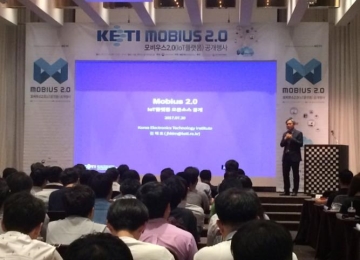
Where is the Internet of Things (IoT) heading in its evolution? Mobius 2.0, an upgraded version of the Internet of Things platform developed by the Electronics and Telecommunications Research Institute (KETI), has been unveiled. Mobius is a platform operated as open source with source code publicly disclosed, created based on oneM2M, a global IoT standard. KETI held an event introducing Mobius 2.0 at Elltower in Yangjae on the 20th. Since first introducing Mobius 1.0 in 2015, the upgraded version was released based on developers' requirements. Park Chung-won, President of KETI, said, "We started from a time when IoT wasn't receiving much attention, and today we're unveiling the 2.0 version. As we move toward a hyper-connected society, interoperability between devices becomes important, and Mobius has technological competitiveness in that regard."
2017.07.21by 김지혜 기자

[Interview] Bluetooth 5.0, “Widely applicable from Home IoT to Advertising”
Discussions are ongoing about which field—home, factory, building, or automotive—will first adopt Bluetooth 5.0, which offers lower power consumption and extended reception distance. There is no predetermined answer. If we prioritize convenience that touches everyday life, it would likely enter Home IoT first, just as the Galaxy S8 quietly adopted Bluetooth 5.0. When Bluetooth 5.0 is integrated into door locks that previously operated on a 1:1 Beacon method through a gateway, the intermediate step is eliminated. Users can control and monitor door locks from anywhere in the home using their mobile phones. This Bluetooth connection list method reduces retransmission frequency and current consumption, enabling operation even with coin cell batteries. Then, what is the barrier to overcome for IoT activation using Bluetooth? Currently, there are no established standards for IoT applications.
2017.07.25by 김자영 기자
The Home IoT trend is blowing fiercely in China.
A wave of IoT-equipped smart home products is intensifying within Chinese households. This is attributed to companies such as Xiaomi and Haier flooding the market with a diverse range of affordably-priced smart home products, thereby captivating Chinese consumers. According to the "China Smart Home Market Status and Implications" report released by the Korea Trade-Investment Promotion Agency Shanghai Branch, China's smart home market in 2016 reached a scale of 60.6 billion yuan (approximately 10.7 trillion Korean won), representing significant growth of 50.2% year-over-year, and is projected to demonstrate growth exceeding 50% over the next five years.
2017.07.25by 김자영 기자
Korea Instrument, KOLAS Accredited Calibration Agency First to Simultaneously Acquire ISO/IEC 27,001·27,701
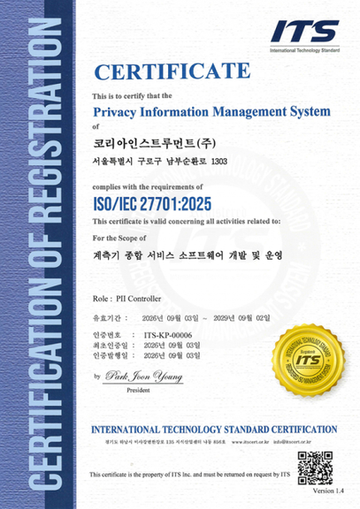
Korea Instrument has become the first among KOLAS accredited calibration agencies to simultaneously acquire ISO/IEC 27,001 and ISO/IEC 27,701 certifications. Through its proprietary platforms CWIZ Enterprise and CWIZ Partners, the company has embedded information security and personal data protection requirements across all business processes including customer information, equipment data, and calibration reports, with plans to continuously advance its management system through regular audits and security inspections.
2026.10.12by 배종인 기자

TeamViewer One, IT Incident Automation Workflow and Resolution Center Enhanced
TeamViewer has added IT incident automation capabilities and an advanced Resolution Center to its integrated digital workplace management platform 'TeamViewer ONE'. Recurrent service disruptions, configuration errors, and capacity shortages are automatically handled according to preset policies, and device status verification through script deployment can be managed in a unified interface, significantly reducing repetitive tasks for IT teams.
2026.10.12by 배종인 기자











