


Samsung Electronics Sees Q2 Earnings Soar on Increased Galaxy S8 Sales and Semiconductor Boom
 Published2017.07.27 17:00
Samsung Electronics announced its second-quarter 2017 results, reporting consolidated revenue of 61 trillion won and an operating profit of 14.07 trillion won.
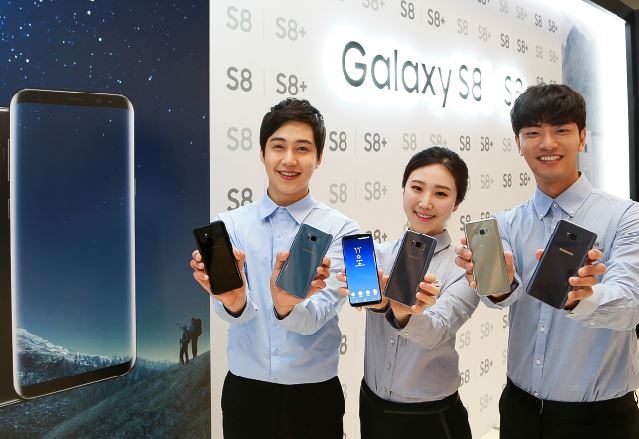
In the second quarter, revenue increased by 20% year-on-year to 61 trillion won, driven by the continued favorable memory market and expanded global sales of the Galaxy S8 and S8+. Operating profit also rose by 5.92 trillion won year-on-year to 14.07 trillion won, achieving an operating profit margin of 23.1%, thanks to a substantial increase in profits from the components business.
The components business saw a significant improvement in performance driven by strong memory prices, expanded sales of high-capacity server DRAM and SSDs, and increased sales of Galaxy S8 components in the System LSI and Display businesses. In the second quarter, the semiconductor business achieved sales of 17.58 trillion won and an operating profit of 8.03 trillion won.

While demand growth for memory slowed in some sectors, such as mobile, due to the seasonal off-peak period, strong demand for high-capacity server DRAM and SSDs persisted; coupled with overall industry supply constraints, a robust supply and demand situation and an upward price trend continued. NAND continued to improve performance following the previous quarter by focusing on the sales of high-value products such as high-capacity products of 64GB or more for mobile and enterprise SSDs, while DRAM focused on expanding sales of differentiated products such as high-capacity products for servers and HBM2, a high-bandwidth memory.
In the third quarter and the second half of the year, robust supply and demand for memory are expected to continue as demand for mobile and server-driven products grows. We plan to actively respond to the demand for high-capacity server storage, which is expected to see high growth centered on the Pyeongtaek semiconductor line, while also strengthening our technological leadership by focusing on the development of 5th-generation products following the 4th-generation 64-layer products.
System LSI saw its performance improve compared to the previous quarter as mass production of 10nm-based APs for flagship smartphones began in earnest and demand for 14nm-based mid-to-low-end APs and image sensors remained strong. In the second half of the year, continuous revenue growth is expected to continue as the supply of display driver chips (DDIs) for flagship OLEDs begins in earnest and the supply of image sensors is anticipated to increase due to the expanded adoption of dual cameras.
The Foundry business unit, launched last May, is stably mass-producing the 10nm mobile APs it began supplying for the first time in the industry, and has seen sales growth in 14nm mobile products as well as products for IoT, home appliances, and PCs. To meet the increasing demand for 10nm mobile APs, the Foundry business unit plans to increase the production capacity of existing lines and expand supply through the addition of a new line in Hwaseong, while also completing the development of the 8nm process in a timely manner to maintain its technological leadership.
Performance improved due to increased global sales of the Galaxy S8
In the set business, performance in the wireless sector improved due to expanded global sales of the Galaxy S8, but TV performance slowed due to rising panel prices, and profits in home appliances decreased compared to the same period last year due to investments in the B2B market.
The display business recorded sales of 7.71 trillion won and an operating profit of 1.71 trillion won in the second quarter. In the second quarter, performance improved compared to the previous quarter due to increased sales of flexible OLED panels and high-value LCD products. The OLED division saw improved performance driven by increased sales of flexible products following expanded sales of flagship models by major customers, while the LCD division also improved by expanding sales of high-value products centered on UHD and large-screen TVs.
In the second half of the year, the OLED division is expected to see revenue growth compared to the first half due to the expansion of flexible product supply; however, intensified competition with Low Temperature Polysilicon (LTPS) LCDs in the mid-to-low price market and increased costs resulting from the ramp-up of new lines in the third quarter are anticipated. In the second half, the LCD division is expected to face supply-demand imbalances due to increased panel inventory among set manufacturers and expanded supply from the panel industry; nevertheless, growth in the premium TV market, including high-resolution and ultra-large TVs, is also projected to continue.
The TV division maintained its leadership in the premium market by expanding the sales proportion of key products such as UHD and ultra-large TVs; however, performance declined due to slowing sales and declining profitability caused by rising panel prices. The home appliance division continued revenue growth through strong sales of Wind-Free air conditioners during the peak season and strengthened sales of products like AddWash washing machines and premium refrigerators; nevertheless, performance decreased compared to the previous year due to rising raw material costs and the impact of investments in the U.S. B2B market.
Earnings are expected to increase in the second half, driven by the parts business.
While performance is expected to increase in the second half of the year, driven by the components business, it is projected to decline slightly in the third quarter due to a slowdown in the display and wireless businesses.
Meanwhile, Harman achieved solid results in terms of operations, with sales of $1.9 billion and an operating profit of approximately $200 million, but recorded a net operating profit of about $5 million due to acquisition-related costs. Over the next few quarters, acquisition-related costs are expected to average around $100 million, which will impact Harman's performance.
Samsung Electronics plans to strengthen the competitiveness of its core businesses by securing the world's highest and largest production capacities in the semiconductor and OLED sectors, while reinforcing its technological leadership. It also intends to foster its System LSI and Foundry businesses as future growth engines by strengthening their design and manufacturing capabilities, respectively.
However, while it is essential to secure advanced technologies through M&A and discover new growth engines through strategic investments to respond to the rapid changes in the IT industry, difficulties are also expected due to the continued uncertainty in the domestic and international business environment.
Comments
Related news
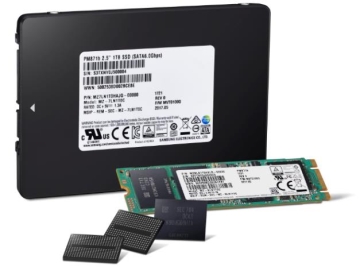
Samsung Electronics Expands 4th Generation V-NAND Lineup by Overcoming Limitations of 3D Stacking Technology
Samsung Electronics is ramping up mass production of "4th generation (64-layer) 256-gigabit (Gb) 3-bit V-NAND flash" that implements world-leading performance and high reliability, expanding its 4th generation V-NAND lineup across all NAND products for servers, PCs, and mobile applications. Following the supply of 4th generation 256Gb V-NAND-based SSDs to global B2B customers that began last January, Samsung Electronics plans to expand 4th generation V-NAND to mobile eUFS, consumer SSDs, and memory cards, while increasing monthly production share to over 50% within this year to address growing global customer demand. Three innovative technologies—"ultra-high integration cell structure and process," "ultra-high-speed operation circuit design," and "ultra-high reliability CTF thin film formation"—are applied to the 4th generation (64-layer) V-NAND, achieving over 30% improvement in speed, productivity, and power efficiency compared to 3rd generation (48-layer) products.
2017.06.15by 김지혜 기자

Samsung Electronics Starts Mass Production of '3D V-NAND' by Operating Largest Semiconductor Line in Pyeongtaek
Samsung Electronics is set to pursue investments exceeding 37 trillion won, including expansion of semiconductor and display production lines, as the company ramps up operations at its Pyeongtaek semiconductor line. Samsung Electronics held a product shipment ceremony at the Pyeongtaek semiconductor complex on the 4th and commenced mass production of cutting-edge three-dimensional V-NAND. The shipment ceremony was attended by key executives including Kwon Oh-hyun, Vice Chairman and CEO, Kim Gi-nam, President of the Semiconductor Division, business unit heads of the DS division, and approximately 100 employees and staff.
2017.07.04by 신윤오 기자
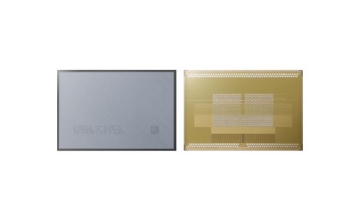
Samsung Electronics Expands Premium Market Through Mass Production of D-RAM for AI Systems
Samsung Electronics is rapidly increasing production volumes of 8GB High Bandwidth Memory (HBM2) D-RAM, expanding supply not only to the supercomputer (HPC) market but also to network and graphics card markets. Samsung Electronics began mass production of 8GB HBM2 D-RAM in June of last year, pioneering the memory market for supercomputers utilized in artificial intelligence (AI) services, and has subsequently expanded the application scope of premium D-RAM to the existing high-end graphics card market.
2017.07.19by 김자영 기자
ESP32 Development Environment Selection and GPS Application Implementation
The ESP32 is a microcontroller that integrates Wi-Fi, Bluetooth, 12-bit ADC, capacitive touch, PWM, DAC, and UART in a single SoC. However, the abundance of features does not by itself solve the designer's problems. The real challenges lie in selecting the appropriate development environment, determining which pins can be used and which must be avoided, and converting raw data from modules into usable information. This document addresses ESP32 peripheral constraints (ADC2 and Wi-Fi coexistence limitation, UART1 occupancy, ADC non-linear regions), the trade-offs between Arduino IDE and ESP-IDF, and the process from connecting NEO-6M/NEO-M8N GPS modules to UART2, parsing NMEA sentences, and visualizing routes in Google Earth, all organized based on documented references.
2026.10.12by 편집부
MIPI CSI-2, DSI-2, C-PHY, D-PHY Test Solution Technical White Paper
The MIPI interface adopts a burst mode that transitions between low-power (LP) and high-speed (HS) states for low-power consumption, and in return, strict timing rules are imposed on state transitions. Additionally, the high-speed section operates as a packet-based protocol with headers, ECC, and CRC, so verification engineers must handle waveforms and protocols simultaneously. Traditional configurations combining general-purpose oscilloscopes and AWGs reveal limitations in setup complexity, measurement uncertainty, and lack of reproducibility when faced with these requirements. This white paper, based on webinar materials, organizes the structure of this problem and describes how the SV5C-DPTXCPTX generator for receiver testing and SV5C-DPRXCPRX analyzer for transmitter testing integrate state transition testing, stressed eye testing, and protocol analysis into a single bench, along with their application boundaries.
2026.10.12by 편집부











