


Smart Factory: Where Does the Temperature Gap Between Government and the Field Come From?
 Published2017.09.20 16:36
Comments
Related news
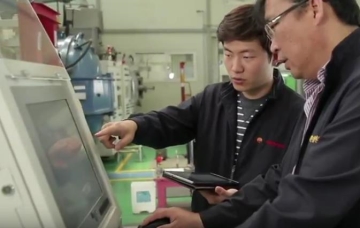
We will add 2,200 smart factories this year and deploy 5,000 by the end of the year.
The government has announced related business projects to distribute more than 2,200 smart factories this year. The Ministry of Trade, Industry and Energy is focusing on expanding and advancing smart factory distribution and strengthening the competitiveness of the domestic smart factory supply industry to accelerate manufacturing innovation in preparation for the Fourth Industrial Revolution.
2017.02.06by 신윤오 기자
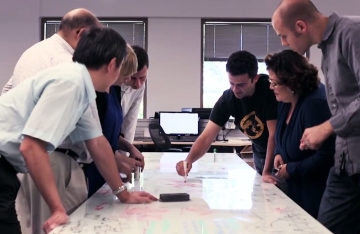
[Reporter's Notebook] Things Not to Overlook in the Fourth Industrial Revolution
The voices calling for responses to the new industrial revolution emerging as smart factories are growing louder. Perhaps because of this, I've noticed that events using the term "Fourth Industrial Revolution" as a modifier have increased noticeably these days. Of course, since it's the most important keyword recently, many cases are likely motivated by a desire to draw public attention. However, it appears that a consensus is gradually forming around the idea that transformation befitting the age of "intelligent informatization," which differs from previous industrial eras, must be realized.
2017.06.12by 신윤오 기자
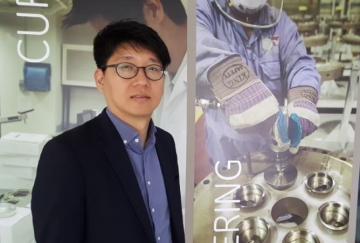
[Talking about Industrial IoT ①] GE Interview: "Industrial IoT, Like Saving Electricity, Must Start with Purpose"
Industrial IoT, as commonly referred to, encompasses the concept of the Industrial Internet that emerged from the opposite perspective of consumer internet. The connectivity between computers and connections among people were collectively termed the Internet of Things, but this concept alone could not explain everything needed in industry. Ultimately, the concept of how to connect machines and people converged into the Industrial Internet. GE, having transformed itself into a digital company early on, established the concept of Industrial Internet and materialized it into visible solutions. Kim Sung-jin, Executive Vice President of GE Digital, emphasizes that "starting right now is the first step of Industrial IoT." We heard from Kim, who states that connections must extend beyond inter-device connectivity to include people as well, about GE's Industrial Internet story.
2017.07.17by 신윤오 기자
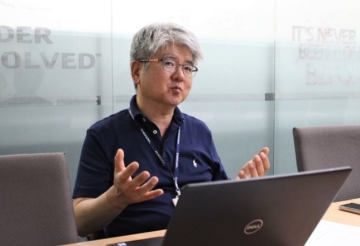
[Talking about Industrial IoT ③] Emerson: “Recently Significantly Changed Perception of IIoT Will Accelerate Growth”
When instrumentation communication became smarter, the company launched the HART (Highway Addressable Remote Transducer) digital communication protocol. This protocol, which is compatible with existing systems and communicates with 4-20 milliamperes without collision, has been internationally standardized and continues to be used to this day. The same applies to the Ovation Foundation Fieldbus, which enhances diagnostics and predictive maintenance through unique input/output modules. This is the story of Emerson Automation Solutions (hereinafter Emerson), which has been at the forefront of standardization that forms the foundation of industrial IoT. Emerson underwent both major and minor changes last year. It acquired Pentair Valves and Controls, adding safety valve automation solutions to Emerson's portfolio. It reorganized five subsidiaries into two categories: automation solutions and commercial and residential solutions. For process automation technology, it was renamed Automation Solutions, which includes Emerson Electric and portions of industrial automation solutions.
2017.08.14by 김자영 기자
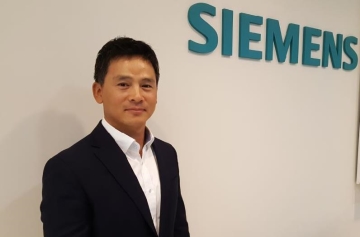
[Talking about Industrial IoT⑤] Siemens: "Domestic smart factories will increase investment after the transition period"
With Industry 4.0 gaining momentum, the Internet of Things and services began to be introduced into the manufacturing environment. In response, Siemens, traditionally a hardware-based manufacturing company, pursued mergers and acquisitions (M&A) to strengthen its software capabilities. Starting with the acquisition of UGS, a PLM (Product Lifecycle Management) company in 2007, Siemens has acquired 17 companies through 2016, including Mentor Graphics, an electronic design automation (EDA) firm. Equipped with not only hardware but also software for handling hardware, Siemens focused on improving productivity and efficiency rather than simply automating assembly lines in its smart factory approach. To learn about Siemens' smart factory strategy and solutions, we met with Park Yoo-soon, Director of the Smart Factory Task Force Team.
2017.09.18by 김지혜 기자











