



The IoT War of the Three Major Telecom Companies: Find Service Models Using AI
 Published2017.10.13 06:04
LG "고객이 적정한 서비스 찾아 선택", KT "IoT약관 표준화로 생태계 구축 도와"
“NB-IoT라 하면, 새로운 네트워크망을 구축이라 생각한다. 일부 전용 기지국을 구축한 사례도 있으나 기존 LTE망을 유지한 채 전국망을 확대했다”고 KT 박윤성 팀장이 말했다. 박 팀장 말에 따르면, NB-IoT의 기술 수준은 LTE 대비 통신망이 1.2배 정도 더 넓은 수준이다.
통신 3사(KT, SKT, LG유플러스)가 사물인터넷 국제전시회에 참여해 각 회사의 IoT 통신 모듈과 관련 서비스를 소개했다.
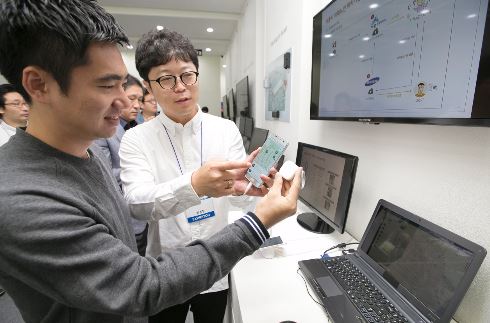
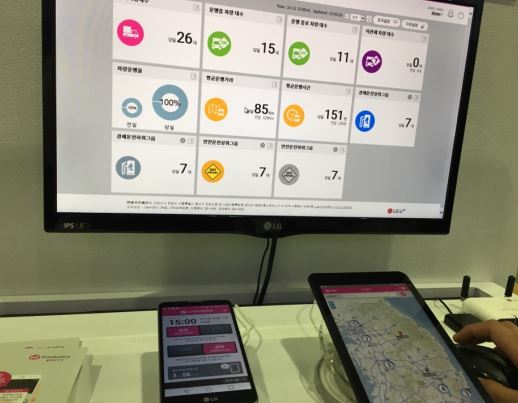
사진은 NB-IoT를 적용한 트래킹 기기 시연 모습
박 팀장은 “7월에 NB-IoT 네트워크를 구축했고, 통신칩을 일반 모듈로 만들었다. 현재 55개 정도 관련 기기를 개발 중이다”라고 밝혔다.
이어 구조가 단순한 IoT 기기의 특성상 벤처 회사나 개인 사업자가 기기를 출시할 경우, ‘통신 대리점과 소비자를 연결하는 소통이 어려운 점을 지적하며 “과기정통부와 전용 약관을 수정해 벤처 회사도 직접 개통할 수 있도록 했다”고 밝혔다.
KT의 상용화 사례는 NB-IoT을 탑재한 LP가스 관제 △LPG 가스통에 탱크 잔량과 주유 경로를 관제하고, 급유량 및 이동 위치를 관제하는 다임폴라특장㈜ △LP가스 용기 및 탱크의 정보를 제공하고 탱크 잔량 및 주유 경로를 관제하는 글로스컴㈜ △거래처 위치와 배터리 상태, 통신 감도 등 다양한 정보를 제공하고 LG가스 탱크 잔량 및 가스 미터기 사용을 원격 관제하는 다우 펀다㈜가 있다.
SK는 IoT 서비스로 계측, 모니터링, 트래킹, 차량 제어 등을 제공하고 있다.
SK의 IoT 사업 부문 나경환 팀장은 “소비자가 IoT 서비스에 대해 편리하지만, 추가 비용을 지급하는 것에 회의적”이며 “IoT 서비스는 파편화돼 있어 경제적 이익을 얻는 수준까지 도달하기가 어려워 데이터 분석으로 경제성을 높이는 방안을 고민하고 있다”고 밝혔다.
관련 사례로는 농가에서 소의 체온을 측정해 질병 예방과 수정 적정 시기를 예측하는 라이브케어서비스를 소개했다. 위가 4개인 소에게 휴대폰 크기 절반 정도인 센서를 넣는 방식이다. 하루에 한 번 데이터를 전송해 5년간 배터리를 사용할 수 있다. 일반적으로 소의 도축 기간이 3년 내라는 점을 봤을 때 배터리 수명이 문제가 되지 않는다.
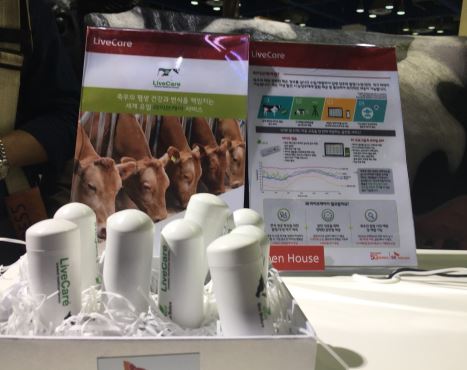
라이브케어 센서
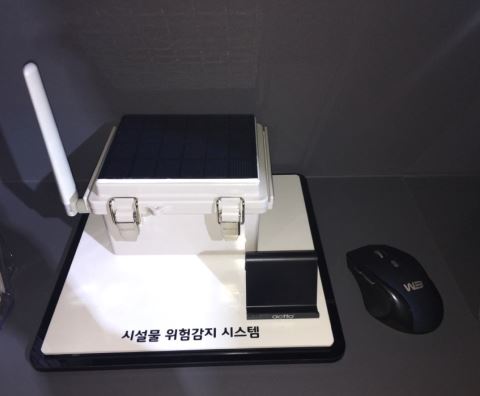
공사 현장에 임시로 지은 건축 틀이나 1년 미만의 건물이 해빙기를 지날 때, 낡은 시설물 등 무너질 위험요소가 잠재된 시설물의 상태를 실시간으로 모니터링한다. 건물의 각도와 기울기, 기압을 측정해 위험 기준치를 넘어설 경우 사용자에게 경고 알람을 보낸다.
LG 유플러스의 정종화 책임 연구원은 “3사의 서비스를 비교하기보다는 적합한 서비스를 적합한 곳에 적용하는 것이 중요하다”고 말했다. LG 유플러스는 홈, 공공영역, 산업영역으로 나눠 IoT 서비스를 운영 중이다. IoT 수도 및 가스계량기, 쓰레기통, 모니터링, 가로등, 환경오염, 모니터링, 자전거 대여 등이다.
Comments
Related news

KT, "Measuring Fine Dust Nationwide Using National ICT Network"
Domestic fine dust is becoming increasingly severe. With research reports indicating that fine dust will persist for over 20 years, South Korea ranks among the worst in fine dust exposure levels among OECD countries. On the 20th, KT held a press briefing and announced plans to install IoT-based air quality measurement devices throughout the nation utilizing ICT infrastructure to address fine dust issues. The IoT-based air quality measurement devices to be installed in cooperation with domestic specialized companies measure six types of air quality data—ultrafine dust, fine dust, volatile organic compounds, carbon dioxide, noise, and humidity—on a minute-by-minute basis.
2017.09.20by 김자영 기자
[Photo News] Meet the smart world at the 'IoT International Exhibition'
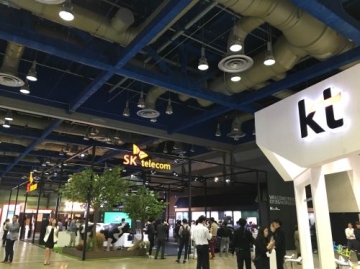
The Internet of Things International Exhibition, where you can see at a glance the various application fields of the Internet of Things such as smart cities, smart farms, smart metering, smart factories, smart cars, and smart homes, was held at COEX for three days starting on the 11th.
2017.10.11by 김자영 기자
From individuals to industries, IoT technology is converging into diverse fields.
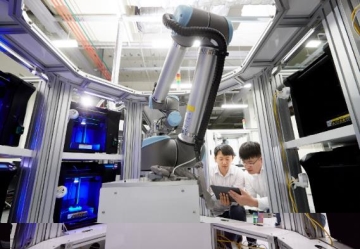
Smart cities, smart farms, smart factories, and smart homes—Internet of Things (IoT) is converging across the public and industrial sectors. With this development, an opportunity has been created to showcase diverse technologies including personal IoT, public IoT, and industrial IoT. At the "2017 Internet of Things International Exhibition" held at Samsung COEX from the 11th, the Electronics and Telecommunications Research Institute (ETRI) showcased 12 new IoT technologies to support the growth of small and medium enterprises. The technologies unveiled that day span application fields in industry, including ▲FaaS (Factory as a Service) smart factory ▲Energy IoT-based microgrids; disaster safety applications such as ▲Augmented cognition services for firefighters in disaster response ▲Underground space safety IoT ▲Energy safety IoT; and next-generation leading technologies including ▲Ultra-connected self-learning engine common framework, ▲Wearable human care technology based on psychological emotion and sleep state recognition.
2017.10.12by 김지혜 기자
Korea Instrument, KOLAS Accredited Calibration Agency First to Simultaneously Acquire ISO/IEC 27,001·27,701
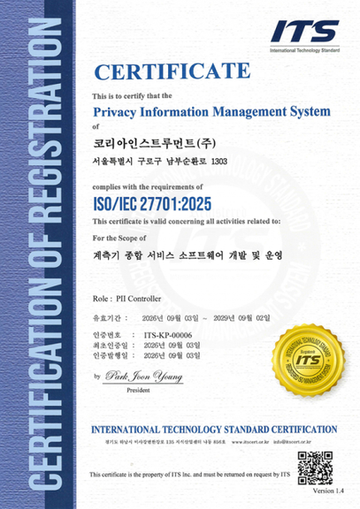
Korea Instrument has become the first among KOLAS accredited calibration agencies to simultaneously acquire ISO/IEC 27,001 and ISO/IEC 27,701 certifications. Through its proprietary platforms CWIZ Enterprise and CWIZ Partners, the company has embedded information security and personal data protection requirements across all business processes including customer information, equipment data, and calibration reports, with plans to continuously advance its management system through regular audits and security inspections.
2026.10.12by 배종인 기자
TeamViewer One, IT Incident Automation Workflow and Resolution Center Enhanced
TeamViewer has added IT incident automation capabilities and an advanced Resolution Center to its integrated digital workplace management platform 'TeamViewer ONE'. Recurrent service disruptions, configuration errors, and capacity shortages are automatically handled according to preset policies, and device status verification through script deployment can be managed in a unified interface, significantly reducing repetitive tasks for IT teams.
2026.10.12by 배종인 기자











