


[Talking about Industrial IoT⑥] Will B&R, combining OPC-UA and TSN, become a smart factory turbo engine?
 Published2018.02.05 17:46
TSN turbocharges OPC-UA's speed
OPC-UA is an OPC Foundation technology that enables stable connections between equipment (robots, sensors, etc.) in automated environments, as well as up to higher-level stations and enterprise levels, using various industrial protocols. It aims to create a future smart industrial system that integrates diverse systems, establishes standards, and operates autonomously.
OPC-UA meets emerging industry requirements, such as security, data loss, redundant data connections, and the use of complex data structures. It offers scalability, high availability, and Internet functionality while remaining independent of operating systems and programming languages. Furthermore, it supports a wide range of systems, from PLCs in production, including embedded systems in control devices, to MES and ERP (Enterprise Resource Planning) systems in enterprise servers.
Platform-independent protocol usage, a communication stack that can be ported to any operating system or embedded hardware – these are the unique protocol communication advantages that enable efficient combinations of OPC-UA. Due to these advantages, it is currently used by most major control system manufacturers.
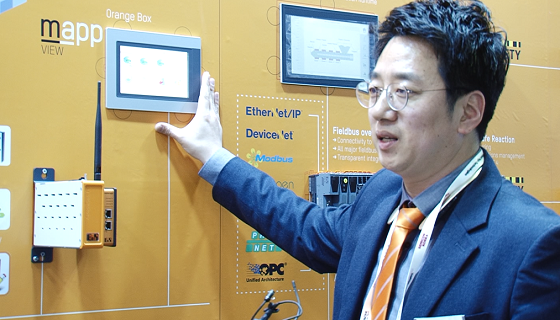
B&R's Deputy General Manager, Sa Jae-hoon, explains the "Orange Box" solution for OPC-UA.
However, OPC-UA doesn't fully meet the level of openness required for comprehensive communication integration in smart factories. To address this issue, the Time Sensitive Networking (TSN) technology standard was developed. A separate standard from OPC-UA, it boasts data transfer speeds at least 10 times faster than existing Industrial Ethernet protocols. Currently under research and development by the IEEE 802.1 Study Group, it is slated for registration as a standard.
TSN aims to enable automation technologies with individual, flexible, modular structures, connected via Industrial Ethernet, to evolve into increasingly intelligent peripherals. For example, individual subsystems and modules are configured with their own controllers, enabling intelligent production. This means that groups of identical equipment are aggregated into a single, intelligent unit.
Deputy Director Sa Jae-hoon said, “TSN technology, which is a protocol at least 10 times faster, can solve the problems arising from the large amount of data generated by the advanced equipment itself. “If used in conjunction with OPC-UA, it can be evaluated as an optimized protocol with integration and expandability in future smart industrial sites,” he said. “If we develop applications that fit this direction and target the semiconductor market, more industrial automation equipment companies will be able to enter the innovative market,” he advised.

Comments
Related news
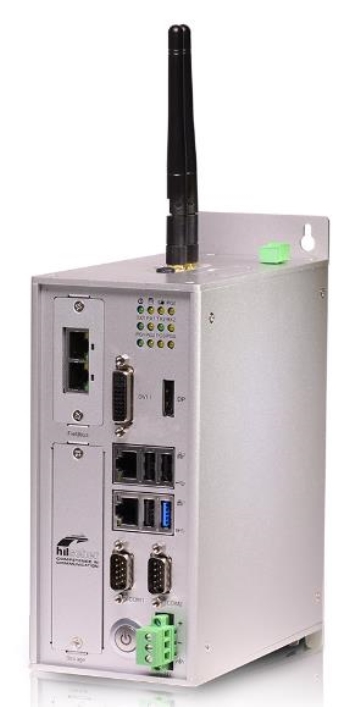
Hilscher Provides Central Link Connecting IT and OT Networks
Hilscher stated that it is supplying a technology and service package with its netIOT product line that enables data exchange from automation system components to cloud or IoT-based applications. The recently launched netIOT Edge Gateway NIOT-E-TIJCX-GB-RE is available for purchase on the market and provides a central link connecting IT and OT networks. Since the gateway device itself is integrated as an I/O subscriber in a PROFINET or Ethernet/IP network, it can be positioned to periodically exchange with the PLC while communicating directly with IoT-enabled field devices via OPC UA/MQTT.
2017.09.06by 김지혜 기자
Smart Factory: Where Does the Temperature Gap Between Government and the Field Come From?
On one side, they say domestic smart factory deployment is rapidly expanding, while on the other side, people ask who they should contact to build a smart factory. These are contrasting statements that frequently emerge at smart factory-related discussion forums, which have come to the forefront as the core of the so-called Fourth Industrial Revolution. Why are such reactions occurring regarding smart factories, which refer to production systems where all manufacturing stages are automated and digitalized based on IoT and CPS (cyber-physical systems), and the entire value chain operates in real-time synchronization like a single factory? This reflects a significant temperature gap between the smart factory promotion projects that the government is enthusiastically pursuing and what manufacturing sites actually experience. According to overseas research institutions, 84% of more than 1,000 global companies with revenues exceeding 1 billion dollars as of 2015 are either in the process of building or planning to build smart factories. However, the situation in Korea is somewhat different. According to a survey conducted by the Korea Trade Association in June on visitor interest in smart factory construction at the '2017 Smart Factory Expo & Conference,' 92% of respondents expressed interest but hesitated to implement due to construction costs, connectivity with existing equipment, and employee capabilities. There were even cases where employees themselves opposed implementation due to concerns that smart factory adoption would lead to job losses. What manufacturing sites experience goes further. Many are unaware of where and how to find solutions tailored to their manufacturing processes. There are instances where companies hastily purchase MES (Manufacturing Execution Systems) costing hundreds of millions of won, fail in operation, and then repurchase. Companies that can even afford such equipment are fortunate. The majority of manufacturing companies across diverse industries struggle with construction costs, operational workforce, and construction methods. The diversity of Korea's manufacturing industry serves as both an advantage and a disadvantage. This means there are many mid-sized companies. Since the majority of businesses are relatively small in scale, they are cost-sensitive and operate various systems. There is a strong voice that the government must take the lead in standardization for this reason. The argument is that benchmark standards must first be established to integrate various systems across diverse industries. While it is important to immediately promote and deploy smart factories, there are calls to increase R&D investment in how to establish standardization systems. If focus is placed solely on the number of smart factory deployments, there is a risk of overlooking reality. In the past, there were projects to promote automation centered on manufacturing, but there is no guarantee that the smart factory project will not meet the same fate. Professor Hong Seung-ho from Yonsei University, who participated in a digital transformation strategy discussion forum utilizing smart factories, stated, "Smart factories should become technology for SMEs," and added, "Smart manufacturing should not simply be the concept of automation added to smart buildings. Once standardization is applied, it will ultimately be advantageous for SMEs." However, he noted that it will take some time for such benefits to reach SMEs. The same applies to the recently emerging employment issue. Certainly, in digitalized manufacturing processes, simple labor will be replaced, but workforce efficiency must be enhanced through job reallocation of regular employees. Germany, which triggered Industry 4.0, provides a solution through statistics showing that new jobs actually increased. Ultimately, whether it is smart factories, the Fourth Industrial Revolution, or anything else, "people" remain at the center. As smart factory issues become increasingly heated recently, the temperature gap between policy and the field is becoming increasingly apparent. Ultimately, active interest among these stakeholders will significantly help narrow the gap.
2017.09.20by 신윤오 기자
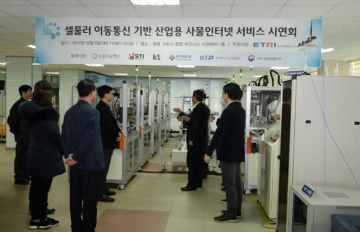
ETRI Creates Smart Factories with NB-IoT
Domestic researchers have successfully applied mobile communication technology to smart factories, and this is expected to open the way for wireless remote control of factories in the future. The Electronics and Telecommunications Research Institute (ETRI) has successfully demonstrated industrial Internet of Things (IIoT) services by applying mobile communication technology to a smart factory production automation system for the first time in Korea. Until now, industrial sites such as factories have independently applied IT. Wired communication technology, which is widely used in factory operations, has higher reliability compared to wireless communication; however, it is not suitable for mobile operations, leaving room for improvement in wiring and safety. Therefore, there has been the inconvenience of having to completely reinstall the factory's wired communication infrastructure when rearranging the factory layout or moving machinery and robots in response to process changes.
2017.12.06by 김지혜 기자
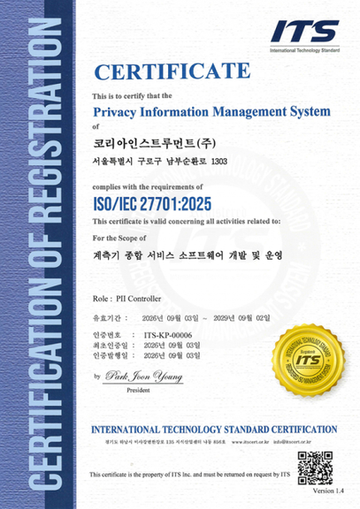
Korea Instrument, KOLAS Accredited Calibration Agency First to Simultaneously Acquire ISO/IEC 27,001·27,701
Korea Instrument has become the first among KOLAS accredited calibration agencies to simultaneously acquire ISO/IEC 27,001 and ISO/IEC 27,701 certifications. Through its proprietary platforms CWIZ Enterprise and CWIZ Partners, the company has embedded information security and personal data protection requirements across all business processes including customer information, equipment data, and calibration reports, with plans to continuously advance its management system through regular audits and security inspections.
2026.10.12by 배종인 기자

TeamViewer One, IT Incident Automation Workflow and Resolution Center Enhanced
TeamViewer has added IT incident automation capabilities and an advanced Resolution Center to its integrated digital workplace management platform 'TeamViewer ONE'. Recurrent service disruptions, configuration errors, and capacity shortages are automatically handled according to preset policies, and device status verification through script deployment can be managed in a unified interface, significantly reducing repetitive tasks for IT teams.
2026.10.12by 배종인 기자











