


Analyzing Fiber Composition Using Machine Learning and the TI NIRscan Nano EVM
 Published2018.10.14 07:01
The growing need for chemical recycling techniques
TI DLP NIRscan Nano can be classified as Sagitto
The burn test is a classic method for determining what a fabric is made of. It involves burning a sample of fabric to see if it shrinks, melts, or burns, and smelling the resulting odor.
This is a cumbersome process. However, using the TI DLP NIRscan Nano evaluation module and the Sagitto system, textile composition analysis can be easily performed. Sagitto combines an ultra-small near-infrared sensor with a machine learning model, enabling unprecedented analysis. Each fabric has a unique near-infrared fingerprint based on its fiber composition. Most clothing is composed of various fibers, and accurately understanding the fiber composition is crucial throughout the garment's lifespan.
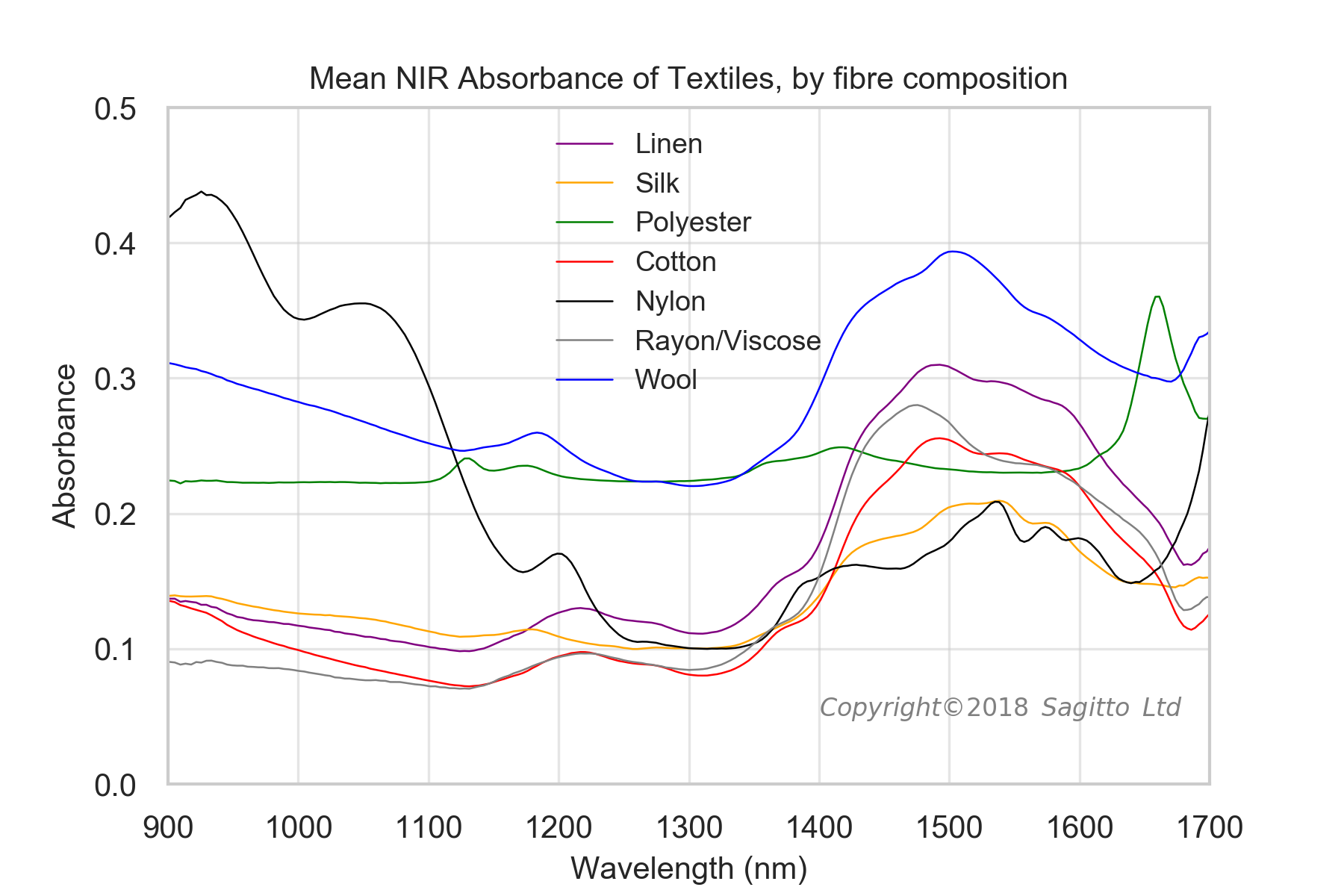
[Figure 1] Near-infrared absorption spectra of fabrics composed of various fiber components.
Many countries require clear labeling of the fiber composition of textiles. However, in some cases, these labels can be misleading. For example, in the picture below, the dishcloth set is labeled as 100% cotton, but when tested with Sagitto, it was found to be a blend of 67% cotton and 33% polyester.
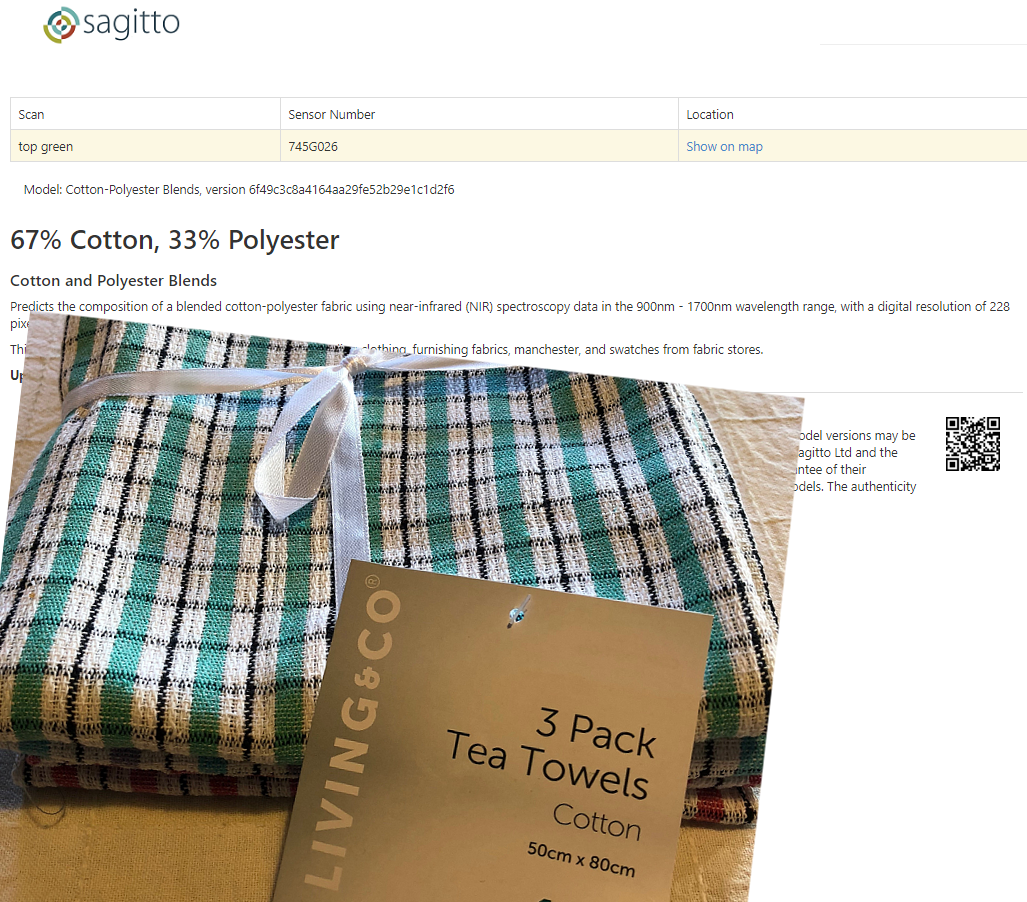
[Figure 2] Contrary to the labeling, the product was found to be a mixture of 67% cotton and 33% polyester.
Why is fiber composition important?
Each year, 80 billion pieces of clothing are produced worldwide, 75% of which end up in landfills or incineration. Many are pressuring major clothing companies to find alternatives to reduce resource waste caused by this high waste rate. Governments around the world are promoting the "circular economy" and introducing measures to recycle clothing that would otherwise end up in landfills.
Clothing made of acrylic and polyester has a significant environmental impact, releasing hundreds of thousands of microfibers into sewage treatment plants with each wash. Of this, 40% ultimately flows into rivers, lakes and oceans.
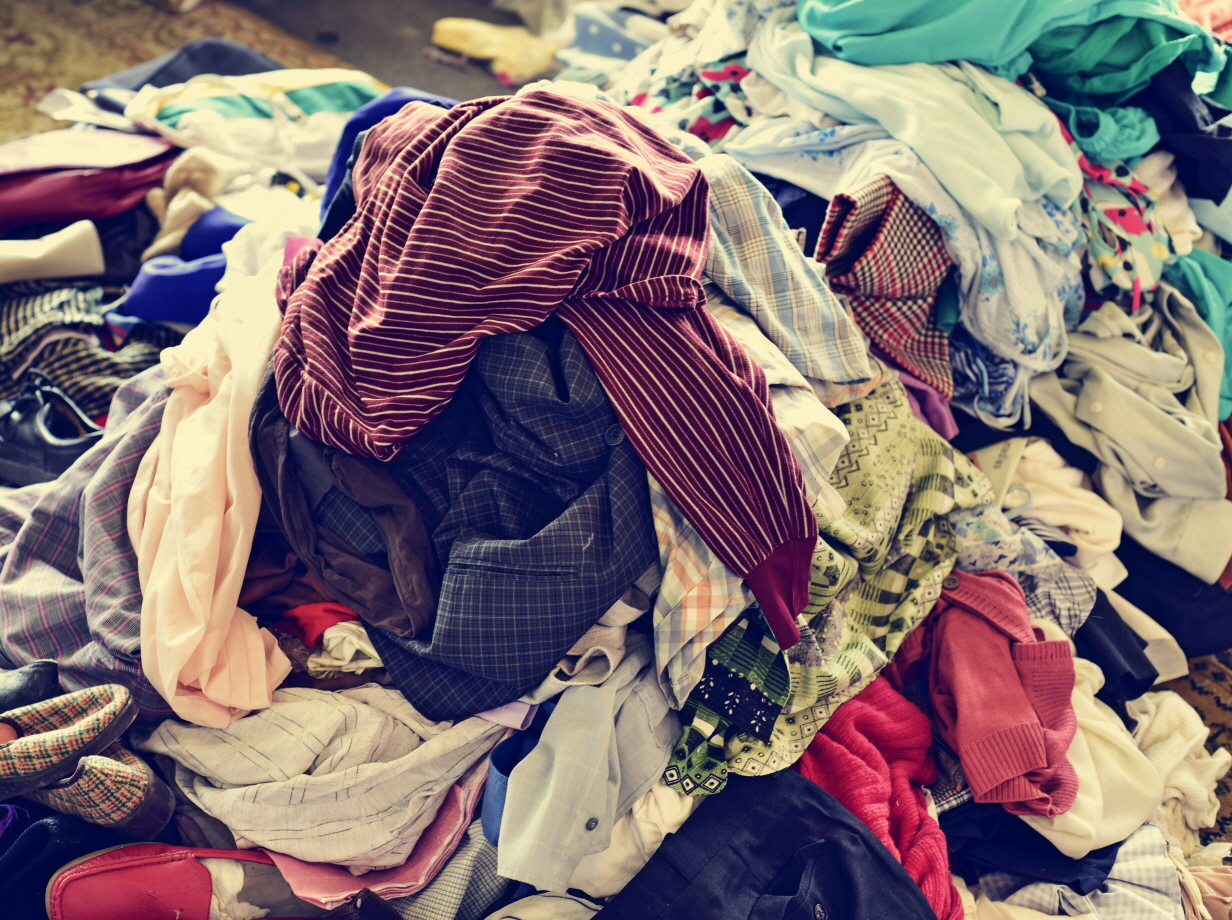
[Figure 3] Clothing waste is becoming a serious problem worldwide.
This is why pressure is growing to develop new chemical recycling techniques for textiles. These techniques can return polyester and cotton garments to their original chemical components: cellulose fibers and polyester monomers and polymers. To do so, recyclers seeking chemical recycling must first accurately sort garments by fiber composition.
Previously, workers sorted waste textiles by sight and feel. They picked up each garment, inspected it, and assessed it. However, it's impossible for the human eye to determine the fiber composition with the level of accuracy required for chemical recycling techniques.
Conversely, by equipping a robotic arm with a TI DLP NIRscan Nano and combining it with sophisticated machine learning, we can develop an accurate robotic sorting system for chemical recycling facilities.
Sagitto combines cloud-based artificial intelligence with the DLP NIRscan Nano. With Sagitto, you don't need your own data scientists. There's no need to collect data separately to train machine learning models. Therefore, Sagitto removes the barriers associated with equipment cost, expertise, and data, enabling a wider range of manufacturers and producers to optimize their processes using the DLP NIRscan Nano EVM. You can experiment with demo models of fiber composition using Sagitto artificial intelligence software and the DLP NIRscan Nano EVM.
This article is based on a contribution from Texas Instruments.
Comments
Related news
.jpg)
Mouser Supplies TI's 4-Channel ADS54J64 ADC
Mouser Electronics supplies Texas Instruments' 4-channel analog-to-digital converter.
2018.07.23by 이수민 기자

Economical Options for Integrated Position Sensing Design
Texas Instruments' DesignDRIVE Position Manager achieves reduced system costs and improved feedback performance through the integration of diverse functionalities.
2018.08.20by 이수민 기자
.jpg)
SK Telecom Takes First Step in AI Development for the Visually Impaired
SK Telecom's AI Center T-Brain won the runner-up award at the VizWiz Grand Challenge 2018 hosted by ECCV. The VizWiz Grand Challenge 2018 is a competition that evaluates appropriate responses to various questions about images directly captured by people with visual impairments, utilizing a dataset built by the University of Texas in the United States.
2018.09.22by 이수민 기자
[e4ds Tech Day 2026 ⑨] Sim Sang-gyu, Autocrypt CTO: "In the Physical AI Era, Automotive Security Must Extend Beyond the Vehicle"
At e4ds Tech Day 2026, Sim Sang-gyu, CTO of Autocrypt, explained automotive cybersecurity strategies in the era of Physical AI and SDV (Software-Defined Vehicle). Automobiles are evolving as part of an ecosystem connected to AI, cloud, chargers, IoT, and robots, and he emphasized that the scope of security must expand beyond the vehicle interior to the entire connected environment. In particular, AI model tampering, adversarial attacks, OTA updates, and EV charger hacking were identified as major threats. He explained that response measures require zero trust, AI model integrity protection, intrusion detection, Security by Design and Default, and full lifecycle security management, and that proactive security system establishment beyond regulatory compliance is critical for securing future mobility competitiveness.
2026.10.12by 배종인 기자

NVIDIA to Invest $1 Billion in U.S. Science Over Next Five Years
NVIDIA has announced plans to invest $1 billion over the next five years to strengthen U.S. scientific and technological competitiveness. The company will enhance cutting-edge artificial intelligence research and development capabilities in key areas including quantum computing, healthcare, and energy security, while expanding support for higher education research institutions and cloud service providers. NVIDIA is participating as a major industry partner in the White House Office of Science and Technology Policy's Genesis Mission, and is promoting supercomputer construction in collaboration with national laboratories including Argonne and Los Alamos.
2026.10.12by 배종인 기자











