


Cisco Launches New Server Platform for AI and Machine Learning
 Published2018.10.15 07:06
Support for AI and ML project development environments across all industries
Cisco Korea announced on the 10th that it will help strengthen the capabilities of companies preparing for the increasing number of AI and machine learning projects by unveiling a new AI server tailored to AI and machine learning.
The adoption of AI and machine learning offers new solutions to many of the problems facing businesses today. However, it is also expected to have a significant impact on existing IT infrastructure and processes, posing new challenges. Cisco, therefore, provides IT infrastructure capable of accommodating the new traffic patterns and rapidly increasing throughput resulting from the adoption of AI and machine learning.
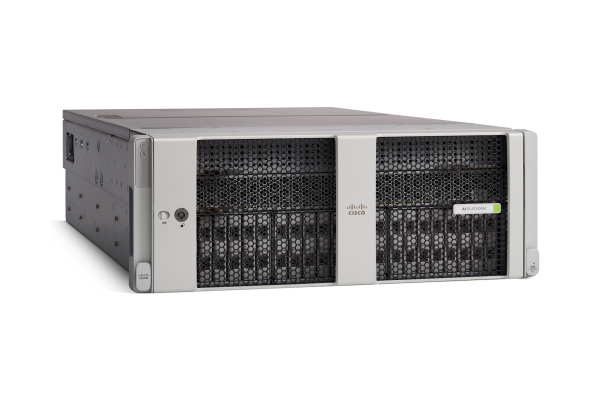
Cisco UCS New Deep Learning Server
The new Cisco AI Server is designed to accelerate compute-intensive forms of deep learning and features NVIDIA GPUs to accelerate widely used machine learning software.
In recent years, data scientists and developers working in machine learning and deep learning environments require increasingly advanced computing capabilities, including IT architectures suited to handling massive amounts of data and tools for analyzing and utilizing that data for learning. To this end, Cisco collaborates with various solution partners to present optimized architecture modeling and provide guidance on actual introduction and deployment, thereby reducing customer deployment times and optimizing operations.
“Artificial intelligence and machine learning-based applications are expected to emerge as major trends in the enterprise sector in the coming years, supporting complex business issues while presenting new challenges for IT to overcome,” said Hwang Seung-hee, managing director of Cisco Korea’s data center and cloud division. “The new Cisco AI server will support the spread of AI across various industries with its powerful performance.”
He continued, “Customers in the financial sector who have early access to this AI server are using it to improve fraud prevention and algorithmic trading functions, while customers in the healthcare sector are using it to strengthen cognitive and diagnostic functions, improve medical image classification functions, and promote new drug development research.”
Additionally, with the addition of the new AI server (UCS C480 ML), Cisco offers a variety of computing options for each stage of AI and machine learning. This includes everything from data collection and analysis at the edge, to data processing and learning in the data center, to real-time inference at the AI core, all the way to customer delivery, supporting customers as follows:
First, benefits are provided for data scientists and developers. Thousands of customers worldwide are currently leveraging Cisco UCS for big data analytics, and this new AI server, tailored for AI and machine learning, accelerates the movement of data from the edge to the core, enabling customers to extract more information from their data and make faster, more informed decisions. Cisco is also accelerating the development of next-generation applications by providing data scientists and developers with tools and resources through its new DevNet AI Developer Center and DevNet Ecosystem Exchange.
And there's IT infrastructure support. Cisco UCS enables IT to easily add new technologies to the environment, and it also leverages Cisco Intersight, a cloud-based systems management tool, to provide convenient and accessible system management. This allows companies to build a policy-based, automated operating system for the computing infrastructure required for AI and ML software environments.
Finally, it is built on an ecosystem-based design. Cisco comprehensively supports containers and multi-cloud computing architectures that facilitate the deployment of open source software. Furthermore, Cisco is validating solutions and machine learning environments, including Anaconda, Kubeflow, Cloudera, and Hortonworks. UCS customers using Kubeflow on Kubernetes can easily deploy AI workloads to Google Kubernetes Engine, leveraging them as on-premises or cloud-based ML environments.
In addition, Cisco AI Server is expected to contribute to the development of deep learning computing systems through partnerships that significantly strengthen AI capabilities, such as supporting Kubeflow, a Google open source project, and integrating NVIDIA Tesla V100 Tensor Core GPUs and collaborating with the University of Wisconsin-Madison.
The Cisco UCS C480 ML M5 Rack Server builds on the Cisco UCS B-Series, C-Series, and HyperFlex systems portfolio and is expected to be available through Cisco partners in Q4, along with Cisco AI and ML enabled services spanning analytics, deep learning, and automation.
Comments
Related news
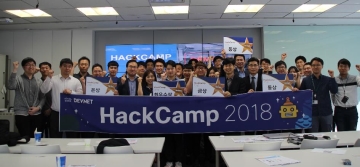
Cisco Successfully Completes Domestic Software Developer Training Program
Cisco Korea announced the successful completion of the hackathon event 'Cisco HackCamp 2018' and held an awards ceremony. Cisco has established 'DevNet,' a developer community in the key business areas of collaboration, security, data center, and enterprise network, to foster domestic software developers and ecosystem development. The company is actively running support programs including △Cisco Open API (Application Programming Interface) training △mentoring △hackathon and other initiatives.
2018.05.24by 김지혜 기자
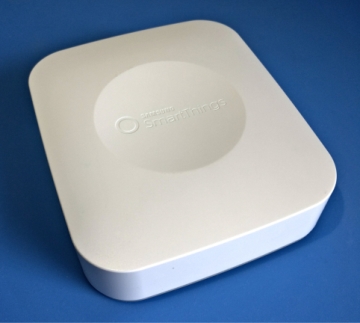
Cisco recommends Samsung SmartThings firmware update
Cisco Talos collaborated with Samsung to distribute firmware that addresses security vulnerabilities in the 'Samsung SmartThings Hub'.
2018.07.27by 이수민 기자

Urgent measures are needed to address Korea's security capabilities, which are ranked among the lowest in the Asia-Pacific region.
Cisco announced the "Cisco 2018 Asia-Pacific Security Capabilities Benchmark Report" on the 6th, targeting security experts. According to the report, only 30% of all threat alerts targeting domestic companies were investigated, revealing that strengthening overall security capabilities throughout the country is urgent. As cyber attack targets in the Asia-Pacific region, including Korea, have expanded to the operational technology sector, this report was released along with key recommendations for security personnel.
2018.09.08by 이수민 기자
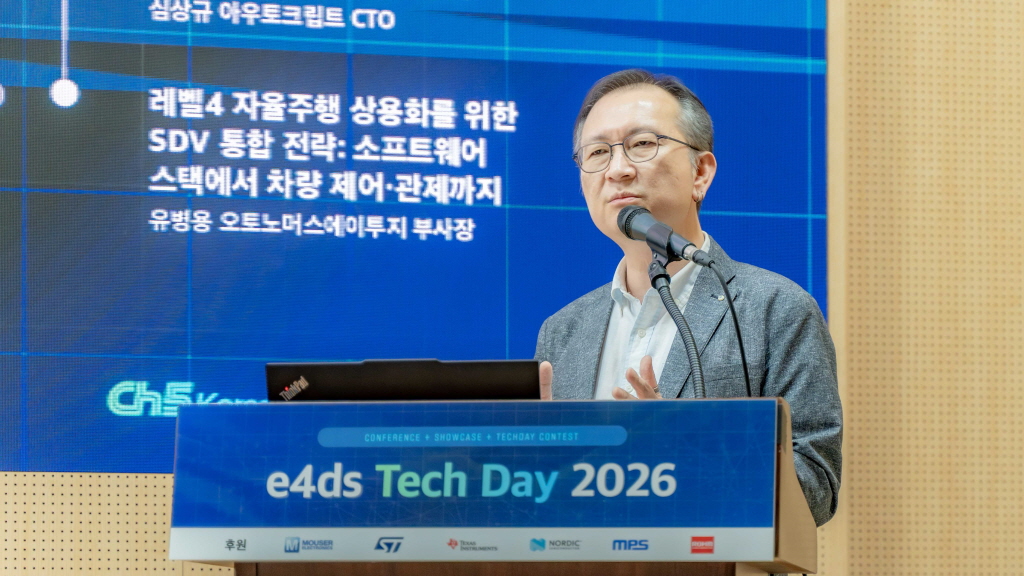
[e4ds Tech Day 2026 ⑨] Sim Sang-gyu, Autocrypt CTO: "In the Physical AI Era, Automotive Security Must Extend Beyond the Vehicle"
At e4ds Tech Day 2026, Sim Sang-gyu, CTO of Autocrypt, explained automotive cybersecurity strategies in the era of Physical AI and SDV (Software-Defined Vehicle). Automobiles are evolving as part of an ecosystem connected to AI, cloud, chargers, IoT, and robots, and he emphasized that the scope of security must expand beyond the vehicle interior to the entire connected environment. In particular, AI model tampering, adversarial attacks, OTA updates, and EV charger hacking were identified as major threats. He explained that response measures require zero trust, AI model integrity protection, intrusion detection, Security by Design and Default, and full lifecycle security management, and that proactive security system establishment beyond regulatory compliance is critical for securing future mobility competitiveness.
2026.10.12by 배종인 기자
NVIDIA to Invest $1 Billion in U.S. Science Over Next Five Years
NVIDIA has announced plans to invest $1 billion over the next five years to strengthen U.S. scientific and technological competitiveness. The company will enhance cutting-edge artificial intelligence research and development capabilities in key areas including quantum computing, healthcare, and energy security, while expanding support for higher education research institutions and cloud service providers. NVIDIA is participating as a major industry partner in the White House Office of Science and Technology Policy's Genesis Mission, and is promoting supercomputer construction in collaboration with national laboratories including Argonne and Los Alamos.
2026.10.12by 배종인 기자











