


Achieving Integrated Isolation Solutions in the Era of Human-Machine Interaction
 Published2018.10.21 07:01
With proper application of the insulator and safe operation
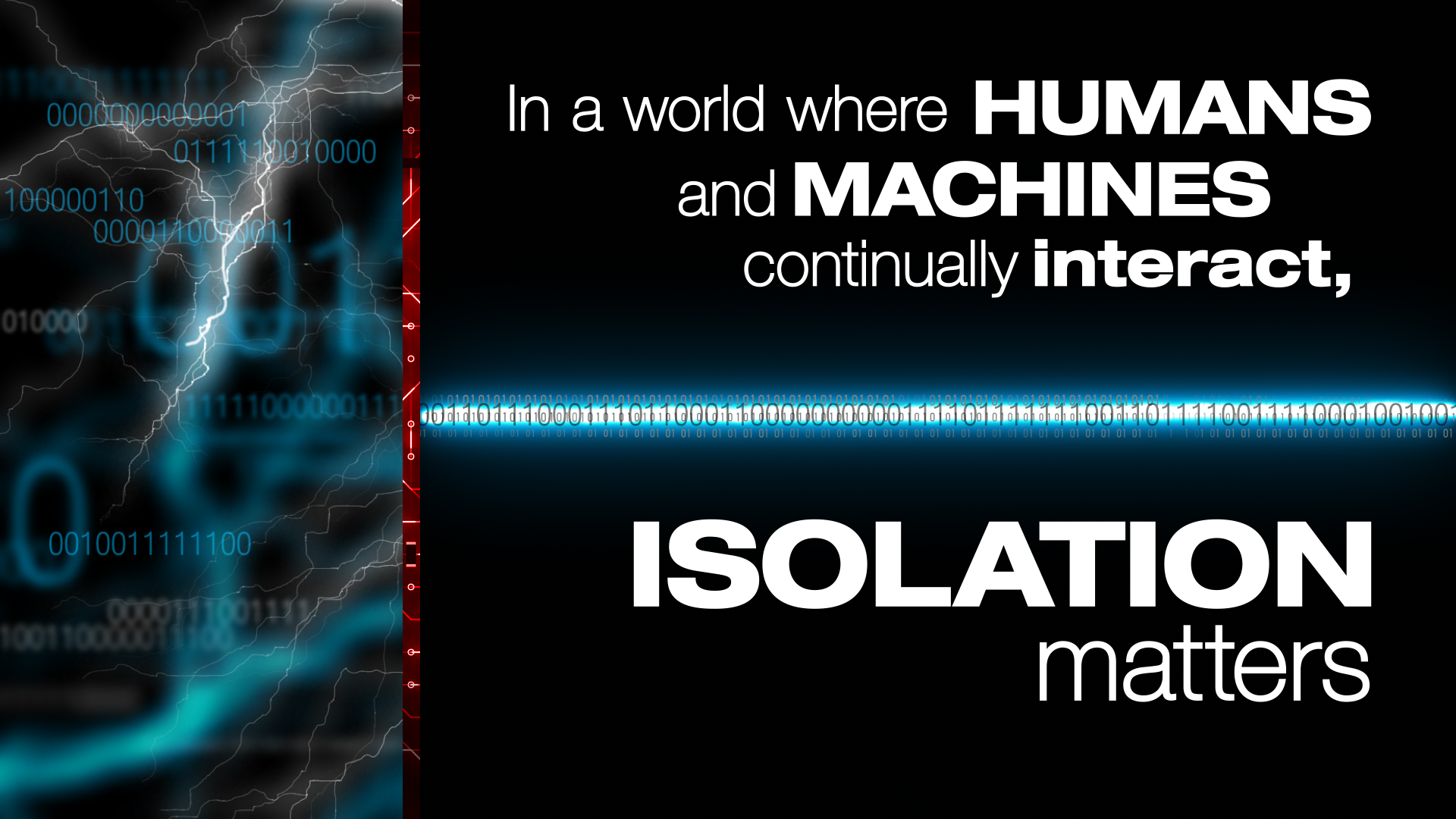
For example, inside an electric vehicle (EV), kilometers of wiring connect switches, sensors, and high-voltage motors. In factories, industrial controllers exchange data, commands, and power with various sensors. In hospitals and nursing facilities, high-voltage medical equipment monitors patients and connects industrial machinery to microcontrollers via USB interfaces. And high-voltage relays operate according to commands from smart controllers.
With the trend of replacing mechanical industrial systems with electric motors, sensors, and actuators, instances of such machine-to-machine and human-to-machine interactions are becoming increasingly common.
Cumbersome mechanical switches are being replaced by sensitive touch controls. As the number of electric motors operating at high voltages rapidly increases, semiconductor switches operating at high voltages are becoming commonplace. All of these devices must communicate and interact with smart controllers and drivers. As industrial, automotive, medical, and offline applications grow, the need for the protection, noise immunity, and reliable operation provided by isolation technology increases.
An isolator is required for reliable operation, and safe operation can be achieved by properly applying the isolator. For example, an isolator can protect people from the risk of electric shock by isolating related circuits from high-voltage or low-voltage processors, such as C2000 microcontrollers that drive powerful industrial motors.
It is establishing itself as a mainstream solution in many industrial applications that tend to transmit data exceeding hundreds of megabits through isolation walls that offer high efficiency and robustness against high-voltage surges. Additionally, in gate driver and industrial sensor applications, both data and power can be transmitted through isolation walls. As the number of channels increases and channel-to-channel isolation becomes required, the demand for miniaturized solutions is also rising.
So, what exactly is insulation? An insulation wall refers to a physical medium that enables the reliable exchange of data and power between two systems while blocking unwanted currents. To achieve an integrated insulation solution, the following points must be considered.
First, one must consider the maximum surge voltage and operating voltage that the isolator can withstand during short periods or normal operation. Additionally, one must consider the maximum rate of change in ground potential difference that the isolator can withstand without causing communication errors. Furthermore, the delay time caused by the isolation walls, the spatial distance and creepage distance between power pins, and the level of electromagnetic interference must also be taken into account.
There are two types of insulation methods.
First is the capacitive method.
By integrating a multilayer silicon oxide-based capacitor internally instead of using an external capacitor, a high level of insulation can be achieved and data can be transmitted via an electric field.
TI's capacitive isolation technology uses two capacitors in series on two dies placed side-by-side within the same module. In this way, an excellent reinforced insulation solution can be provided for high-speed data transmission.
Data rates for isolated walls reach over several hundred megabits per second. Using innovative circuit topologies can further increase data rates, making them more suitable for applications such as industrial Ethernet.
TI's isolator products use customized CMOS technology to provide high-performance reinforced isolation walls.
The following is the inductive method.
A combined pair of inductors can be used to exchange data via magnetic flux while isolating two circuits. The two inductors can be embedded in a laminated PCB or integrated into a single die in a monolithic manner.
The advantage of inductive isolation is that it can transmit over several hundred milliwatts of power through isolation walls. Therefore, an additional power supply is not required on the secondary side. The ability to transmit power with high efficiency and data through isolation walls is critical for many industrial applications because it enables low input current and high maximum operating ambient temperatures.
Digital isolator products integrating TI's power technology use innovative materials and inductor designs to provide maximum power transfer efficiency.
Data and power conditioning are commonly combined with capacitive and inductive isolation. Data conditioning minimizes the risk of transient spikes appearing in the data, thereby protecting signals through isolation and ensuring smooth equipment operation. Power conditioning maximizes power transmission efficiency.
Isolation can also be achieved by physically separating two systems while communicating using optical or electromagnetic waves.
No single isolation solution can meet all requirements. Most industrial solutions require an integrated approach that includes isolated amplifiers, isolated high-speed data links such as RS-485 signals, and isolated gate drivers. As humans and machines increasingly collaborate, high-voltage solutions ensure that systems operate robustly and reliably.
This article is a summary of a piece by Ahmad Bahaï, Chief Technology Officer at Texas Instruments.
Comments
Related news
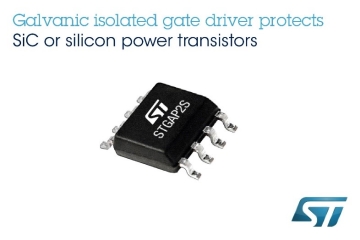
STMicroelectronics Launches Isolated Gate Driver with Enhanced High-Speed Performance
ST Microelectronics has launched the STGAP2S, a single-channel galvanically isolated gate driver. This device can control SiC and silicon MOSFETs as well as IGBTs in various switching topologies through a maximum gate-drive output voltage of 26V and optionally available separate turn-on/turn-off outputs or an integrated active Miller clamp.
2018.08.10by 이수민 기자
.jpg)
SK Telecom Takes First Step in AI Development for the Visually Impaired
SK Telecom's AI Center T-Brain won the runner-up award at the VizWiz Grand Challenge 2018 hosted by ECCV. The VizWiz Grand Challenge 2018 is a competition that evaluates appropriate responses to various questions about images directly captured by people with visual impairments, utilizing a dataset built by the University of Texas in the United States.
2018.09.22by 이수민 기자
TI Korea to Host Industrial Solutions Seminar at COEX on the 23rd
Texas Instruments Korea will hold a TI Industrial Solutions Seminar on October 23rd at the Seoul COEX Conference Center, targeting system development engineers. The seminar will cover topics including motor control for factory automation, implementation of test equipment and data acquisition systems, industrial interfaces and TI solutions, and power system design for industrial applications.
2018.10.16by 이수민 기자
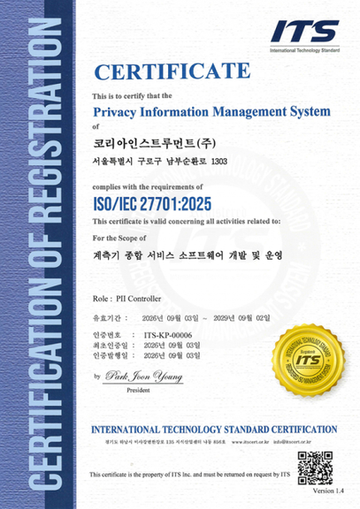
Korea Instrument, KOLAS Accredited Calibration Agency First to Simultaneously Acquire ISO/IEC 27,001·27,701
Korea Instrument has become the first among KOLAS accredited calibration agencies to simultaneously acquire ISO/IEC 27,001 and ISO/IEC 27,701 certifications. Through its proprietary platforms CWIZ Enterprise and CWIZ Partners, the company has embedded information security and personal data protection requirements across all business processes including customer information, equipment data, and calibration reports, with plans to continuously advance its management system through regular audits and security inspections.
2026.10.12by 배종인 기자

TeamViewer One, IT Incident Automation Workflow and Resolution Center Enhanced
TeamViewer has added IT incident automation capabilities and an advanced Resolution Center to its integrated digital workplace management platform 'TeamViewer ONE'. Recurrent service disruptions, configuration errors, and capacity shortages are automatically handled according to preset policies, and device status verification through script deployment can be managed in a unified interface, significantly reducing repetitive tasks for IT teams.
2026.10.12by 배종인 기자











