



Gartner: "Asia-Pacific's Digital Maturity Has Reached a Turning Point"
 Published2018.11.01 15:29
Gartner warns that the rapid increase in AI adoption could be overheating.

Gartner
On October 30, Gartner announced the results of a survey on digital maturity in the Asia Pacific region.
According to Gartner research, 31% of CIOs in the Asia-Pacific region reported that their digital initiatives have reached the scale-up stage, up from 19% in 2018. This indicates that digital businesses in the region are maturing, moving from tentative experiments to large-scale implementation. The desire to expand customer engagement through digital channels is a key driver of this expansion.
Gartner analysts released the results of their annual global CIO survey for the Asia Pacific region at the Gartner Symposium/IT Expo, held in Gold Coast, Australia, from October 29 to November 1. The 2019 Gartner CIO Agenda survey collected data from over 3,000 CIOs across major industries in 89 countries, including 671 CIOs from 16 countries in the Asia-Pacific region, representing $6.1 trillion in revenue and $73.7 billion in IT spending.
The survey results show that digital business has reached a turning point this year. Forty-seven percent of CIOs in the Asia-Pacific region said they have already transformed or are currently in the process of transforming their business models. Furthermore, 40% said that shifting consumer demands are driving the transformation of their business models.
“The ability to support greater scale is being invested and developed in three key areas: scale, scope, and agility,” said Andy Rowsell-Jones, vice president and distinguished analyst at Gartner. “All of these areas aim to encourage consumers to interact with the organization. Generally, the more diverse the interactions across digital channels, the more engaged consumers are and the lower the cost to serve them.”
Andy Rowsell-Jones, Vice President, advised CIOs across the Asia Pacific region to “evolve their thinking for the new era of rapidly expanding digital business.”
Increased fixed IT budgets are evidence of innovation toward digital business.
This survey reveals that the transformation toward digital business is supported by steady increases in IT budgets. CIOs worldwide expect their IT budgets to increase by 2.9% in 2019, with the Asia-Pacific region leading the way with a 3.5% increase. However, it fell significantly from the projected 5.1% budget increase in 2018.
Executives often demand key performance indicators (KPIs) to measure the progress of digital transformation. According to Gartner research, 81% of CIOs in the Asia-Pacific region measure the return on investment (ROI) of digital.
“CIOs must leverage their financial resources to make 2019 the year of business transformation,” said Andy Rowsell-Jones, Vice President. “We must actively participate in discussions related to innovation and invest time, money, and people in removing barriers to change,” he said. “Companies that fall behind in digital business today will be at a significant disadvantage in the future competitive landscape.”

If your company falls behind in digital business, its future is uncertain.
The top five areas in which Asia-Pacific CIOs plan to invest new or additional funding in 2019 are business intelligence and data analytics (42%), core system improvement and innovation (33%), AI and machine learning (33%), cybersecurity and information security (32%), and digital business initiatives (30%).
AI and Cybersecurity Are Reshaping the CIO Technology Agenda
According to the latest CIO Agenda survey, disruptive new technologies that are transforming the capital landscape for all companies are expected to play a significant role in reshaping business models in the Asia-Pacific region. Thirty-four percent of Asia-Pacific CIOs cited AI as the technology most likely to bring about innovative change to their organizations in 2019, surpassing data and analytics, which currently holds second place at 26%.
Forty-nine percent of CIOs in the Asia-Pacific region have already adopted AI technologies or have short-term plans to do so, the second highest adoption rate after cybersecurity (86%). The top three areas where CIOs in the Asia-Pacific region are most actively applying AI are chatbots (37%), process optimization (27%), and fraud detection (20%).
“The rapid shift to AI may seem revolutionary on the surface, but the rapid rate of adoption may indicate an abnormally high level of exuberance,” said Andy Rowsell-Jones, vice president. “CIOs cannot ignore this group of technologies, but they must maintain a sense of balance. The latest AI tools have not yet gone through the Trough of Disillusionment.”
He also explained that the growing interest in cybersecurity demonstrates the need to build a secure foundation for digital business that protects both companies and customers. While the survey found that 45% of CIOs in the Asia-Pacific region still have responsibility for cybersecurity, IT organizations alone are no longer able to provide cybersecurity.
The rise of social engineering attacks like phishing is prompting broader behavioral changes across all employees. Twenty-four percent of leading digital companies in the Asia-Pacific region view cybersecurity as a board-level responsibility, not the sole responsibility of the CIO. However, CIOs are striving to strengthen security against cyber threats by improving information processing assets and influencing those who use technology.
“Last year, APAC CIOs excelled at scaling their digital businesses. But now they must go one step further and ensure their growing digital businesses are built on a stable and secure foundation,” said Andy Rowsell-Jones, Vice President. “Their success will depend on a robust strategy that combines new disruptive technologies with a rebalancing of existing investments.”
Comments
Related news

Global PC shipments in Q3 2018 showed weak growth for the second consecutive quarter.
Gartner announced preliminary survey results on global PC shipments for the third quarter of 2018. According to Gartner's survey, global PC shipments in the third quarter of 2018 totaled 67.2 million units, representing a 0.1% increase year-over-year and reversing six years of decline while showing modest growth for the second consecutive quarter. Steady demand for enterprise PCs, driven by Windows 10 PC hardware upgrades, appears to be leading the PC market. However, continued weak consumer PC demand offset the strong sales performance in the enterprise PC market.
2018.10.15by 이수민 기자
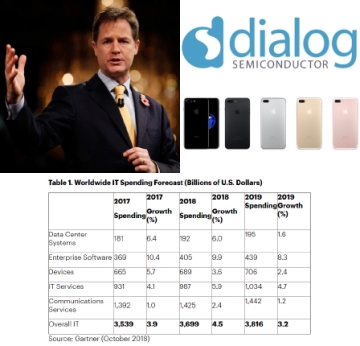
Apple Acquires Dialog Semiconductor for $600 Million
[US Weekly IT News] 1. Apple Acquires 'Dialog Semiconductor' for $600 Million 2. Apple's 'Chinese Spy Chip' Suspicions Face 'FBI Investigation' 3. Why Did Facebook Recruit UK Former Deputy Prime Minister? 4. Gartner Forecasts 'Global IT Spending Growth of 3.2% Next Year' 5. Alibaba Opens 'UK Data Center' to Strengthen Cloud Services
2018.10.23by 류아연 외신

10 ICT Trends for Businesses to Watch in 2019
IT consulting firm Gartner has announced the key strategic technology trends that enterprises should focus on in 2019. Over the past two years, "intelligence, digital, and mesh" have consistently been identified as major growth drivers for enterprises. The trends corresponding to these three factors are core elements that drive continuous innovation processes. Additionally, these trends are characterized by converging with each other and exerting mutual influence, thereby creating new opportunities and inducing new innovations.
2018.10.23by 이수민 기자
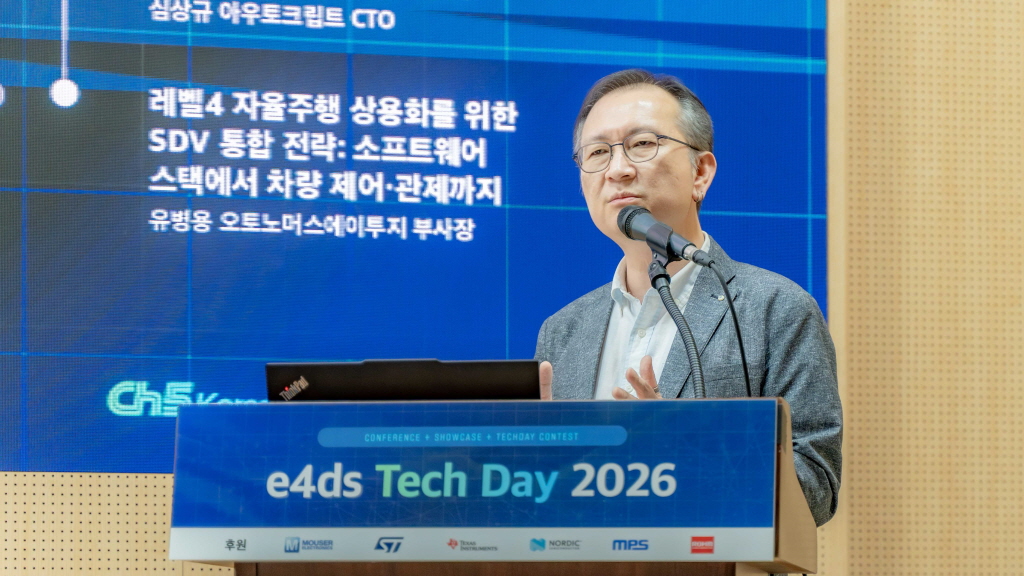
[e4ds Tech Day 2026 ⑨] Sim Sang-gyu, Autocrypt CTO: "In the Physical AI Era, Automotive Security Must Extend Beyond the Vehicle"
At e4ds Tech Day 2026, Sim Sang-gyu, CTO of Autocrypt, explained automotive cybersecurity strategies in the era of Physical AI and SDV (Software-Defined Vehicle). Automobiles are evolving as part of an ecosystem connected to AI, cloud, chargers, IoT, and robots, and he emphasized that the scope of security must expand beyond the vehicle interior to the entire connected environment. In particular, AI model tampering, adversarial attacks, OTA updates, and EV charger hacking were identified as major threats. He explained that response measures require zero trust, AI model integrity protection, intrusion detection, Security by Design and Default, and full lifecycle security management, and that proactive security system establishment beyond regulatory compliance is critical for securing future mobility competitiveness.
2026.10.12by 배종인 기자

NVIDIA to Invest $1 Billion in U.S. Science Over Next Five Years
NVIDIA has announced plans to invest $1 billion over the next five years to strengthen U.S. scientific and technological competitiveness. The company will enhance cutting-edge artificial intelligence research and development capabilities in key areas including quantum computing, healthcare, and energy security, while expanding support for higher education research institutions and cloud service providers. NVIDIA is participating as a major industry partner in the White House Office of Science and Technology Policy's Genesis Mission, and is promoting supercomputer construction in collaboration with national laboratories including Argonne and Los Alamos.
2026.10.12by 배종인 기자











