



Microchip Unveils "PolarFire SoC Architecture" for Running Real-Time Embedded Applications
 Published2018.12.11 09:04
Royalty-free open RISC-V ISA-based
Microprocessor Subsystem Combination Architecture
With the advent of an era where the convergence of 5G, machine learning, and IoT drives computing, embedded developers require the diverse capabilities of Linux-based operating systems. To meet these requirements, deterministic system requirements must be satisfied in design environments where power and temperature are more limited than ever, as well as critical security and reliability requirements. Traditional SoC FPGAs, which combine reconfigurable hardware and Linux-supported processing capabilities on a single chip, provide devices suitable for customization, but they come with drawbacks such as high power consumption, a lack of proven security and reliability, and a low-flexibility and expensive processing architecture.
.jpg)
Microchip Polarfire SoC
To address this, Microchip Technology expanded its Mi-V ecosystem by launching an SoC FPGA architecture that combines the mid-range PolarFire FPGA family with a royalty-free, open RISC-V ISA (Instruction Set Architecture)-based microprocessor subsystem through its subsidiary, Microsemi Corporation.
Microchip’s PolarFire SoC architecture, unveiled at the RISC-V Summit in Santa Clara, California, provides real-time deterministic Asymmetric Multiprocessing (AMP) capabilities to Linux platforms with multicore coherent CPU clusters. Co-developed with SiFive, the PolarFire SoC architecture features a flexible 2 MB L2 memory subsystem that can be configured as a cache, scratchpad, or direct access memory. This architecture enables developers to run deterministic real-time embedded applications with various operating systems for various temperature and space-constrained applications in networked cooperative IoT systems.
Bruce Weyer, Vice President of Programmable Solutions at Microchip, said, “The PolarFire SoC architecture supports real-time capabilities in Linux based on a powerful combination of configurable devices, low power, security, and reliability,” adding, “Building on Microchip’s Mi-V RISC-V ecosystem and system solution portfolio, the PolarFire SoC architecture provides customers with a platform to address the next-generation challenges of the computing industry.”
The PolarFire SoC includes extensive debug features such as instruction traces, 50 breakpoints, a passive run-time configurable AXI (Advanced eXtensible Interface) bus monitor, and an FPGA fabric monitor, as well as Microchip's built-in 2-channel logic analyzer, SmartDebug. In addition, the PolarFire SoC architecture is equipped with reliability and security features such as SEC-DED (Single Error Correction and Double Error Detection) for all memory, physical memory protection, DPA (Differential power analysis) Safe Crypto Core, defense-grade Secure Boot, and 128Kb Flash Boot Memory.
"Naveed Sherwami, CEO of SiFive, stated, 'The PolarFire SoC architecture, a fully customizable programmable RISC-V platform, enables developers to design innovative Linux-based SoCs in new and exciting ways according to the unique requirements of specific fields.' He added, 'The PolarFire SoC leverages SiFive's market-leading U54-MC CPU core complex to provide developers with the capability to overcome the overall challenges of building real-time systems through predictable behaviors.'"
Comments
Related news
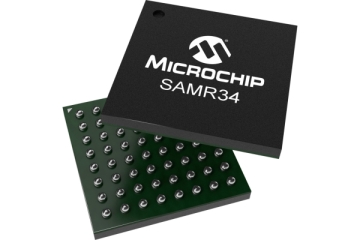
Microchip Launches LoRa SiP Family for Remote IoT Node Development
Microchip Technology has introduced a LoRa SiP featuring an ultra-low-power 32-bit MCU, sub-GHz RF LoRa transceiver, and software stack to accelerate the development of LoRa-based connected solutions. The SAM R34/35 SiP provides certified reference designs and interoperability validated through major LoRaWAN gateways and network providers, thereby significantly simplifying the overall development process through hardware, software, and support. These devices support industry-leading low power consumption in sleep mode and further extend the battery life of remote IoT nodes.
2018.11.17by 이수민 기자
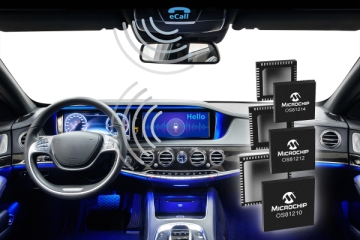
Microchip Launches Single-Cable Automotive Infotainment Networking Solution
INICnet technology is a synchronous, scalable solution that significantly simplifies the construction of audio and infotainment systems, enabling seamless networking without interruption in vehicles with Ethernet-oriented system architecture. INICnet technology provides high-speed packet data communication by supporting file transfer, OTA software updates, and system diagnostics through standard Ethernet frames. It also supports efficient transmission of stream data as well as seamless integration of IP-based system management and data communication. Since it requires no development or licensing of additional protocols or software stacks, it can reduce development costs, effort, and time.
2018.11.21by 이수민 기자
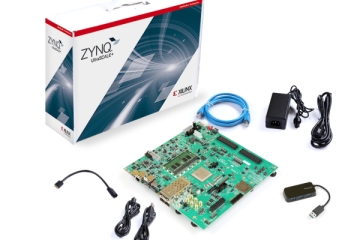
Xilinx Zynq UltraScale+ MPSoC Obtains IEC 61508 Specification Certification
Xilinx announced that its Zynq UltraScale+ MPSoC has been evaluated by Exida, a functional safety certification body, as SIL 3 level capable of implementing HFT1 in accordance with the IEC 61508 functional safety specification. Through this evaluation, product developers can now safely implement AI and high-performance systems for safety-critical applications using Xilinx's diverse, highly integrated single-chip MPSoC product portfolio. Youssef Kailirolai, Vice President of Xilinx's Core Vertical Markets Business Unit, stated, "The Zynq UltraScale+ MPSoC is a device designed with safety and security in mind, and it is an ideal architecture supporting IIoT or Industry 4.0 platforms as well as next-generation automotive, aerospace, and AI-based systems."
2018.11.22by 이수민 기자

Intel Unveils Next-Generation 'Core Ultra Series 3' and vPro Platform for Enterprise PCs
Intel has officially unveiled the "Intel Core Ultra Series 3" for next-generation enterprise PCs and the latest vPro platform, addressing a wide range of demands from enterprise notebooks to high-performance workstations.
2026.03.26by 배종인 기자

ROHM Launches ESD Protection Diode Compatible with High-Speed Interfaces of 10Gbps or Higher
Semiconductor specialist ROHM has developed the 'RESDxVx series' of ESD (electrostatic discharge) protection diodes capable of responding to next-generation high-speed data communication environments exceeding 10Gbps, simultaneously enhancing both signal quality maintenance required in high-speed interfaces and IC protection performance.
2026.03.26by 배종인 기자











