



Global semiconductor sales in 2019 down 11.9% YoY
 Published2020.01.15 09:50
Intel Surpasses Samsung Electronics to Take First Place in Supply Sales in Two Years
The memory market slump continued in 2019, with global semiconductor sales declining 11.9% year-on-year.
In 2020, semiconductor sales are expected to turn positive as semiconductor chip ASPs (average selling prices) increase.

▲ Gartner
According to preliminary results of the 2019 worldwide semiconductor revenue survey released by Gartner on January 15, global semiconductor revenue in 2019 recorded $418.3 billion, an 11.9% decrease from 2018.
Due to the slump in the memory market, Samsung Electronics, which had maintained the top spot in global semiconductor supply sales from 2017 to 2018, lost its ranking to Intel in just two years.
Intel sold its cellular modem business to Apple in the fourth quarter in response to a slump in the server market and continued CPU supply constraints in 2019, which led to a 0.7% decline in semiconductor revenue.
Samsung Electronics has been struggling due to oversupply and falling prices in the DRAM and NAND flash markets, and memory sales, which accounted for 82% of total sales, fell to 34% in 2019.
▲ 2019 Global Top 10 Semiconductor Supplier Sales Rankings <Data = Gartner, January 2020>
“The memory market, which accounted for 26.7% of semiconductor sales in 2019, saw revenue decline by 31.5%,” said Andrew Norwood, vice president and analyst at Gartner. “Within the memory segment, DRAM revenue declined by 37.5% due to oversupply from the end of 2018 to 2019.” “In the second half of 2019, excessive inventory at DRAM suppliers caused semiconductor prices to fall, and ASP fell by 47.4% in 2019.”
“The oversupply is due to the sharp drop in demand in the hyperscale market,” he added, “which shows the reality of OEMs having excessive inventory.”
NAND flash saw a modest decline in the overall memory market last year. NAND flash revenue fell 23.1% as inventory buildup at the end of 2018 exacerbated weak demand in the first half of 2019.
The NAND market began to stabilize in July 2019, which is believed to have been helped by a power outage at a factory jointly owned by Kioxia and Western Digital. The power outage prompted suppliers to clear out inventory, which in turn drove up NAND flash prices.
Gartner expects the recovery in NAND flash prices to continue in 2020 due to low supply bit growth (the rate at which production in bits increases) caused by increased SSD adoption and demand for 5G smartphones.
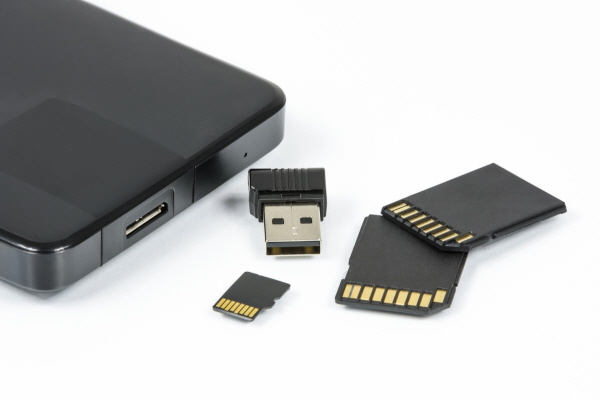
▲ Changes in semiconductor market sales due to the US-China trade war are worth paying attention to in 2020 as well.
“In 2020, chip ASPs are expected to rise as excess inventory issues are resolved, which will ultimately lead to increased semiconductor market revenue, especially in the memory sector,” said Norwood, vice president at Gartner. “Although the US-China trade war appeared to be easing in 2020, the US added several Chinese companies, including Huawei, to the Entity List in 2019, restricting the sale of US components.”
He continued, “Huawei has sought alternative suppliers headquartered in Japan, Taiwan, Korea, and China, as well as its subsidiary HiSilicon, in order to secure silicon suppliers that can replace U.S. companies,” adding, “The movements of the U.S. and Huawei will continue to be something to watch in 2020.”
Comments
Related news

Global IT spending in 2019 will increase compared to 2018 despite the recession.
Global IT spending in 2019 is expected to total $3.74 trillion, representing a 0.6% increase compared to 2018. This represents a slight decline from the previous quarter's forecast of 1.1%. Despite growing uncertainty due to economic recession concerns, Brexit, trade wars, and tariffs, Gartner predicts that IT spending levels in 2019 will remain stable. While figures vary significantly by country, IT spending across all nations is expected to increase in 2019. North American IT spending is projected to grow 3.7% in 2019 despite the ongoing tariff war, and China's IT spending is expected to increase 2.8%.
2019.07.11by 이수민 기자
What is the core of the top 10 strategic technology trends of '20? "Humans and Space"
Gartner, focusing on human-centric smart spaces, has announced the top 10 strategic technology trends for 2020 that enterprises should pay attention to. The top 10 strategic technology trends for 2020 consist of two categories of technologies. These are emerging technologies with innovative potential demonstrating broader impact and use cases as they move beyond their early stages, as well as technologies exhibiting rapid growth and expected to reach their peak within the next five years. Gartner's top 10 strategic technology trends for 2020 are hyperautomation, multiexperience, democratization of expertise, human augmentation, transparency and traceability, autonomous edge, distributed cloud, autonomous things, practical blockchain, and AI security.
2019.10.26by 이수민 기자
[Joint Reporting] Semiconductor Industry Turnaround: Focus on OT Infrastructure and Edge Computing in 2020
DRAM prices rebounded slightly in the third quarter, and Samsung Electronics recorded its highest market share in two years, with the semiconductor industry expected to experience a boom in 2020. The semiconductor industry is focusing on the OT sector to implement IoT, and with the growth of 5G, AI, Edge Computing, and Automotive, demand for memory semiconductors such as DRAM and NAND is projected to increase.
2019.11.26by 최인영 기자
Global semiconductor equipment sales this year down 10.5% from last year… Room for rebound in next year and the year after
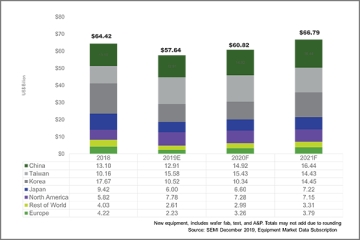
Global semiconductor equipment sales in 2019 fell approximately 10.5% from the record high of $64.4 billion in 2018, recording $57.6 billion. Semiconductor equipment sales in 2020 are expected to reach $60.8 billion, representing approximately 5.5% growth compared to this year, and are projected to record an all-time high of $66.8 billion in 2021. This is because major semiconductor manufacturers are expected to expand capital investments in equipment for sub-10 nanometer process nodes for foundry and logic semiconductor production.
2019.12.11by 이수민 기자

Intel Unveils Next-Generation 'Core Ultra Series 3' and vPro Platform for Enterprise PCs
Intel has officially unveiled the "Intel Core Ultra Series 3" for next-generation enterprise PCs and the latest vPro platform, addressing a wide range of demands from enterprise notebooks to high-performance workstations.
2026.03.26by 배종인 기자











