This page was machine-translated and may differ from the original. View original
IoT Device Internet Method, Product Success or Failure
Wi-Fi and Bluetooth, easy to design due to high popularity
Increasing LTE CAT-M usage among mobile networks
To enjoy online content, you need to be connected to the Internet via mobile, Wi-Fi, or Ethernet. While this type of connection is already widely used in consumer products, IoT edge nodes are not as connected.
Edge devices aren't used to check email or stream video, so they don't need the high data rates required for consumer products.
IoT solutions typically consist of hundreds or thousands of connected edge devices, which adds to the typical design constraints such as cost and power management. At this scale, the method of connecting to the Internet itself can determine the success or failure of the product.
Let's compare each option for the most common types of connectivity used in IoT applications and decide how to implement Internet connectivity in your IIoT (Internet of Things) designs.

First, Ethernet
Ethernet is a fast and reliable way to connect things to the Internet. Commonly used in industrial and building automation, Ethernet shines especially in systems where multiple nodes are connected to the same network.
Ethernet is very secure because it is connected by wires. It also has the function of supplying power to the device through an Ethernet cable via PoE (Power over Ethernet), so a separate power module is not required.
However, the hardwiring method is quite difficult to reflect in the design and is not suitable for all applications.
Nodes connected via Ethernet must be close to the router. Even for short-distance applications such as home automation and building automation, Ethernet cables are quite bulky, making wiring and management very difficult.
Modern buildings are installed by directly connecting lighting automation systems during the construction process, but it is often impossible to later install an Ethernet IoT system in a building that was not initially designed to incorporate Ethernet-based IoT.
Second, Wi-Fi®
Wi-Fi is supported by many mainstream devices and is not subject to the wiring constraints of Ethernet. Despite its widespread use, adding Wi-Fi functionality to embedded designs can be a complex task.
Wi-Fi is attractive because it is fast and allows wireless connection, but it has the disadvantages of poor security and high power consumption. Therefore, Wi-Fi-based IoT design requires an appropriate balance between three factors: security, power, and cost.

To overcome these obstacles, it is necessary to apply a WiFi module optimized for IoT. Using such a module simplifies the design and reduces development time.
Modules such as Microchip's ATWINC1500 have completed all necessary certifications, support security protocols and are optimized for battery-powered devices, enabling Wi-Fi connectivity without compromising on cost and power consumption.
Third, low-power wide area networks (LPWANs)
Many IoT applications are being used in wide-area applications such as environmental monitoring. The advantage of using IoT for environmental monitoring is that it can monitor rural and coastal areas as well as areas that are generally difficult to access.
The problem is that the monitoring sites are usually in rural, coastal, or other difficult-to-access areas. For example, it's impossible to fast-charge a device floating in the Mariana Trench or connect to Wi-Fi in the Mojave Desert.

The typical range of a low-power wide area network is about 10 km. Data transfer speeds are very slow, but unless your IoT solution includes checking email or streaming video, high transfer speeds are not necessary.
While LPWANs are primarily used in agriculture and remote applications, they are not exclusive to either sector. They are increasingly being used in urban areas, and in North America, an auction house has built the largest commercial IoT system in North America to track auction-site vehicles.
There are two widely used LPWAN protocols: LoRaWAN™, named after LoRa®, an acronym for “Long Range,” and Sigfox. One of the differences between the two protocols is cost.
Sigfox is a subscription-based service that operates in a similar way to cellular. If you are in an area where Sigfox service is available, you can sign up and connect through your local service provider.
LoRaWAN allows developers to build their own networks (DIY networks) without paying a fee, but most developers choose to utilize the LoRa gateway infrastructure through local telecom carriers and pay a usage-based fee.
Fourth, Cellular
The coverage area of mobile communications covers the entire world, except for very remote rural areas or remote areas. For embedded systems that require such a large coverage area, mobile communications are the only option, but the problem is cost.
Before construction, you have to go through a telecommunications company, and you can’t build your own network without government regulatory approval. The cost of embedded components and the cost of subscription to a telecommunications company for each node often outweigh the benefits of a mobile network’s vast service coverage. In other words, the telecommunications network used to connect things and the monthly telecommunications fee must be separated.
Among these, IoT-specific mobile communication networks are emerging as competitors of low-power wide-area communication networks. Among IoT-specific mobile communication networks, the use of LTE CAT-M (Machine) is increasing in particular. Mobile communication rates can be quite expensive, but the current CAT-M rate plan is formed at about $7 per month per 5MB. In addition, there are CAT-0, CAT-1, and the newly released NB (Narrow Band)-IoT as IoT connection methods through mobile communication networks.
There is growing anticipation that the recently commercialized 5G will lead IoT innovation. Although it is more expensive than IoT-only communication networks due to its fast speed, it will enable advanced IoT applications such as self-driving cars to develop further. 5G is not as widespread as LTE or 3G, but its coverage continues to expand. The industry predicts that 20% of the world's population will use 5G within the next five years.
Fifth, Satellite
The coverage area of mobile networks covers most populated areas, but what if you need to connect things in remote areas or vast wilderness areas?
Satellite communications are used in IoT applications such as transportation logistics services targeting remote areas of the globe where mobile communication services do not reach. As satellite technology advances, this will change, but satellite IoT application development is still not as accessible as other methods.
Although many satellite constellations are designated for military use, modules can be purchased from companies such as Iridium® and ORBCOMM®.

Sixth, Bluetooth®
Bluetooth is a technology we are familiar with. Both Bluetooth Classic and Bluetooth Low Energy (BLE) have a maximum range of over 100m, but are generally applied when the distance between devices does not exceed a few meters. As a low-power technology, it is suitable for consumer products because it supports a wide range of services and enables fast pairing.
Unlike Wi-Fi, Bluetooth does not connect directly to the Internet. To connect to the Internet, you need to set up a gateway. Setting up your own gateway can be a daunting task, but it can be as easy as connecting to a mobile device that also connects to Wi-Fi.
The recently updated Bluetooth 5.0 version has an extended transmission range, allowing it to be used in home networks. While Bluetooth Classic and BLE are mainly used to connect devices that are only a few meters apart, Bluetooth 5.0 can cover the entire home. With this extended range, Bluetooth is moving into the realms of home automation, lighting, and industrial applications.
Recommended suggestions
The differentiation of these connectivity methods is based on the ease of implementation itself. Commonly used networks such as Wi-Fi or Bluetooth are the easiest way to evaluate and analyze IoT designs, as there is no need to build your own gateway or pay a carrier.
Consumers can use a variety of Wi-Fi and Bluetooth prototyping modules, which come with open source code and user guides for programming. We recommend using connectivity modules because they offer greater design flexibility. If you need to change to a different network during your design, you can simply replace the module without having to start over from scratch.
Simplify the design process
Internet connectivity is just one of many components in an IoT design.
IoT systems consist of three elements: smart, connected, and secure. This means that three electrical components are required: an MCU, a connectivity module, and a security element. The challenge of IoT design comes from the integration of these three components.
Microchip’s AVR-IoT WG Development Board is a streamlined Wi-Fi development platform that is pre-configured to securely connect to Google Cloud’s IoT platform. With a secure element, Wi-Fi controller, and MCU all on one board, you can eliminate much of the basic design work and get your IoT products to market quickly.

The Arduino Uno WiFi Rev 2 also offers smart, connected and secure elements. Arduino has a Prototyping Community that provides a variety of documentation and open source code online.
MikroElektronika Click Boards™ are rapid prototyping modules that connect directly to the AVR-IoT WG development board or via a shield for Arduino Uno WiFi Rev 2.
There are a variety of LoRa modules, Bluetooth modules, and a variety of connectivity click boards available, making them a great way to add connectivity to your IoT designs during the prototyping phase.

Building IoT devices is easier than ever thanks to easy-to-use tools like Arduino and the AVR-IoT WG development board.
Anyone can build an IoT network, whether you're an embedded developer, a maker, or simply a curious electronics blog follower.
As the world becomes increasingly interconnected, the possibilities afforded by this powerful accessibility will continue to advance connectivity in new and novel ways.
This article is based on "Six Ways to This is a summary of an article titled "Put the 'I' in 'IoT'".
Wi-Fi and Bluetooth, easy to design due to high popularity
Increasing LTE CAT-M usage among mobile networks
To enjoy online content, you need to be connected to the Internet via mobile, Wi-Fi, or Ethernet. While this type of connection is already widely used in consumer products, IoT edge nodes are not as connected.
Edge devices aren't used to check email or stream video, so they don't need the high data rates required for consumer products.
IoT solutions typically consist of hundreds or thousands of connected edge devices, which adds to the typical design constraints such as cost and power management. At this scale, the method of connecting to the Internet itself can determine the success or failure of the product.
Let's compare each option for the most common types of connectivity used in IoT applications and decide how to implement Internet connectivity in your IIoT (Internet of Things) designs.
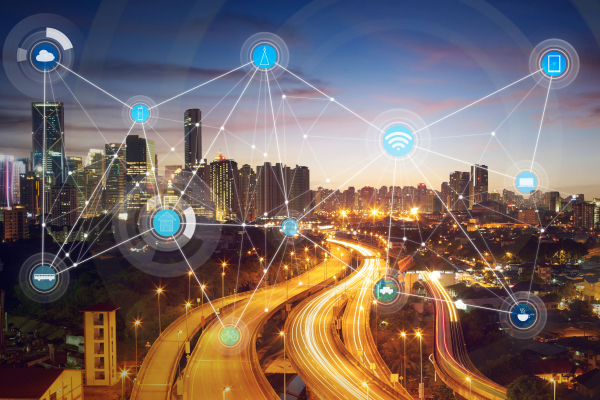
▲ IoT is hundreds or thousands of devices connected to the same network.
It consists of thousands of devices [Image = Microchip]
First, Ethernet
Ethernet is a fast and reliable way to connect things to the Internet. Commonly used in industrial and building automation, Ethernet shines especially in systems where multiple nodes are connected to the same network.
Ethernet is very secure because it is connected by wires. It also has the function of supplying power to the device through an Ethernet cable via PoE (Power over Ethernet), so a separate power module is not required.
However, the hardwiring method is quite difficult to reflect in the design and is not suitable for all applications.
Nodes connected via Ethernet must be close to the router. Even for short-distance applications such as home automation and building automation, Ethernet cables are quite bulky, making wiring and management very difficult.
Modern buildings are installed by directly connecting lighting automation systems during the construction process, but it is often impossible to later install an Ethernet IoT system in a building that was not initially designed to incorporate Ethernet-based IoT.
Second, Wi-Fi®
Wi-Fi is supported by many mainstream devices and is not subject to the wiring constraints of Ethernet. Despite its widespread use, adding Wi-Fi functionality to embedded designs can be a complex task.
Wi-Fi is attractive because it is fast and allows wireless connection, but it has the disadvantages of poor security and high power consumption. Therefore, Wi-Fi-based IoT design requires an appropriate balance between three factors: security, power, and cost.

▲ Wi-Fi is the preferred Internet access method for consumer products.
It has the advantage of high-speed and wireless connectivity [Image = Microchip]
To overcome these obstacles, it is necessary to apply a WiFi module optimized for IoT. Using such a module simplifies the design and reduces development time.
Modules such as Microchip's ATWINC1500 have completed all necessary certifications, support security protocols and are optimized for battery-powered devices, enabling Wi-Fi connectivity without compromising on cost and power consumption.
Third, low-power wide area networks (LPWANs)
Many IoT applications are being used in wide-area applications such as environmental monitoring. The advantage of using IoT for environmental monitoring is that it can monitor rural and coastal areas as well as areas that are generally difficult to access.
The problem is that the monitoring sites are usually in rural, coastal, or other difficult-to-access areas. For example, it's impossible to fast-charge a device floating in the Mariana Trench or connect to Wi-Fi in the Mojave Desert.

▲ LPWAN can cover a wide area with minimal power.
It is suitable for applications in agriculture, etc. [Photo = Microchip]
The typical range of a low-power wide area network is about 10 km. Data transfer speeds are very slow, but unless your IoT solution includes checking email or streaming video, high transfer speeds are not necessary.
While LPWANs are primarily used in agriculture and remote applications, they are not exclusive to either sector. They are increasingly being used in urban areas, and in North America, an auction house has built the largest commercial IoT system in North America to track auction-site vehicles.
There are two widely used LPWAN protocols: LoRaWAN™, named after LoRa®, an acronym for “Long Range,” and Sigfox. One of the differences between the two protocols is cost.
Sigfox is a subscription-based service that operates in a similar way to cellular. If you are in an area where Sigfox service is available, you can sign up and connect through your local service provider.
LoRaWAN allows developers to build their own networks (DIY networks) without paying a fee, but most developers choose to utilize the LoRa gateway infrastructure through local telecom carriers and pay a usage-based fee.
Fourth, Cellular
The coverage area of mobile communications covers the entire world, except for very remote rural areas or remote areas. For embedded systems that require such a large coverage area, mobile communications are the only option, but the problem is cost.
Before construction, you have to go through a telecommunications company, and you can’t build your own network without government regulatory approval. The cost of embedded components and the cost of subscription to a telecommunications company for each node often outweigh the benefits of a mobile network’s vast service coverage. In other words, the telecommunications network used to connect things and the monthly telecommunications fee must be separated.
Among these, IoT-specific mobile communication networks are emerging as competitors of low-power wide-area communication networks. Among IoT-specific mobile communication networks, the use of LTE CAT-M (Machine) is increasing in particular. Mobile communication rates can be quite expensive, but the current CAT-M rate plan is formed at about $7 per month per 5MB. In addition, there are CAT-0, CAT-1, and the newly released NB (Narrow Band)-IoT as IoT connection methods through mobile communication networks.
There is growing anticipation that the recently commercialized 5G will lead IoT innovation. Although it is more expensive than IoT-only communication networks due to its fast speed, it will enable advanced IoT applications such as self-driving cars to develop further. 5G is not as widespread as LTE or 3G, but its coverage continues to expand. The industry predicts that 20% of the world's population will use 5G within the next five years.
Fifth, Satellite
The coverage area of mobile networks covers most populated areas, but what if you need to connect things in remote areas or vast wilderness areas?
Satellite communications are used in IoT applications such as transportation logistics services targeting remote areas of the globe where mobile communication services do not reach. As satellite technology advances, this will change, but satellite IoT application development is still not as accessible as other methods.
Although many satellite constellations are designated for military use, modules can be purchased from companies such as Iridium® and ORBCOMM®.

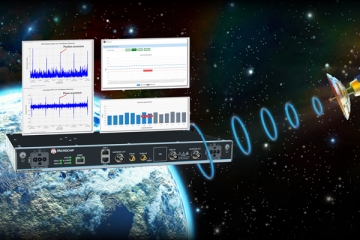
▲ In the case of remote areas where mobile communication services do not reach
Satellite communication is effective, but the service target is not yet
Limited to commercial IoT [Image = Microchip]
Satellite communication is effective, but the service target is not yet
Limited to commercial IoT [Image = Microchip]
Sixth, Bluetooth®
Bluetooth is a technology we are familiar with. Both Bluetooth Classic and Bluetooth Low Energy (BLE) have a maximum range of over 100m, but are generally applied when the distance between devices does not exceed a few meters. As a low-power technology, it is suitable for consumer products because it supports a wide range of services and enables fast pairing.
Unlike Wi-Fi, Bluetooth does not connect directly to the Internet. To connect to the Internet, you need to set up a gateway. Setting up your own gateway can be a daunting task, but it can be as easy as connecting to a mobile device that also connects to Wi-Fi.
The recently updated Bluetooth 5.0 version has an extended transmission range, allowing it to be used in home networks. While Bluetooth Classic and BLE are mainly used to connect devices that are only a few meters apart, Bluetooth 5.0 can cover the entire home. With this extended range, Bluetooth is moving into the realms of home automation, lighting, and industrial applications.
Recommended suggestions
The differentiation of these connectivity methods is based on the ease of implementation itself. Commonly used networks such as Wi-Fi or Bluetooth are the easiest way to evaluate and analyze IoT designs, as there is no need to build your own gateway or pay a carrier.
Consumers can use a variety of Wi-Fi and Bluetooth prototyping modules, which come with open source code and user guides for programming. We recommend using connectivity modules because they offer greater design flexibility. If you need to change to a different network during your design, you can simply replace the module without having to start over from scratch.
Simplify the design process
Internet connectivity is just one of many components in an IoT design.
IoT systems consist of three elements: smart, connected, and secure. This means that three electrical components are required: an MCU, a connectivity module, and a security element. The challenge of IoT design comes from the integration of these three components.
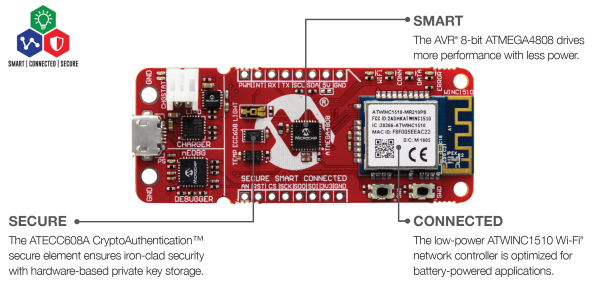
Microchip’s AVR-IoT WG Development Board is a streamlined Wi-Fi development platform that is pre-configured to securely connect to Google Cloud’s IoT platform. With a secure element, Wi-Fi controller, and MCU all on one board, you can eliminate much of the basic design work and get your IoT products to market quickly.

▲ The AVR-IoT WG development board is securely connected to Google Cloud.
Pre-configured to be connected [Photo = Microchip]
The Arduino Uno WiFi Rev 2 also offers smart, connected and secure elements. Arduino has a Prototyping Community that provides a variety of documentation and open source code online.
MikroElektronika Click Boards™ are rapid prototyping modules that connect directly to the AVR-IoT WG development board or via a shield for Arduino Uno WiFi Rev 2.
There are a variety of LoRa modules, Bluetooth modules, and a variety of connectivity click boards available, making them a great way to add connectivity to your IoT designs during the prototyping phase.

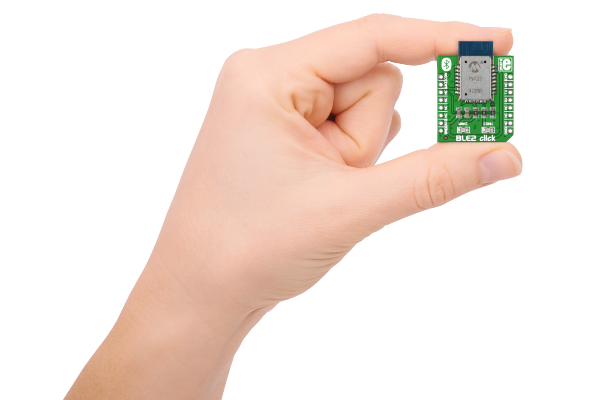
▲ The Microelectronica BLE2 Click Board is a versatile
Easy to integrate into a universal development platform [Photo = Microchip]
Building IoT devices is easier than ever thanks to easy-to-use tools like Arduino and the AVR-IoT WG development board.
Anyone can build an IoT network, whether you're an embedded developer, a maker, or simply a curious electronics blog follower.
As the world becomes increasingly interconnected, the possibilities afforded by this powerful accessibility will continue to advance connectivity in new and novel ways.
This article is based on "Six Ways to This is a summary of an article titled "Put the 'I' in 'IoT'".
본 기사에 대한 정정·반론·추후보도 청구는 보도 청구 안내를, 그간 게재된 보도문은 정정·반론보도 모아보기를 참고해 주세요.