



Embedded System Design Must Start with Power Supply
 Published2020.10.15 16:00
Embedded system noise reduction, from the early stages of design
Take this into account and shorten power wiring and utilize capacitors.
High-performance wireless electronic products are being widely used not only in homes but also in various industries. Small terminals now perform some tasks that were previously handled by large central devices, and more data is transmitted and received wirelessly with low latency rather than via wires.
The market is demanding smaller size, better performance, faster speeds, and lower power consumption from electronic products. So, what are the most important factors that engineers designing electronic products should consider?
It is the power supply. Only when supported by a stable power supply can a designed product perform at its best. There are various factors that affect the power supply. In particular, the causes of EMI amount to approximately 500 million. It is very difficult to control all of this within a limited time.

We asked Park Kyung-jin, CEO of Creca, who will be giving a special lecture titled "Design Methods for Power Stabilization in Embedded Systems" at the " 2020 Mouser Power Seminar " on the upcoming Wednesday, the 21st, what mindset relevant engineers should have for effective power design and stable power management.
Q. Please give a brief self-introduction and an introduction to your company.
A. Hello. I am Park Kyung-jin, CEO of Creka Co., Ltd., a company engaged in radar development, sales, and technical consulting. I am currently conducting hardware-related training at the e4ds Lifelong Education Center.
Q. What are some of the recent issues in the field of embedded system design?
A. The trend in embedded systems is miniaturization and low power consumption, with new technologies such as high frequency and high-speed digital transmission being applied. Consequently, the factors that engineers must consider during the design, manufacturing, and debugging processes are increasing. Furthermore, the rising cost of measurement equipment has placed a significant burden on companies.
Q. When designing power supplies for embedded systems, what should engineers prioritize to ensure the smooth operation of the entire system?
A. Fundamentally, you must consider the overall power block. You need to identify the incoming input voltage—for example, 5V, 3.3V, or 2.5V—classify and organize it into analog and digital, and then draw up a rough ground separation plan. Additionally, you must review whether the wiring lengths and the number of capacitors are sufficient. Subsequently, you must consider the placement of power components and functional ICs during the PCB artwork phase. This is to prevent noise-generating factors in advance.
Q. What are the main causes of noise in power signals? And what methods are available to identify the points where that noise occurs?
A. Ripple is likely the first thing that comes to mind as a major cause of noise in power supplies. In addition, one can consider spark-like voltage and current. Theoretically, these factors are caused by parasitic resistive and inductive components. Generally, the longer the wiring in a power supply, the greater the possibility of external noise entering. This can be fully verified using an oscilloscope.
Q. Capacitors appear to be widely used in PCB Power Distribution Network (PDN) design. What are the criteria for selecting suitable capacitors?
A. This requires examination from various angles. PDN is fundamentally a design method worth utilizing. PDN serves as the standard for selecting capacitor values. Referencing this can lead to a good circuit design. What needs a little more thought here is the length of the power wiring. If the length is not very long, the number of capacitors can be fewer than the theoretical amount.
Q. If we continue to manufacture products to verify how much noise has been reduced, it will cause problems in terms of cost and time. I would like to know about the simulation method that overcomes this.
A. While utilizing simulations would be ideal, it is realistically difficult to implement due to the high cost of the software. Noise reduction design strategies must begin with understanding the theoretical aspects and closely observing and utilizing actual PCB guidelines.
Q. Lastly, do you have any advice for power design engineers?
A. I would like to emphasize that power design should not be solely focused on the power supply. A good power design will result from understanding the functional systems receiving power, viewing the overall system, and considering whether there will be any power-related issues in operation scenarios. Thank you.
Comments
Related news
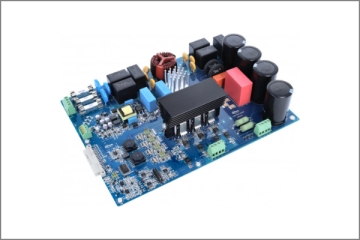
Infineon Unveils SiC-Based Servo Drive Evaluation Board
Infineon has launched the CoolSiC MOSFET MADK board. The MADK EVAL-M5-IMZ120R-SIC evaluation board for motors up to 7.5kW is a 3-phase inverter board for servo drives. All analog and control signals can be easily accessed through test pads, and the signals are isolated from the power section for precise measurement.
2020.09.09by 명세환 기자
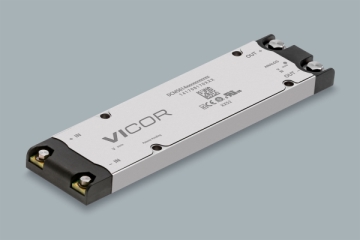
Vicor Globally Supplys "Modular Power Solutions" via Arrow
Vicor Corporation announced that it is expanding the scope of its distribution agreement with Arrow Electronics from the Europe, Middle East, and Africa region to worldwide coverage. Arrow stated that this contract expansion was made to propose smaller and more efficient solutions to customers seeking to innovate their power delivery networks in response to ever-increasing system power demands.
2020.09.16by 이수민 기자
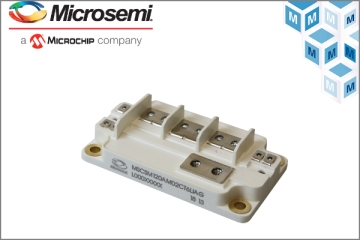
Mouser to Supply Microchip SiC Phase Leg Power Modules
Mouser Electronics supplies Microchip Technology's AgileSwitch phase leg SiC MOSFET modules. The power modules, which combine SiC MOSFETs and SiC diodes, can be utilized in power supply device applications across various fields including automotive, medical, aerospace, and power generation.
2020.09.28by 강정규 기자

ESP32 Development Environment Selection and GPS Application Implementation
The ESP32 is a microcontroller that integrates Wi-Fi, Bluetooth, 12-bit ADC, capacitive touch, PWM, DAC, and UART in a single SoC. However, the abundance of features does not by itself solve the designer's problems. The real challenges lie in selecting the appropriate development environment, determining which pins can be used and which must be avoided, and converting raw data from modules into usable information. This document addresses ESP32 peripheral constraints (ADC2 and Wi-Fi coexistence limitation, UART1 occupancy, ADC non-linear regions), the trade-offs between Arduino IDE and ESP-IDF, and the process from connecting NEO-6M/NEO-M8N GPS modules to UART2, parsing NMEA sentences, and visualizing routes in Google Earth, all organized based on documented references.
2026.10.12by 편집부
MIPI CSI-2, DSI-2, C-PHY, D-PHY Test Solution Technical White Paper
The MIPI interface adopts a burst mode that transitions between low-power (LP) and high-speed (HS) states for low-power consumption, and in return, strict timing rules are imposed on state transitions. Additionally, the high-speed section operates as a packet-based protocol with headers, ECC, and CRC, so verification engineers must handle waveforms and protocols simultaneously. Traditional configurations combining general-purpose oscilloscopes and AWGs reveal limitations in setup complexity, measurement uncertainty, and lack of reproducibility when faced with these requirements. This white paper, based on webinar materials, organizes the structure of this problem and describes how the SV5C-DPTXCPTX generator for receiver testing and SV5C-DPRXCPRX analyzer for transmitter testing integrate state transition testing, stressed eye testing, and protocol analysis into a single bench, along with their application boundaries.
2026.10.12by 편집부











