



Even 5G technology can't break through the US's Huawei encirclement: "Biden will continue."
 Published2020.11.09 16:31
Difficulty in procuring parts, time needed to become self-sufficient
US containment will continue under the Biden administration.
In October, the central and eastern European countries of Slovakia, North Macedonia, Bulgaria, and Kosovo signed an agreement with the U.S. State Department to consider "foreign government control" when selecting equipment suppliers for the construction of 5G networks.
Although the agreement did not mention any specific countries or companies, it was revealed that the description of companies suspected of threatening national security and leaking personal information was in fact targeting Chinese companies such as Huawei and ZTE.
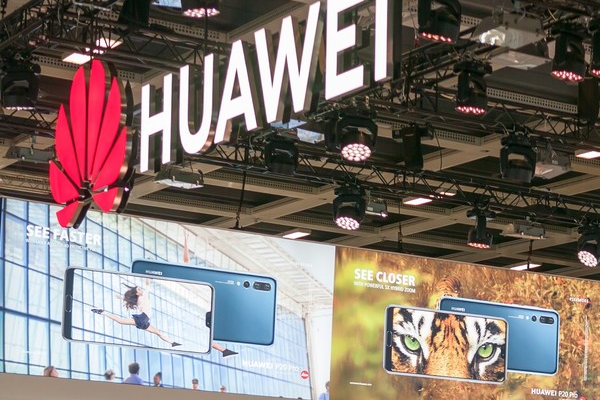
[Photo = Matti Blume]
“This agreement is in line with our national efforts to ensure 5G security,” said Slovak Foreign Minister Ivan Korcok. “Everyone is aware of the security risks (related to Huawei equipment and devices) and we do not want any backdoors.”
A backdoor is a private access function created by developers or administrators to easily access a computer system. Huawei exports it to countries around the world.There are suspicions that they are attempting to steal information by installing backdoors on communication equipment and mobile phones.
The prime ministers of North Macedonia and Bulgaria also expressed their view that 5G networks should be built on the basis of fair competition and transparency, and that this agreement is crucial for the future prosperity of their countries.
For China, which has been leading the "16+1" summit, a regular consultative body with Central and Eastern European countries as part of the Belt and Road Initiative since 2012, this agreement is likely to cause disruption to future plans.
The Institute for Information and Communications Technology Planning and Evaluation (IITP) reported in its "ICT Brief 2020-41 Major Country Trends" that the number of countries joining the Huawei ban continues to grow. In July, the UK officially announced a phased, complete phaseout of Huawei equipment, and in October, Sweden also announced its exclusion.
France has also indirectly hinted at a ban on Huawei and ZTE equipment, citing domestic industry protection and security concerns, while Italy has blocked its telecoms provider Fastweb from doing business with Huawei.
In response to these strong moves by European countries, Huawei refuted claims that it is a private company and that the claims that it poses a threat to national security are simply baseless suspicions.
According to the American foreign affairs journal Foreign Policy, key American policymakers and top European intelligence officials are warning that Chinese companies participating in the development of Europe's 5G system could become Trojan horses for technology theft and potentially exert undue influence.
◇ Give flesh and strike bones
Last September, the United States announced strong sanctions aimed at blocking semiconductor supplies to Huawei, citing reasons such as preventing China from securing competitiveness in advanced fields and for national security. Then, in October of last year, we approved the transaction requests of some companies.
The U.S. Department of Commerce has authorized Intel and AMD to supply certain products, including PC servers, to Huawei. This appears to reflect concerns that the strict sanctions on Huawei could actually pose a risk to the supply chains of U.S. semiconductor companies.
With several companies resuming business with Huawei, it is expected that major semiconductor companies such as Qualcomm and MediaTek will also be permitted to do business with Huawei within the year.
Among domestic companies, Samsung Display received approval to supply some OLED products for smartphones, and Sony was also permitted to supply image sensors for smartphones.
However, OLED products for smartphones can also be purchased from Chinese companies such as BOE, so it is uncertain whether this supply approval will actually lead to exports to Huawei. Samsung Display supplies less than BOE in terms of volume, and only supplies 10% of its annual OLED panel shipments to Huawei.
Additionally, domestic and foreign companies that have submitted applications for trade licenses to the U.S. government, including Samsung Electronics, SK Hynix, Kioxia, and TDK, are also paying close attention to whether they will be approved.
Currently, the U.S. government only allows trade in relatively non-sensitive items, such as servers, displays, and image sensors, that can be sourced from other Chinese companies.
The possibility of approval is uncertain as export permits for memory and non-memory semiconductors used in cutting-edge smartphones have not yet been issued.
Huawei is developing self-rescue measures by pursuing its own foundry.
Huawei is accelerating its technological independence by building a semiconductor factory in Shanghai to secure and procure key components independently in order to circumvent the U.S.'s strict sanctions.
The new semiconductor factory being built by Huawei is expected to primarily handle pilot production of low-cost 45nm chips. The industry believes that since 45nm chips have been commercially available by major semiconductor companies for over a decade, Huawei will face no significant challenges in adopting and stabilizing the technology immediately.
Huawei plans to first stabilize its 45nm process, then introduce a 28nm process by the end of 2021, enabling it to be used in 5G communications equipment, smart TVs, and other IoT devices. Previously, Huawei's semiconductor design was handled by its subsidiary HiSilicon, while production was handled by Taiwan's TSMC and others. However, direct production at its own factory is expected to impact these companies as well.
However, TSMC and Samsung Electronics, the world's top two foundries, have secured the lead in developing 5nm process chip technology. It is expected that it will take a considerable amount of time for Huawei, which is now starting the 45nm process, to catch up.
The Biden administration will recruit allies to encircle China.
On the morning of November 7th, local time in the United States, major American media outlets such as CNN and NBC reported that former Democratic Senator Joe Biden had been confirmed as the winner of the 46th U.S. presidential election.
Although current US President Donald Trump refuses to accept the election results, the inauguration of the Biden administration on January 20, 2021, is more or less a foregone conclusion. What impact will Biden's election have on Huawei and China?
Over the past four years, the Trump administration has weakened the multilateral trade order by withdrawing from the Trans-Pacific Partnership (TPP) and crippling the World Trade Organization (WTO). Furthermore, it has spurred US-China trade by imposing high tariffs that erroneously conflated national security with trade, and has pursued highly uncertain trade policies, including bilateral trade agreements that prioritize US interests.
According to the Korea International Trade Association (KITA), President-elect Biden's trade pledges are not significantly different from the current Trump administration's trade policies. President-elect Biden announced plans to pursue a U.S.-centric trade policy aimed at revitalizing the U.S. manufacturing industry, creating jobs, and bolstering domestic competitiveness by encouraging manufacturing in the U.S. and buying American products.
President-elect Biden, who holds the position that "economic security is national security," has announced that he will work with allies to correct China's unfair trade practices and reform China's structures that undermine the multilateral trade order, and his hard-line policy toward China is expected to continue from the previous administration.
The Trump administration's trade policy, prioritizing America First, created conflict with allies, but the Biden administration is projecting a view that it will restore American leadership and lead the global trade order through multilateralism and solidarity with allies.
In a report analyzing the impact of the U.S. presidential election results on the Korean economy, the Korea Chamber of Commerce and Industry stated, “The Biden administration’s trade policy is ‘pressure on China’ and ‘multilateral negotiations,’” and pointed out that “there is a high possibility that Korea’s active cooperation will be sought in this process, and companies with a large proportion of trade with China may be hit hard.”
◇ Huawei sanctions easing is highly unlikely.
Even with the inauguration of a new administration in the United States, the US-China conflict is expected to continue. Meanwhile, a growing number of countries are joining the sanctions and pressure campaign targeting Huawei.
The United States appears to be blocking semiconductor supplies to Huawei while allowing trade in some non-sensitive items.
Domestic companies, too, must devise a multifaceted approach to allay security concerns, minimize export losses, and ensure business continuity, given their organic supply chain ties to Huawei.
Comments
Related news
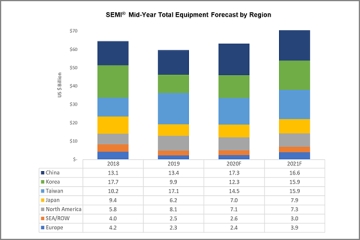
Semiconductor equipment investment next year is expected to reach a record high.
SEMI announced that global semiconductor equipment investment is expected to reach $63.2 billion this year, a rise of approximately 6% compared to $59.6 billion in the previous year. Additionally, it forecasted that next year will see further growth to approximately $70 billion, marking a record high. Regionally, China, Taiwan, and South Korea are expected to lead global semiconductor equipment investment.
2020.07.22by 이수민 기자
Huawei Given a Six-Month Lifeline, What Is the Impact on the Korean Economy?
The U.S. government has implemented third-round sanctions against Huawei, resulting in a complete cutoff of semiconductor supplies to Huawei and 106 of its affiliated companies. Huawei is known to have secured components that can sustain operations for approximately six months at maximum. The domestic semiconductor industry estimates that if this export ban continues for one year, it will result in approximately 10 trillion won in annual revenue disruption.
2020.09.22by 이수민 기자
"The US and China are leading the way in AI development," Korea faces a difficult choice.
By 2030, the potential scale of AI's impact on the global economy is projected to reach up to 16 trillion dollars. Currently, the global AI competitive landscape is shaped around the leading United States and the catching-up China. Both countries are engaged in fierce competition while demonstrating considerable interdependence. However, as economic and technological decoupling between the two countries emerges due to the US-China trade conflict, the confrontational structure surrounding AI is intensifying. This trend is expected to strengthen further with the COVID-19 pandemic.
2020.10.20by 이수민 기자

Intel Unveils Next-Generation 'Core Ultra Series 3' and vPro Platform for Enterprise PCs
Intel has officially unveiled the "Intel Core Ultra Series 3" for next-generation enterprise PCs and the latest vPro platform, addressing a wide range of demands from enterprise notebooks to high-performance workstations.
2026.03.26by 배종인 기자

ROHM Launches ESD Protection Diode Compatible with High-Speed Interfaces of 10Gbps or Higher
Semiconductor specialist ROHM has developed the 'RESDxVx series' of ESD (electrostatic discharge) protection diodes capable of responding to next-generation high-speed data communication environments exceeding 10Gbps, simultaneously enhancing both signal quality maintenance required in high-speed interfaces and IC protection performance.
2026.03.26by 배종인 기자











