



[Interview] "HPC Needs an Integrated, Heterogeneous Programming Environment"
 Published2020.12.24 18:45
Intel Delivers OneAPI Unified Environment to Prevent Fragmentation
ManycoreSoft supports HPC implementation from both hardware and software perspectives.
As the speed and volume of data collection rapidly increases, the demand for high-performance processors capable of quickly processing massive amounts of data continues to grow. IDC estimates that the total amount of data produced by humanity to date reached 33 zettabytes (ZB) in 2018, and this is projected to increase to 175 ZB by 2025.
The industry has been increasing the density per unit area to enhance processor performance. However, this approach already encountered limitations due to power consumption and heat generation in the early 2000s. This was overcome by multicore/many-core technology, which integrates multiple cores onto a single chip. The number of integrated cores continues to increase.
Beyond increasing core counts, other approaches are also being adopted. In fields requiring massive computational power, such as big data processing, deep learning, and machine learning, it's becoming increasingly common for general-purpose processors, efficient for complex, sequential tasks, to be supplemented by parallel processors, efficient for simple, repetitive tasks, in the form of accelerators.
"Heterogeneous systems" equipped with different types of processors, such as CPUs, GPUs, and FPGAs, are widely used in fields requiring high-performance computing (HPC), such as natural language processing, genome analysis, and financial forecasting. However, implementing them is not easy. Park Jeong-ho, CEO of Manicorsoft, explained that this was due to the fragmentation of the programming environment.

CEO Park Jeong-ho said, “Systems equipped with multiple processors require a variety of programming environments to coexist, making programming difficult and requiring significant effort for future program maintenance and management.”
If a system utilizes CPUs, GPUs, and FPGAs simultaneously, programmers must be able to write and manage code in pThreads and OpenMP for the CPU, CUDA and OpenCL for the GPU, and Verilog for the FPGA. Furthermore, if the system is divided across multiple nodes, they must also handle programming models like MPI, which require inter-node communication.
To combat programming fragmentation, Intel unveiled "OneAPI," a unified programming environment, later this year. Park explained, "OneAPI integrates Intel's previously released libraries and tools and provides the DPC++ programming model based on the standard heterogeneous parallel programming model, SYCL." He added, "This enables programming across a variety of heterogeneous processors."
OneAPI increases 'code portability' through the DPC++ programming model, which allows programs to be written using a single code to run on various types of accelerators. Additionally, performance portability has been improved by providing code optimized for the architecture of various accelerators in the form of a library.
CEO Park Jeong-ho emphasized, "Unlike SYCL, a heterogeneous programming model based on the C++ language, DPC++ includes the ability to write code that can run programs in parallel on accelerators." He also explained, "DPC++ provides unified memory, making data transfer between the accelerator and host memory easier to manage."
oneAPI is largely open-source software. CEO Park stated, "With future participation, it's possible and hopeful that hardware from other manufacturers, such as NVIDIA and AMD, will be supported."
◇ "Supporting HPC design capabilities in both hardware and software."
ManycoreSoft is a startup founded in 2012 in the Multicore Computing Lab at Seoul National University. It possesses hardware and software expertise in accelerators like GPUs and FPGAs, and provides solutions to address HPC challenges in diverse fields, including AI, finance, healthcare, manufacturing, and biotechnology. Currently, we design, manufacture and sell a water-cooled GPU system called 'DEEP Gadget'.
CEO Park Jeong-ho said, “We recently started a software project that automatically builds AI infrastructure that runs deep learning models efficiently by using all accelerators in the cluster,” and added, “The project supports various backend hardware architectures, and we expect OneAPI to play a key role in supporting various Intel hardware in this project.”
He also stated, “Manicorsoft plans to continue to work to ensure that its hardware and software know-how and capabilities in the HPC field can be utilized in various industries.”
Comments
Related news
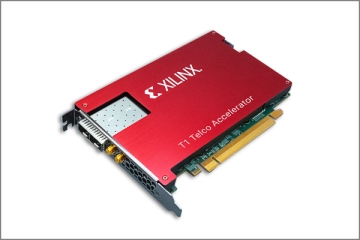
Xilinx Announces FPGA Accelerators to Support 5G Virtualization
Xilinx has unveiled the 'T1 Mobile Accelerator Card' for 5G network O-DU and vBBU. The T1 card, equipped with Xilinx's Zynq UltraScale RFSoC FPGA, performs both O-RAN fronthaul protocol and Layer 1 offload, and is a multifunctional PCIe single-slot card that can be easily connected in a plug-and-play manner to both x86 and non-x86 servers.
2020.09.16by 이수민 기자
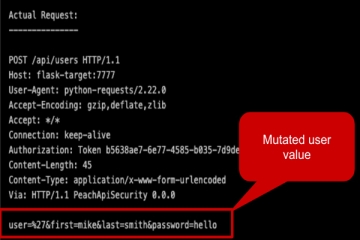
GitLab Completes Integration of Fuzzing Solutions, Strengthening DevSecOps Capabilities
GitLab has completed its integration of Fuzz Tech, a security software development company specializing in protocol fuzz testing and DAST API testing security, and Fuzzitech, a continuous fuzz testing solution provider offering coverage-guided testing. Through this integration, GitLab now delivers a comprehensive and integrated security solution to its security features customers, spanning from automated DevOps security testing deployment to vulnerability management and remediation.
2020.12.03by 이수민 기자
Naver Cloud, Advancing Cloud with Intel FPGA
Naver Cloud and Intel have signed an MOU for research and development of next-generation smart NIC and storage network acceleration. Both companies will mutually support tools, licenses, development kits, and personnel for FPGA development. Based on this, they plan to develop a differentiated public cloud business model.
2020.12.14by 이수민 기자

Intel Unveils Next-Generation 'Core Ultra Series 3' and vPro Platform for Enterprise PCs
Intel has officially unveiled the "Intel Core Ultra Series 3" for next-generation enterprise PCs and the latest vPro platform, addressing a wide range of demands from enterprise notebooks to high-performance workstations.
2026.03.26by 배종인 기자

ROHM Launches ESD Protection Diode Compatible with High-Speed Interfaces of 10Gbps or Higher
Semiconductor specialist ROHM has developed the 'RESDxVx series' of ESD (electrostatic discharge) protection diodes capable of responding to next-generation high-speed data communication environments exceeding 10Gbps, simultaneously enhancing both signal quality maintenance required in high-speed interfaces and IC protection performance.
2026.03.26by 배종인 기자











