



Electric vehicles require MCUs capable of real-time control.
 Published2021.02.01 09:30
Real-time control capabilities are crucial for electric vehicle EDT MCUs.
Infineon to Supply ASIL-D Compliant MCUs
The Biden administration officially began its work on the 20th. Unlike former President Donald Trump, President Joe Biden, who is more concerned about climate change, has pledged to reduce U.S. greenhouse gas emissions to net zero by 2050 and signed an executive order to replace government vehicles with American-made electric vehicles.
Additionally, the European Union (EU) raised the average carbon dioxide emissions standard for automobiles from 130 grams per kilometer to 95 grams per kilometer starting this year, imposing fines of 95 euros per gram for exceeding the limit. In response, major global automakers, including GM in the US and Volkswagen in Germany, have announced their intention to transition to electric vehicles.
The automotive industry is shifting its focus from internal combustion engines to electric vehicles. This shift is driven not only by environmental concerns but also by automakers' desperate search for new growth engines.
In 2020, global automobile demand fell 15% year-on-year to 76.5 million units due to the adverse impact of the COVID-19 pandemic. Despite this, demand for electric vehicles (EVs) increased 30% year-on-year to 2.8 million units. Furthermore, the stock price of Tesla, a specialized EV manufacturer, soared ninefold in 2020 alone.
According to IHS Markit, global demand for electric vehicles is projected to increase to 11.2 million units in 2025 and 31.1 million units in 2030, accounting for approximately 32% of all new car sales. To remain competitive in the automotive market, companies must strengthen their diverse electric vehicle capabilities. This also includes the selection of electrical components to be installed in electric vehicles and the MCU products that control them.
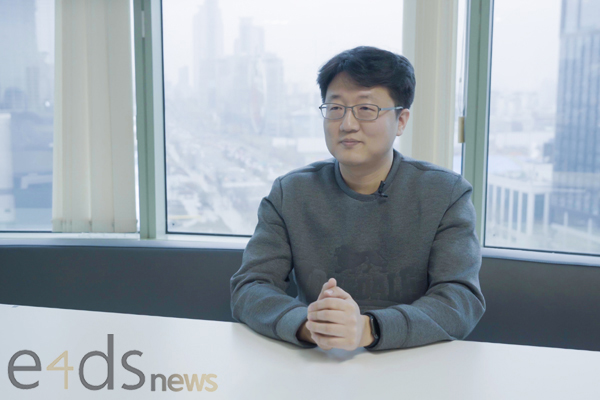
[Photo = Reporter Lee Su-min]
“In the past, many consumers were hesitant to purchase electric vehicles due to long charging times, short driving ranges, and a lack of charging stations,” said Kim Haram, deputy manager in charge of MCU support at Infineon Technologies Korea’s Automotive Business Unit. “However, with the advancement of overall technology, the efficiency of electric vehicles is increasing, and as the public increasingly values environmental friendliness, the market is on a growth path.”
Electric vehicles are equipped with electronically controlled devices, including high-voltage batteries, power converters, and high-capacity inverter motors, features not found in internal combustion engine vehicles. Infineon collectively refers to the controllers required to operate electric vehicles as the Electric Drive Train (EDT). The controllers within the EDT are responsible for not only electric vehicle performance but also safety and security, requiring stable, real-time, and highly efficient computation.
◇ Electric vehicle MCU that internalizes the external component functions of an internal combustion engine MCU
Currently, Infineon continues to supply MCUs for powertrain controllers for internal combustion engine vehicles. Vice President Kim stated, “Internal combustion engine MCUs require high specifications,” adding, “This is because they must integrate multiple complex signals to determine the status and precisely control the timing of fuel injection into the engine, compression, combustion, exhaust, etc. based on a large amount of data.”
MCUs for electric vehicle EDTs and MCUs for internal combustion engine powertrain controllers have different requirements. "Internal combustion engine MCUs must incorporate peripherals that minimize the computation of complex signals, while electric vehicle MCUs require significant real-time control capabilities, such as high-performance timers and analog-to-digital converters," explained Deputy Director Kim.
Vice President Kim Haram said, “In preparation for the expansion of the electric vehicle market, Infineon is mass-producing high-frequency PWMs corresponding to high-voltage DC/DC converters, accelerators that accelerate calculations, and ADCs (Analog-to-Digital Converters) that enable fast conversion with low noise.”
He added, “We are helping to reduce the BOM (Bill of Materials) of electric vehicle and electrical equipment manufacturers by eliminating many analog components that were previously installed outside the MCU and replacing their roles with functions inside the MCU and digitizing them.”
◇ We will supply MCUs that meet the latest safety, security, and other requirements.
EDT is responsible for the performance of electric vehicles as well as their safety and security. “While EDT has not required much security and safety so far, applications developed in the future will require functional safety at the ISO 26262 ASIL-D level,” said Vice President Kim. “As the OTA (Over The Air) function, which updates software wirelessly, is applied, an even higher level of security will also be required.”
“Infineon is providing safety and verifiable documentation to manufacturers developing electric vehicle applications based on its electric vehicle EDT MCUs to help them meet ASIL-D standards,” said Kim Haram, Vice President.
Major domestic and international auto and electronics manufacturers are striving to keep pace with these trends. "Infineon maintains close relationships with them," explained Vice President Kim. "We are striving to build a 'P2S (Product to System)' model, developing high-quality semiconductors that meet the latest requirements and providing consistent technical support to supply products tailored to the system."
◇ We are developing accelerators and other devices for smooth in-vehicle communication.
Infineon currently competes in the automotive semiconductor market with companies like NXP Semiconductors of the Netherlands, Renesas Electronics of Japan, and Texas Instruments of the United States. What will Infineon's strategy be to differentiate itself from its competitors in the future electric vehicle market?
“As important as improving MCU performance is leading manufacturers to save on development costs and time,” said Vice President Kim Haram. “Infineon is striving to improve MCU performance while maintaining core genes even as generations change.” It provides hardware and software compatibility, allowing manufacturers to save development time and cost.
In addition, Vice President Kim Haram stated, “We are providing or developing various types of communication routing accelerators and related accelerators that can reduce computational load to enable efficient communication and exchange with the AP (Application Processor), which is important in the domain or zone controllers that will be used in the future.”
Comments
Related news
Microchip Unveils Reference Offline Power Control Solution
In offline AC/DC power systems without a separate bias power supply, the secondary-side MCU cannot operate the system. Microchip has released the 15W MCP102 offline reference design, 'EV37F82A', which enables the elimination of standalone bias power supplies in many applications with the MCP1012 high-voltage auxiliary AC/DC controller.
2021.01.07by 강정규 기자
TI Announces Highly Accurate Voltage Monitoring/Balancing IC for EVs
For automobile manufacturers, filtering system-level noise to accurately measure battery cell voltage and temperature and reliably transmit this information to the MCU is a very important design challenge. Texas Instruments has released the BQ79616-Q1, an automotive battery monitoring and balancing IC that enables accurate voltage measurement even in high-voltage systems of up to 800V.
2021.01.07by 명세환 기자
Infineon supplies MEMS-type microphones to replace ECM
Noise canceling headphone designers consider AOP, SNR, power consumption, package size, and whether to select ECM or MEMS type before adopting a microphone. Infineon has unveiled the XENSIV IM73A135, an analog MEMS microphone that replaces ECM.
2021.01.09by 이수민 기자

[e4ds Tech Day 2026 ⑨] Sim Sang-gyu, Autocrypt CTO: "In the Physical AI Era, Automotive Security Must Extend Beyond the Vehicle"
At e4ds Tech Day 2026, Sim Sang-gyu, CTO of Autocrypt, explained automotive cybersecurity strategies in the era of Physical AI and SDV (Software-Defined Vehicle). Automobiles are evolving as part of an ecosystem connected to AI, cloud, chargers, IoT, and robots, and he emphasized that the scope of security must expand beyond the vehicle interior to the entire connected environment. In particular, AI model tampering, adversarial attacks, OTA updates, and EV charger hacking were identified as major threats. He explained that response measures require zero trust, AI model integrity protection, intrusion detection, Security by Design and Default, and full lifecycle security management, and that proactive security system establishment beyond regulatory compliance is critical for securing future mobility competitiveness.
2026.10.12by 배종인 기자

Practical HIL Construction Strategy for Automotive and Off-Highway Controller Validation
As vehicle E/E architecture transitions to zonal structures and shifts to software-defined vehicles (SDV), the number of controllers (ECUs) requiring validation and software complexity are surging dramatically. Meanwhile, real vehicle testing cannot provide repeated verification under identical conditions and entails lead time and safety concerns. This white paper explains the principles of HIL (Hardware-in-the-Loop) validation and the structure of the NI platform composed of PXI, SLSC, and VeriStand, and through two actual implementation cases—Camera Record & Replay HIL for In-Cabin Monitoring Controller (ICMU) and Forklift Controller (VCU) HILS—describes how controller-level regression testing becomes possible. Additionally, it explicitly states application boundaries and limitations, such as lack of A2B support.
2026.10.12by 편집부











