



Vicor Provides 'PDN Solution' for VideoRay Underwater ROV
 Published2021.03.10 17:01
Video Ray, to improve the stability/mobility of ROVs
Adoption of Vicor's DCM, BCM, SAC, and PRM technologies
Port security and surveillance, mine countermeasures, underwater search and rescue, and marine ecological research are all dangerous missions. To reduce casualties and damage to vessels caused by these operations, the use of remotely operated underwater vehicles (ROVs) is increasing.
ROVs that must remain for extended periods in inaccessible deep seas require the ability to secure space for mission execution, thrust to withstand changes in ocean currents, and stability to provide a stable visual field of view. To achieve this, a robust, high-density power distribution network (PDN) is required.
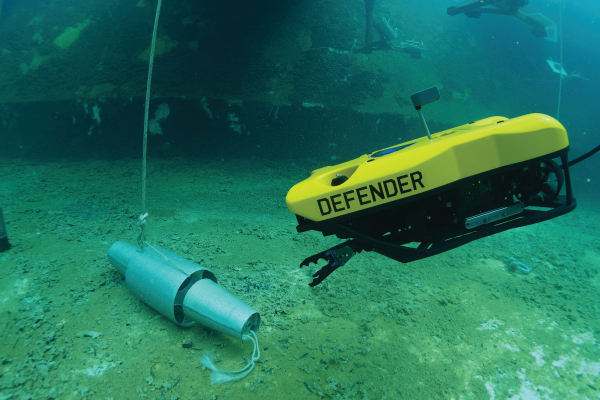
VideoRay’s Defender ROV is powered by a host platform, vessel, etc., and can operate 24/7 at depths up to 305m and 2000m in floating mode. In addition, it can maintain underwater operation for up to 8 hours.
Vicor announced on the 9th that it has collaborated with Videoray to design a system for the Defender ROV that reduces the need for bulky heat sinks and EMI filter systems, thereby reducing wasted board space and enabling efficient cooling.
Based on modular components, the Defender ROV, which is easily adjustable for specific applications, generates 400V DC low-voltage power using 'Vicor DCM™ Series Converters' to power all main thrusters and control electronics inside the submerged equipment.
The DCM series DC-DC converter achieves high power density in a small footprint with integrated monitoring and auto-shutdown functions. The DCM series accommodates a wide input voltage range to allow for large voltage drops over longer tethers.
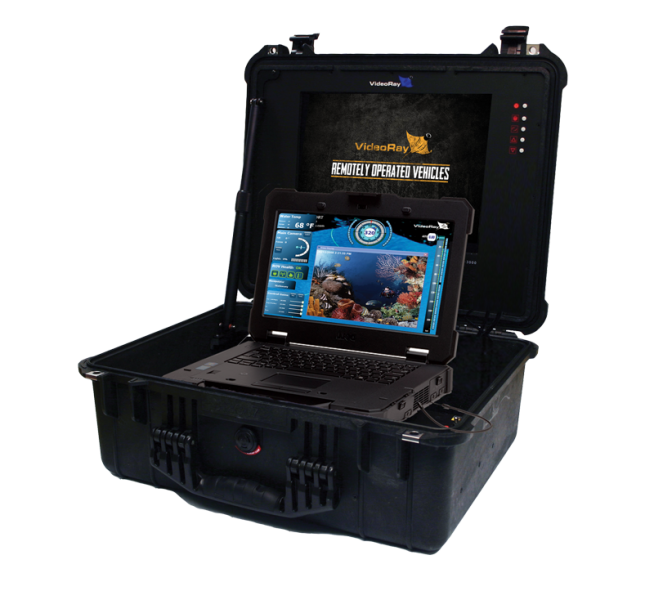
The 'Vicor BCM® Bus Converter' used in the VideoRay Pro 4 main controller converts the host vessel's rectified AC into 72V DC and distributes it to the ROV via a tether. Additionally, it utilizes advanced heat sinks and active cooling for efficient thermal management.
BCM performs bidirectional fixed-ratio DC-DC conversion using the 'Vicor SAC™ (Sine Amplitude Converter) topology,' a resonant tank-based DC-DC converter architecture. With an input voltage range of 36 to 800 V and voltage conversion by various K factors, some BCMs feature integrated PMBus® telemetry, control, and EMI filtering.
In addition, it can reach a power density of up to 2,400 W/ in³ and a maximum efficiency of 98%, and by connecting the inputs in parallel to a high-power array and connecting the outputs in series or parallel, it can achieve much higher output voltage and current than a single module.
VideoRay's battery-powered ROVs utilize 'Vicor PRM™ buck-boost converters' with constant current and constant voltage control for battery management. Featuring a Zero Voltage Switching (ZVS) architecture, the PRM buck-boost regulator accommodates a wide input voltage range and provides regulated and adjustable output voltages.

Comments
Related news
Extending drone flight range depends on optimizing hydrogen fuel cell power delivery network (PDN).
Hydrogen fuel cell technology is enhancing the utility of drones. Doosan Mobility Innovation (DMI) has completed demonstration of the DS30 drone equipped with the DP30 power pack, a hydrogen fuel cell, and is now expanding its lineup. To manufacture drones capable of flights exceeding two hours, DMI adopted Vicor's modular regulators, achieving miniaturization, weight reduction, and efficiency optimization of the power system.
2021.01.12by 이수민 기자
"Gaining Energy from Static Electricity" Saenggiwon Develops TENG Amplifier
High-voltage plasma can be generated without external power by utilizing the principle of triboelectricity in everyday life. For this purpose, a separate energy conversion device called a triboelectric nanogenerator (TENG) is required. KIST, in collaboration with Korea University of Technology and Education and Sungkyunkwan University, developed core technology that maximizes triboelectric output by designing the electrode structure of TENG in a micro-sawtooth shape and utilizing the discharge characteristics of the electrode.
2021.02.05by 이수민 기자

DC/DC Converter Design: Understanding Electrical Characteristics First
Most devices on a PCB operate on DC only, and each device has its own operating voltage range and different voltage accuracy requirements. DC/DC converters are necessary to prevent device malfunction and characteristic degradation. Power supply design engineers must be able to evaluate electrical characteristics of DC/DC converters such as load regulation, inductor current, output voltage, and power efficiency.
2021.02.24by 이수민 기자

Intel Unveils Next-Generation 'Core Ultra Series 3' and vPro Platform for Enterprise PCs
Intel has officially unveiled the "Intel Core Ultra Series 3" for next-generation enterprise PCs and the latest vPro platform, addressing a wide range of demands from enterprise notebooks to high-performance workstations.
2026.03.26by 배종인 기자
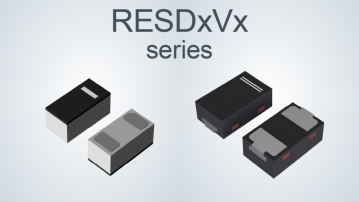
ROHM Launches ESD Protection Diode Compatible with High-Speed Interfaces of 10Gbps or Higher
Semiconductor specialist ROHM has developed the 'RESDxVx series' of ESD (electrostatic discharge) protection diodes capable of responding to next-generation high-speed data communication environments exceeding 10Gbps, simultaneously enhancing both signal quality maintenance required in high-speed interfaces and IC protection performance.
2026.03.26by 배종인 기자











