


The US, China, and Japan are accelerating their efforts to become self-sufficient in semiconductor manufacturing, catching up with South Korea and Taiwan.
 Published2021.04.05 17:13
Stable semiconductor supply and demand leads to national competitiveness.
The top three GDP countries declare semiconductor self-sufficiency.
“It was a mistake.”
On March 31st, a false report occurred that, had it been true, would have rocked the global economy. News of a fire at the 12B fab of Taiwan's TSMC, the world's largest foundry, spread across the globe. Fortunately, this was a false report.
In reality, a transformer within the 12B fab overheated and emitted smoke. The fire alarm mistakenly detected this as a fire, triggering the carbon dioxide extinguishing system. Aside from one employee suffering excessive carbon dioxide inhalation, no other casualties were reported. Furthermore, the employee's health was reportedly unaffected.
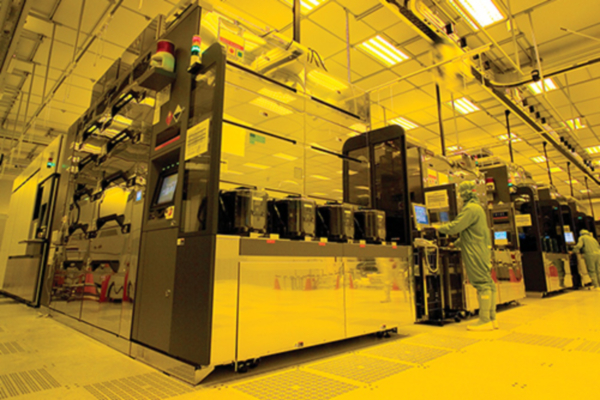
Interest in Korea is growing [Photo = TSMC]
Amid the COVID-19 pandemic, the importance of foundries is growing as demand for semiconductors surges due to the revitalization of the contactless economy. Foundries are companies that manufacture semiconductors based on orders from fabless companies that specialize solely in semiconductor design.
TSMC, the first foundry company, has maintained the top spot since its establishment in 1987. It currently holds over 50% of the global foundry market, leaving Samsung Electronics, GlobalFoundries, UMC, and SMIC behind by a wide margin.
TSMC's 12B fab, where false fire alarms and fire alarms occurred simultaneously, manufactures chips based on 12-inch wafers. It can produce system semiconductors like SoCs and SiPs, as well as memory semiconductors like DRAM and NAND. These products are key devices that meet the high-performance and high-efficiency requirements of today's applications.
The recent instability in the supply and demand of automotive semiconductors has further increased the value of foundries. Early on in the COVID-19 pandemic, a decline in automotive demand due to a decline in consumer sentiment led to a decline in semiconductor production orders. However, a faster-than-expected economic recovery has led to shortages, and this problem is now spreading to consumer devices and industrial semiconductors.
The US-China trade dispute, which has been raging since last year, is also having an impact. The semiconductor supply chain has been impacted by panic buying and overordering by the industry, driven by concerns about supply shortages stemming from the US's strict sanctions on Chinese companies like Huawei and HiSilicon and their affiliates.
Natural disasters and accidents, such as the shutdown of semiconductor factories in Texas due to a record-breaking cold snap in the U.S., the Fukushima earthquake in Japan, and the fire at a Renesas plant, also exacerbated the semiconductor supply-demand imbalance. Fortunately, the TSMC fire report turned out to be a false alarm.
Semiconductors are a key item in the Fourth Industrial Revolution, and supply and demand instability makes it impossible to release devices in a timely manner, thereby reducing the competitiveness of countries and companies. Accordingly, major countries are expanding their investment in the foundry sector and providing full support for its self-sufficiency.
Intel, the world's leading IDM, announces its foundry business with Biden's support.
On March 23rd, Intel, the world's largest integrated device manufacturer (IDM), announced it would invest $20 billion (approximately KRW 22.6 trillion) in re-entering the foundry business. Intel had entered the foundry market in 2016, but withdrew two years later in 2018. Intel plans to establish two new fabs in Arizona, USA, to produce its own designed semiconductors, and through the expanded production capacity, it plans to develop a flexible foundry business that produces not only x86 architecture-based products but also Arm architecture-based products.
According to TrendForce, the global foundry market share in the first quarter of 2021 is projected to be TSMC (56%), Samsung Electronics (18%), GlobalFoundries (7%), UMC (7%), and SMIC (5%). Of these, GlobalFoundries is the only US-based company.
On February 24th, US President Joe Biden signed an executive order assessing the global semiconductor supply chain, emphasizing investment in the US semiconductor industry and reducing the country's reliance on foundries, which account for over 80% of the market, including those in East Asia, such as TSMC and Samsung Electronics. Intel's moves are also expected to gain momentum as a result of the Biden administration's policy of strengthening US semiconductor manufacturing capabilities.
Over the decades, Intel has amassed a vast IP portfolio spanning CPUs, communications, IoT, and memory. It has also built a close network with fabless companies in Silicon Valley. Accordingly, it is expected that it will be possible to attract major domestic IT companies such as IBM and Microsoft (MS), with which it has already established technology partnerships, as well as Amazon, Google, Qualcomm, and Cisco, as clients.
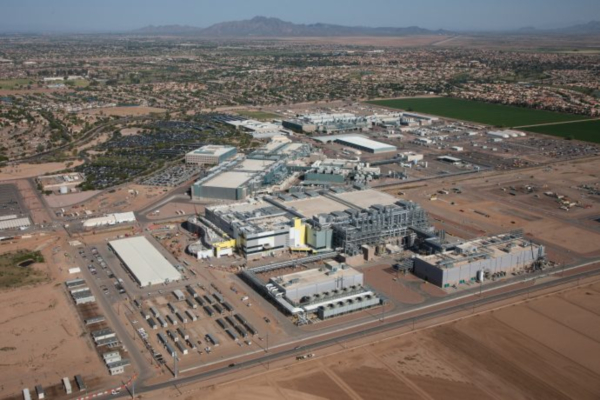
The photo shows Intel's Fab 42 in Arizona, USA [Photo = Intel]
Industry insiders believe Intel's latest move will have minimal impact on the market. This is because Intel, with its limitations even at the 7nm process, cannot immediately jump into the race between TSMC and Samsung Electronics, which has been progressing from 5nm to 3nm in terms of process technology. If Intel focuses on the 10nm and above market, GlobalFoundries, UMC, and SMIC are expected to be affected.
However, some analysts say that if Intel, with its financial power, secures competitiveness in the 7nm process in the near future and reaches the level of the 5nm process or lower to secure volume from major customers such as Nvidia and Qualcomm, it could form a "big three" with TSMC and Samsung Electronics.
In particular, Intel CEO Pat Gelsinger emphasized that the company is working with ASML, a Dutch EUV equipment manufacturer, to increase the utilization of extreme ultraviolet (EUV) technology, which is essential for fine process technology.
◇ Chinese appliance makers, including TCL and Xiaomi, plan to produce chips specifically for their products.
On March 11th, Chinese home appliance manufacturer TCL announced its intention to invest 1 billion yuan (approximately 175 billion won) to establish TCL Semiconductor. TCL Semiconductor plans to invest in areas such as IC design and power semiconductor components.
In particular, the company plans to focus on developing high-demand driver chips and AI audio chips, modeled after the fabless pattern in the IC design field, and produce dedicated chips optimized for its own products.
Xiaomi, a mobile device manufacturer known for its cost-effectiveness, also announced its plan to develop a dedicated chip on March 30th. On that day, Xiaomi unveiled the Surge C1 chip, an image processing processor (ISP) that controls its liquid-lens-based cameras.
In the past, Xiaomi challenged the application processor (AP) market with the Surge S1 and S2, but retreated due to technological limitations. On this day, Xiaomi did not make any remarks regarding foundries as was initially expected, but it is known that the Chinese locals are viewing the possibility of Xiaomi entering the market as somewhat high.
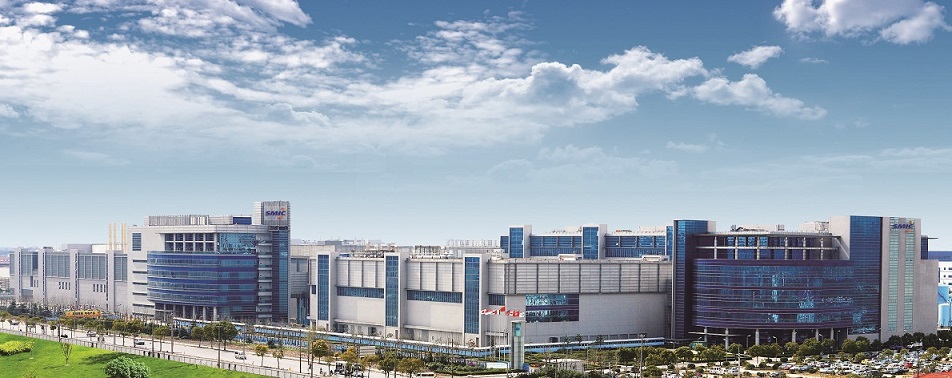
On March 17, SMIC, China's leading foundry, announced plans to build a new semiconductor wafer fabrication plant in Shenzhen in cooperation with the Shenzhen municipal government. SMIC and a Shenzhen government-run fund will jointly invest $2.35 billion (approximately KRW 2.64 trillion) in the new plant.
The plant will utilize SMIC's current flagship 28nm process technology and aims to produce 40,000 12-inch wafers per month. Considering that most Chinese fabs produce 8-inch wafers, SMIC's semiconductor production facility in Shenzhen is expected to be relatively state-of-the-art.
SMIC has already been actively expanding its foundry business, having announced in December last year with the Beijing municipal government the construction of a new semiconductor plant in Beijing that will produce 12-inch wafers and IC packages. However, the company is facing difficulties such as process development suspension due to sanctions imposed by the U.S. government that prohibit the export of parts and equipment to Chinese companies.
However, attention is focused on whether SMIC will be able to gain momentum in technological development as it recently extended its equipment supply contract with ASML by one year and the China Semiconductor Industry Association announced on March 11 that it would discuss forming a consultative body with the US Semiconductor Industry Association.
◇ Japan's Ministry of Economy, Trade and Industry aims to regain its 1980s semiconductor powerhouse status.
On March 23, Japan's Ministry of Economy, Trade and Industry (METI) established a public-private joint venture and began full-scale construction of a domestic production system. METI has secured a total budget of 200 billion yen to support post-5G and semiconductor technology development, and plans to provide approximately 42 billion yen (approximately 428.5 billion won) for this plan and its implementation.
The project, involving three semiconductor solution companies—Canon, Tokyo Electron, and SCREEN—and the National Institute of Advanced Industrial Science and Technology (AIST), will focus on developing technologies related to the pre-process of creating circuits on substrates and commercializing products. Specifically, the company aims to secure 2nm process technology by the mid-2020s, thereby restoring its former position in the global semiconductor market.
Future goals include developing semiconductor manufacturing technology at sub-2nm and establishing advanced logic semiconductor manufacturing technology. In this process, it is highly likely that collaborations with leading American and Taiwanese companies in semiconductor technology will also be explored. In particular, as TSMC has decided to establish a production base in Japan, the possibility of cooperation with TSMC is expected to be high.
Meanwhile, the National Institute of Advanced Industrial Science and Technology plans to install a test line in Tsukuba City, Ibaraki Prefecture, and also operate a consortium of advanced semiconductor manufacturing technology, including a foundry.
Comments
Related news
Global foundries report their highest sales growth in a decade... "Only Samsung can challenge TSMC."
Remote education and work enablement, along with increased demand for high-performance mobile phones and infrastructure due to full-scale 5G commercialization, are driving a boom in the foundry market. Taiwan-based market research firm TrendForce forecasts that global foundry revenue will increase by 23.8% year-over-year this year. This represents the highest growth rate in a decade.
2020.11.19by 이수민 기자
Fostering the System Semiconductor Industry, Demand-Linked Fabless is the Key
System semiconductors are specialized in computation and control, unlike memory semiconductors which are specialized in storage. Additionally, while the memory semiconductor ecosystem is centered on IDMs that handle both design and production simultaneously, the system semiconductor ecosystem has well-established division of labor between fabless companies that handle design and foundries that handle production. To grow the system semiconductor industry further than it currently is, it is necessary to foster and support fabless companies that are capable of customer-centric semiconductor design specialized in specific tasks, rather than foundries which have high barriers to entry.
2021.01.19by 이수민 기자
Foundry Process Competition, Following 'EUV', 3D "GAA" Ignites
Foundry competition is currently centered on EUV technology. Since only TSMC, which holds the top foundry market share, and Samsung Electronics, in second place, have adopted EUV processes, demand is concentrated with these two companies. Samsung Electronics plans to introduce MBCFET based on GAA technology, a three-dimensional structure, at the 3nm node. TSMC also intends to adopt the GAA approach, similar to Samsung Electronics, starting from the 2nm process and below.
2021.01.23by 이수민 기자
Intel Unveils Next-Generation 'Core Ultra Series 3' and vPro Platform for Enterprise PCs
Intel has officially unveiled the "Intel Core Ultra Series 3" for next-generation enterprise PCs and the latest vPro platform, addressing a wide range of demands from enterprise notebooks to high-performance workstations.
2026.03.26by 배종인 기자
ROHM Launches ESD Protection Diode Compatible with High-Speed Interfaces of 10Gbps or Higher
Semiconductor specialist ROHM has developed the 'RESDxVx series' of ESD (electrostatic discharge) protection diodes capable of responding to next-generation high-speed data communication environments exceeding 10Gbps, simultaneously enhancing both signal quality maintenance required in high-speed interfaces and IC protection performance.
2026.03.26by 배종인 기자











