



Is it possible for Samsung Electronics, with a market cap of 120 trillion won, to acquire NXP for 70 trillion won?
 Published2021.04.29 14:45
Cash is sufficient, but investing 70 trillion won is risky for performance.
Already possessing AP, RF, and sensor capabilities for autonomous driving
With May just around the corner, articles are exploring the possibility of Samsung Electronics acquiring NXP Semiconductors. Headquartered in the Netherlands, NXP primarily develops and produces automotive semiconductors, a sector that has been facing increasing supply uncertainty since the beginning of the year.

The reason there are voices speculating on the possibility of a deal between the two companies is because NXP has attempted to sell itself in the past, and Samsung Electronics CFO Choi Yoon-ho declared in a conference call in January this year that he would pursue a meaningful merger or acquisition within the next three years.
In 2016, Qualcomm's acquisition of NXP was thwarted by opposition from Chinese authorities. At the time, Samsung Electronics was reportedly included on the NXP board's list of potential acquisition targets.
Samsung Electronics also has considerable will to engage in automotive-related business. In 2016, it acquired Harman, an American battlefield company, for $8 billion (approximately 9 trillion won), and in 2018, it introduced the vehicle AP, 'Exynos Auto', and the vehicle image sensor, 'ISOCELL Auto'.
◇ 70 trillion won is too expensive
Industry insiders anticipate that the merger of NXP, with its strengths in infotainment and MCUs, and Samsung Electronics, with its strengths in memory semiconductors and foundries, will create synergy that will offset each other's weaknesses and maximize their strengths. However, some are skeptical of this potential.
First, the profitability of automotive semiconductors is lower than that of consumer electronics semiconductors. Automotive semiconductor manufacturers include industry leader NXP, followed by Infineon, Renesas, Texas Instruments, and STMicroelectronics. NXP's total revenue in 2020 was $8.61 billion (KRW 9.5 trillion), with approximately half of that estimated to come from automotive semiconductors.
Meanwhile, Samsung Electronics' semiconductor division's total sales last year amounted to 72.9 trillion won. Harman, acquired for approximately 9 trillion won, also recorded sales of approximately 9.2 trillion won last year. Currently, it is estimated that acquiring NXP would require approximately 70 trillion won. Analysts predict that Samsung Electronics will not undertake excessive spending, especially with Vice Chairman Lee Jae-yong's presence in the English-speaking world.
Supply instability likely to be resolved within this year
The outlook that the instability in the supply of automotive semiconductors will not continue also plays a role. This supply instability is due to factors such as the acceleration of vehicle electrification and electrification, and the advancement of autonomous driving technology, but the more fundamental reason is that we decided not to produce what we intended to produce, and thus missed the opportunity.
Early last year, as the COVID-19 pandemic swept the globe, automotive semiconductor manufacturers anticipated a decline in vehicle demand and shifted their manufacturing capacity to other sectors. However, demand recovered faster than expected, resulting in a supply shortage.
Passenger car sales have increased in line with the spread of the contactless trend, and with automotive semiconductor manufacturers seeing demand grow in the electric vehicle market, led by Tesla, the shortage of automotive semiconductors is expected to improve after the third quarter.
◇ AP, RF, sensors, and foundry are important, not just MCUs
Given the bright mid- to long-term outlook for the automotive semiconductor market, the possibility of an NXP acquisition cannot be ruled out. IHS Markit projects the automotive semiconductor market to reach $67.6 billion (approximately 75 trillion won) by 2026. Statista also forecasts that the market will grow to $175 billion (approximately 194 trillion won) by 2040.
However, this outlook is based on the commercialization of Level 3 autonomous vehicles. Current commercial vehicles contain 200 to 300 semiconductors. Future Level 3 autonomous vehicles are expected to require over 2,000 semiconductors. Samsung Electronics already possesses capabilities in areas such as APs, RF, and image sensors related to autonomous driving functions.
While domestic semiconductor companies like Telechips, Silicon Works, and Above Semiconductor have announced their intention to enter the automotive MCU market, Samsung Electronics appears unlikely to enter the market. Accordingly, the company is likely to focus on building local foundries, taking advantage of tax incentives from countries like the US and EU, which are seeking semiconductor manufacturing independence.
Comments
Related news
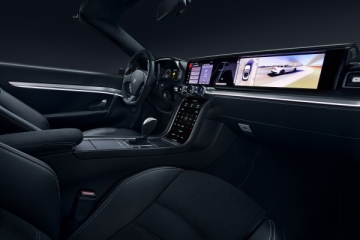
The automotive semiconductor market, facing a supply and demand crisis, demands future investment, not immediate action.
The supply situation for automotive semiconductors shows no signs of improvement. The industry has analyzed that the supply crisis stems from major semiconductor manufacturers' failure in demand forecasting. IHS Markit projected that even if production lines are expanded starting this month, it will take at least six months or more until production, meaning this crisis will extend through the third quarter. Automotive semiconductors currently offer limited profitability, causing semiconductor manufacturers to hesitate in expanding production lines. However, if Level 3 autonomous driving technology is commercialized, it is expected that seven times more semiconductors will be mounted in vehicles compared to the present, suggesting a bright market outlook.
2021.03.08by 이수민 기자
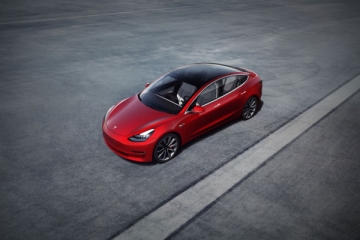
Will the ongoing semiconductor supply and demand instability change the foundry landscape?
The shortage of automotive semiconductors stems from major automotive semiconductor manufacturers' failed demand forecasts, who anticipated reduced automobile sales due to the COVID-19 pandemic, as well as the rapidly advancing electrification of vehicles and enhanced autonomous driving capabilities. The automotive semiconductor shortage shows signs of extending to broader semiconductor shortages across the entire manufacturing sector. In response, the EU, the United States, and other regions are accelerating efforts to reclaim semiconductor manufacturing capabilities that have become dependent on Taiwan and South Korea.
2021.03.27by 이수민 기자

The Korea Automotive Research Institute (KARI) says, "Exploring the automotive semiconductor AP market is essential."
The Korea Automotive Research Institute has stated that rather than entering the MCU-focused automotive semiconductor market, where established global leaders are firmly positioned amid current supply shortages in the electric vehicle semiconductor market, it is necessary to seek opportunities in the AP (application processor for data computation and processing functions) market that is being newly formed amid technological changes.
2021.04.13by 배종인 기자
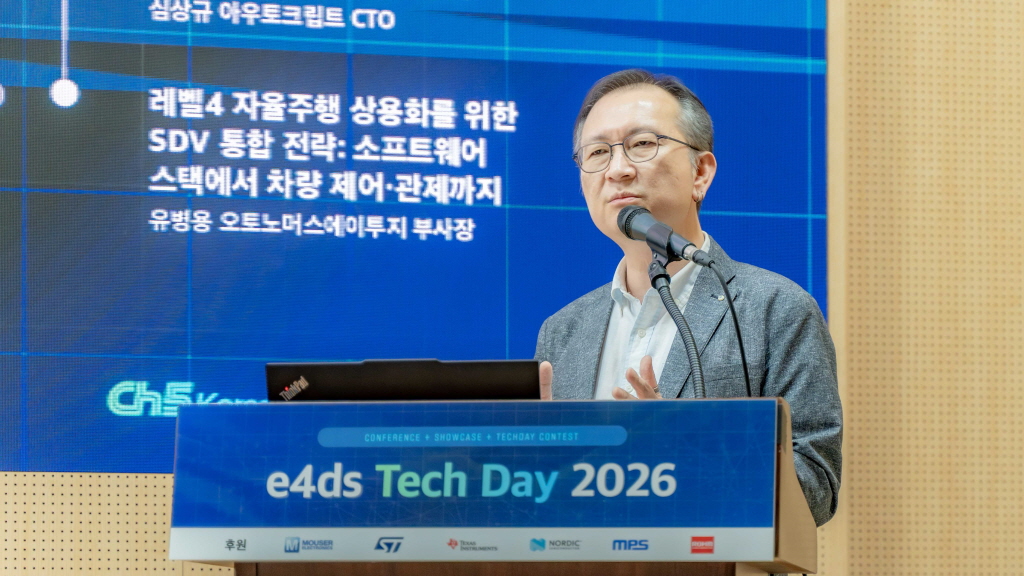
[e4ds Tech Day 2026 ⑨] Sim Sang-gyu, Autocrypt CTO: "In the Physical AI Era, Automotive Security Must Extend Beyond the Vehicle"
At e4ds Tech Day 2026, Sim Sang-gyu, CTO of Autocrypt, explained automotive cybersecurity strategies in the era of Physical AI and SDV (Software-Defined Vehicle). Automobiles are evolving as part of an ecosystem connected to AI, cloud, chargers, IoT, and robots, and he emphasized that the scope of security must expand beyond the vehicle interior to the entire connected environment. In particular, AI model tampering, adversarial attacks, OTA updates, and EV charger hacking were identified as major threats. He explained that response measures require zero trust, AI model integrity protection, intrusion detection, Security by Design and Default, and full lifecycle security management, and that proactive security system establishment beyond regulatory compliance is critical for securing future mobility competitiveness.
2026.10.12by 배종인 기자
Practical HIL Construction Strategy for Automotive and Off-Highway Controller Validation
As vehicle E/E architecture transitions to zonal structures and shifts to software-defined vehicles (SDV), the number of controllers (ECUs) requiring validation and software complexity are surging dramatically. Meanwhile, real vehicle testing cannot provide repeated verification under identical conditions and entails lead time and safety concerns. This white paper explains the principles of HIL (Hardware-in-the-Loop) validation and the structure of the NI platform composed of PXI, SLSC, and VeriStand, and through two actual implementation cases—Camera Record & Replay HIL for In-Cabin Monitoring Controller (ICMU) and Forklift Controller (VCU) HILS—describes how controller-level regression testing becomes possible. Additionally, it explicitly states application boundaries and limitations, such as lack of A2B support.
2026.10.12by 편집부











