



"Easier Metering Design Leads to Higher Energy Efficiency"
 Published2021.06.07 11:11
Metering solutions needed to improve product energy efficiency
Analog World Supplying Easy-to-Use ADI Solutions
According to the International Energy Agency (IEA), global energy demand in 2021 is projected to increase by 4.6% compared to 2020. This represents a 0.5% increase from 2019, indicating that energy demand is returning to pre-COVID-19 levels.
However, as of May, the global COVID-19 vaccination rate remains below 6%, and with the spread of virus variants in countries like Vietnam, it appears difficult to achieve a complete end to the pandemic within this year. Since the energy industry involves many face-to-face tasks that cannot be replaced by remote work, a smooth energy supply is also expected to be difficult if current workforce management challenges persist.
With increasingly frequent extreme weather events, concerns about the environment are growing. The energy industry is grappling with alternatives to thermal power generation, while the automotive industry is accelerating the transition from internal combustion engine vehicles to electric vehicles. The problem is that most eco-friendly power generation methods fail to surpass the efficiency of thermal power, and the driving range of electric vehicles is too short relative to the energy consumed.

With the potential for energy supply instability and increasing demand persisting, energy efficiency is becoming a value of paramount importance. To increase energy efficiency, technology is needed to accurately determine how much energy is being used.
We asked Lee Seung-kyu, a manager at Analog World, about the energy metering solutions needed to improve energy efficiency, the difficulties engineers face when applying them to actual applications, and ways to resolve those challenges.
Q. What is the reason for the recent increase in demand for energy metering solutions?
A. With the spread of non-face-to-face trends during the pandemic and the rise of remote work and education, the volume of data that data centers must process has increased explosively. Furthermore, charging demand is rising due to the active adoption of electric vehicles, while energy consumption is increasing driven by the popularization of smart homes and the growth of smart buildings and smart factories.
As electricity usage must be constantly monitored to maintain smooth energy supply and demand, the demand for energy metering solutions is increasing, and the range of applications is also on the rise.
Q. What are some applications where energy metering is utilized?
A. These include slow electric vehicle chargers, electricity meters, power meters, data center power monitoring systems, street light controllers, security light controllers, smart plugs, etc.
Q. What is the biggest challenge for developers when implementing energy metering functionality?
A. Includes the design of voltage and current sensors, calculation of accumulated power, harmonic analysis, implementation of THD (Total Harmonic Distortion) functions, and calibration.
Q. What is the family of energy metering solutions offered by Analog Devices (ADI)?
A. Currently, ADI supplies the 'ADE7953' single-phase energy metering solution, the 'ADE9000, ADE7878A' three-phase energy metering solution, the 'ADE7880' three-phase harmonic monitoring solution, as well as products including isolators and one-chip solutions.
Q. Please introduce the ADI Energy Metering Solution Evaluation Board.
A. ADI and Analog World supply evaluation boards in which two chips are integrated onto a single board to verify the performance of ADI energy metering IC products, specifically single-phase (ADE7953) and three-phase (ADE9000). Intuitive control is possible as the development environment is Windows GUI-based. In addition, both companies provide circuit diagrams for the evaluation boards and offer design consultation and software support.
Q. What features does the evaluation board support, and which features would you like to emphasize?
A. The ADI energy metering IC evaluation board provides instantaneous values such as voltage, current, power factor, active/reactive power, and apparent power by default. It also provides power quality-related detection functions including THD, zero-crossing, line frequency, dip, swell, and phase angle, as well as cumulative active power.
In particular, the ADE9000 3-phase energy metering solution supports a Waveform Buffer function. This feature allows the MCU to acquire the original power signal and perform functions such as FFT to extract only signals of a desired order from the harmonic components, thereby enabling the analysis of power quality. This data can also be transmitted to a server to plot graphs.
Q. What are ADI and Analog World's goals in the energy metering solutions market?
A. Analog World contributes to the stabilization of the domestic power market by supplying ADI's various energy metering solutions. Moving forward, both companies plan to jointly carry out various projects to design and supply even more stable energy metering solutions.
Comments
Related news

ADI Launches ASIL-D Grade BMS “Supports LFP Batteries”
ADI has expanded its BMS product lineup by launching the ADBMS6815 and ADBMS6817, which are based on ASIL-D functional safety and the latest low-power technology. The two new BMS solutions support monitoring of various battery types used not only in the EV market, but also in ESS that utilize reused and recycled batteries. This includes cobalt-free LFP batteries.
2021.05.28by 명세환 기자

Maxim Launches Regulator that Provides Supercapacitor Backup Power
Maxim Integrated has released the 'MAX38889' 2.5V~5V, 3A reversible buck/boost regulator, the third product in the Continua product family. With this, engineers can design ultra-high efficiency, ultra-compact systems requiring backup power while using energy sources such as supercapacitors.
2021.06.02by 이수민 기자
TI Announces Integrated Solutions for Electric Vehicle Powertrain Systems
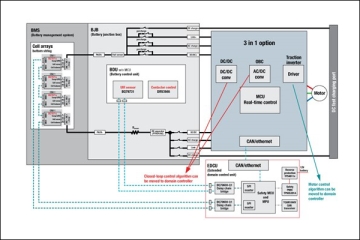
The performance of electric vehicles is determined by the power efficiency and size of the powertrain. In response, Texas Instruments has announced an integrated powertrain system solution that enhances the economics and affordability of hybrid and pure electric vehicles while extending driving range.
2021.06.03by 이수민 기자

Intel Unveils Next-Generation 'Core Ultra Series 3' and vPro Platform for Enterprise PCs
Intel has officially unveiled the "Intel Core Ultra Series 3" for next-generation enterprise PCs and the latest vPro platform, addressing a wide range of demands from enterprise notebooks to high-performance workstations.
2026.03.26by 배종인 기자
ROHM Launches ESD Protection Diode Compatible with High-Speed Interfaces of 10Gbps or Higher
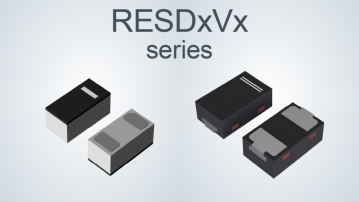
Semiconductor specialist ROHM has developed the 'RESDxVx series' of ESD (electrostatic discharge) protection diodes capable of responding to next-generation high-speed data communication environments exceeding 10Gbps, simultaneously enhancing both signal quality maintenance required in high-speed interfaces and IC protection performance.
2026.03.26by 배종인 기자











