



Dutch Government Halts ASML EUV Equipment Exports to China: "Why?"
 Published2021.07.19 10:15
Biden administration continues previous administration's policies
The U.S. blocked China's '10nm' rise, but nothing more.
The Wall Street Journal reported on the 17th (local time) that ASML, the Dutch company and the world's second-largest semiconductor equipment manufacturer, is facing restrictions on exporting EUV equipment to China due to its government withholding approval. According to the report, this withholding of approval is because the U.S. administration under President Joe Biden requested the Dutch government to restrict sales on grounds of national security.
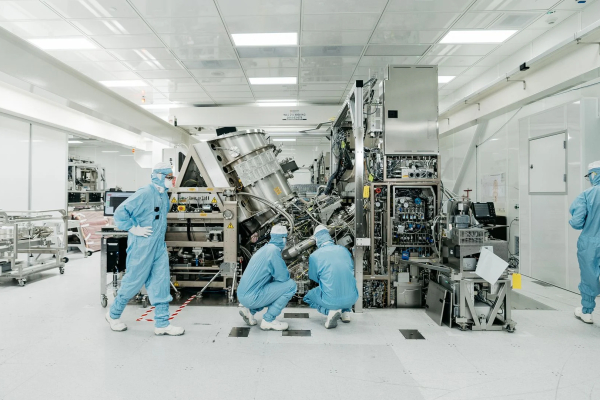
U.S. pressure has continued since July 18, 2019, when Charles Kupperman, former National Security Advisor to former U.S. President Donald Trump, pressured then-Dutch Prime Minister Mark Rutte and officials at the White House to restrict the export of ASML equipment to China, even after the change of administration.
The media suggested that restricting ASML's business in China is a critical task for Biden's National Security Advisor, Jake Sullivan. China is also protesting to the Dutch government through various channels, but it appears to be in vain. The United States is reportedly continuously sending the message to the Dutch government that "restricting the export of EUV equipment to China will only cause trade friction with China, but will further strengthen the alliance with the United States."
EUV equipment, or Extreme Ultraviolet (EUV) lithography equipment, is essential for the production of system semiconductors with dimensions of 5–7 nm or smaller. The competitiveness of the semiconductor lithography process lies in etching circuits as finely as possible within a limited wafer space. This is because performance and power efficiency improve as the number of integrated components increases. Shorter wavelengths allow for higher integration density, with wavelengths decreasing in the order of Krypton Fluoride (Krf, 248 nm), Argon Fluoride (ArFi, 193 nm), and Extreme Ultraviolet (EUV, 13.5 nm). In particular, shorter wavelengths reduce the number of process steps, offering the advantage of enabling future reductions in semiconductor production costs.
EUV equipment is essential for the production of system semiconductors at 5–7nm or smaller. Taiwan’s TSMC and South Korea’s Samsung Electronics, the top two foundry companies, have already entered the 5nm advanced process and plan to launch the 3nm process starting next year. For memory semiconductors as well, EUV equipment is essential for products starting from the 10nm class. Currently, ASML holds a monopoly on the supply of EUV equipment.
ASML sold 11 EUV machines in 2017, 18 in 2018, 26 in 2019, and 31 in 2020. With an average price of around 100 million euros (approximately 135 billion won) per unit, EUV machines are extremely expensive equipment, with the cost of a single unit equivalent to three Boeing 747 aircraft. Production is planned for 42 units this year and 55 units next year. The Wall Street Journal pointed out that while China accounts for 17% of ASML's total revenue, this figure includes older equipment.
So far, U.S. lobbying of the Dutch government has had no impact on ASML's business. "Demand is high outside of China as well, so we are not taking any hit," said ASML CEO Peter Wennink. Last year, ASML recorded approximately $16.5 billion in revenue and $4.1 billion in profit.
Skeptical analyses are also being raised that tightening the grip on EUV technology will not work on China. The former Trump administration estimated that it would take China at least 10 years to acquire technological capabilities on par with ASML and imposed semiconductor sanctions on China in cooperation with its allies. However, this only heightened the vigilance of the Chinese government and companies. Bloomberg reported that China's semiconductor equipment imports amounted to approximately $32 billion (37 trillion won) last year, a 20% increase compared to 2019.
China is also purchasing large quantities of U.S.-made semiconductor equipment. This is because U.S. sanctions are limited to equipment such as EUV and below, with no restrictions on purchasing equipment beyond that level. Although semiconductors below 10nm have high added value, most semiconductors are still produced using processes beyond that, and China holds a strong position in this area. For instance, China's BYD Semiconductor ranks second in global market share for IGBTs.
In a report last March, the AI Committee under the U.S. National Security Council (NSC) proposed that “export restrictions are necessary not only on EUV equipment but also on older equipment of 10nm or larger, such as ArF.” Accordingly, additional U.S. sanctions are expected, but the timing appears to be somewhat late.
Wen Xiaojun, director of the Electronic Information Research Institute under China's Ministry of Industry and Information Technology, stated through the Global Times on June 23 that "14nm chip production will be possible in China by the end of 2022," adding that "related equipment technology is also being steadily secured."
Comments
Related news
Foundry Process Competition, Following 'EUV', 3D "GAA" Ignites
Foundry competition is currently centered on EUV technology. Since only TSMC, which holds the top foundry market share, and Samsung Electronics, in second place, have adopted EUV processes, demand is concentrated with these two companies. Samsung Electronics plans to introduce MBCFET based on GAA technology, a three-dimensional structure, at the 3nm node. TSMC also intends to adopt the GAA approach, similar to Samsung Electronics, starting from the 2nm process and below.
2021.01.23by 이수민 기자
Semiconductor supply and demand instability is expected to be resolved in 2023, with a surge in fabs.
Amid global economic headwinds in the second quarter due to shortage inflation, semiconductor supply-demand stabilization is expected to occur gradually from July in the near term, and more comprehensively from 2023 onwards. With increased ASML EUV equipment supply beginning in the latter half of 2022, full-scale operations of high-end fabs are anticipated in 2023. Mid and low-range fabs producing CIS, DDI, and PMIC are also expected to become active around 2023 through domestic semiconductor supply chain localization policies pursued by various countries.
2021.05.28by 이수민 기자
SK Hynix mass-produces 10nm-class '1a' DRAM based on EUV process
SK Hynix announced that it has begun mass production of 8Gbit LPDDR4 mobile DRAM applying 10-nanometer class 1a process technology. 1a is a technology following 1x, 1y, 1z, and products will be supplied from the second half of the year. Additionally, it marks the first DRAM product from SK Hynix to be mass-produced using EUV process.
2021.07.13by 이수민 기자
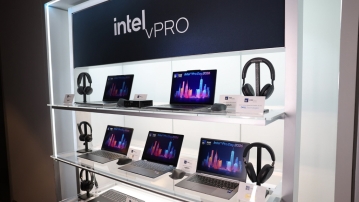
Intel Unveils Next-Generation 'Core Ultra Series 3' and vPro Platform for Enterprise PCs
Intel has officially unveiled the "Intel Core Ultra Series 3" for next-generation enterprise PCs and the latest vPro platform, addressing a wide range of demands from enterprise notebooks to high-performance workstations.
2026.03.26by 배종인 기자
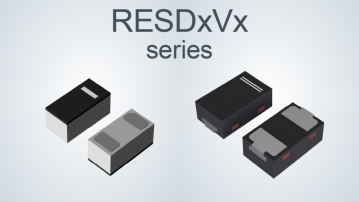
ROHM Launches ESD Protection Diode Compatible with High-Speed Interfaces of 10Gbps or Higher
Semiconductor specialist ROHM has developed the 'RESDxVx series' of ESD (electrostatic discharge) protection diodes capable of responding to next-generation high-speed data communication environments exceeding 10Gbps, simultaneously enhancing both signal quality maintenance required in high-speed interfaces and IC protection performance.
2026.03.26by 배종인 기자











