
Xilinx and Motovis Develop Automotive Front Camera Solution
 Published2021.09.01 11:33
Xilinx-Motovis, CNN-based camera system
Joint development. Supporting a market growing 20% annually.
Forward-facing camera systems are a key component of advanced driver assistance systems (ADAS), providing the advanced sensing capabilities required for critical safety features such as Lane-Keeping Assistance (LKA), Automatic Emergency Braking (AEB), and Adaptive Cruise Control (ACC).
Xilinx announced on the 1st that it has collaborated with Motovis, an embedded AI autonomous driving supplier, to develop a solution for vehicle recognition and control of automotive front camera systems. The two companies announced a solution that combines Xilinx's automotive-grade (XA) 'Zynq® SoC' platform and Motovis' CNN (Convolutional Neural Network) IP.
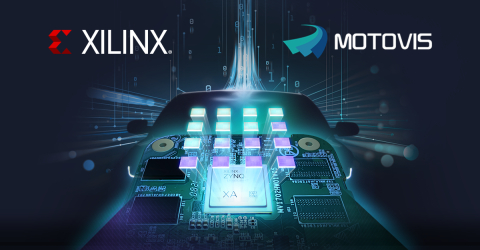
[Image = Xilinx]
This currently available solution leverages CNNs to support the parameters required for the European New Car Assessment Program (NCAP) 2022 requirements and enables fast and cost-effective image processing.
“The front-facing camera market is expected to grow at a rate of nearly 20 percent annually from 2020 to 2025,” said Ian Riches, vice president of global automotive at Strategy Analytics. “This solution meets the needs of automotive OEMs who need to address new standards and continually increasing requirements.”
This solution is scalable across the 16nm and 28nm XA Zynq SoC families, based on Motovis CNN IP. Optimized hardware and software partitioning capabilities, combined with a customizable CNN-specific engine hosting Motovis' deep learning network, enable cost-effective product implementations at various performance levels.
The images supported by the two companies' front camera solutions have a resolution of up to 8 megapixels. OEMs and Tier 1 suppliers can differentiate their designs and implement future-proof designs by layering their own functional algorithms on top of the Motovis perception stack.
Xilinx and Motovis will present details of their solutions at the Xilinx Adapt 2021 event, which will be held online on September 15th.
Comments
Related news
Mouser to Supply Maxim's Automotive DP Backlight Drivers
Mouser Electronics announced that it supplies the Maxim Integrated MAX25530 automotive 4-channel backlight driver product. The MAX25530 integrates an I2C-controlled 4-channel 150mA LED backlight driver and 4-output thin-film transistor liquid crystal display bias power supply in a 40-pin single chip, reducing installation area for automotive dashboard, central information display, and navigation display designs.
2021.07.20by 명세환 기자
BlackBerry QNX to Supply RTOS for Korea's Unmanned Train System
BlackBerry QNX announced that its RTOS will be applied to the communication-based train system of domestic company S-Traffic. 'QNX OS for Safety' is set to be used to improve the safety of S-Traffic's unmanned train system. QNX OS for Safety, which is currently adopted in various industries including railway transportation, industrial control, automotive and aerospace, is an RTOS for embedded systems and has achieved ISO 26262 ASIL D and IEC 61508 SIL 3 functional safety certifications.
2021.07.30by 이수민 기자
Lattice Unveils Automotive AES-256 Secure FPGA Certus-NX
The introduction of the automotive-grade Certus-NX product expands Lattice's automotive product portfolio. The new Certus-NX product, based on the Lattice Nexus platform, combines automotive-grade functionality, high I/O density, power efficiency, compact form factor, excellent reliability, instant-on performance, and support for high-speed PCIe and gigabit Ethernet interfaces.
2021.08.26by 명세환 기자
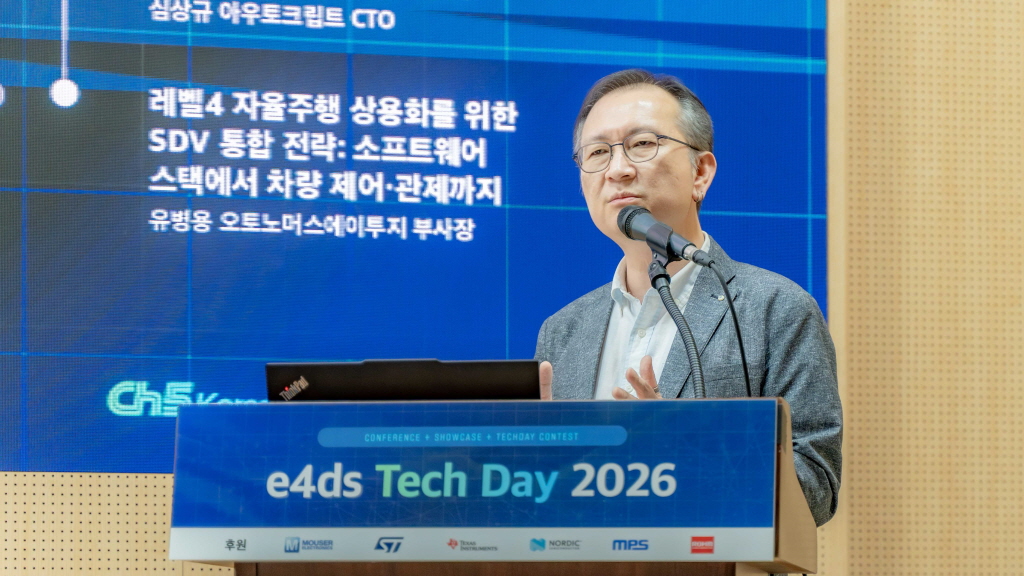
[e4ds Tech Day 2026 ⑨] Sim Sang-gyu, Autocrypt CTO: "In the Physical AI Era, Automotive Security Must Extend Beyond the Vehicle"
At e4ds Tech Day 2026, Sim Sang-gyu, CTO of Autocrypt, explained automotive cybersecurity strategies in the era of Physical AI and SDV (Software-Defined Vehicle). Automobiles are evolving as part of an ecosystem connected to AI, cloud, chargers, IoT, and robots, and he emphasized that the scope of security must expand beyond the vehicle interior to the entire connected environment. In particular, AI model tampering, adversarial attacks, OTA updates, and EV charger hacking were identified as major threats. He explained that response measures require zero trust, AI model integrity protection, intrusion detection, Security by Design and Default, and full lifecycle security management, and that proactive security system establishment beyond regulatory compliance is critical for securing future mobility competitiveness.
2026.10.12by 배종인 기자

Practical HIL Construction Strategy for Automotive and Off-Highway Controller Validation
As vehicle E/E architecture transitions to zonal structures and shifts to software-defined vehicles (SDV), the number of controllers (ECUs) requiring validation and software complexity are surging dramatically. Meanwhile, real vehicle testing cannot provide repeated verification under identical conditions and entails lead time and safety concerns. This white paper explains the principles of HIL (Hardware-in-the-Loop) validation and the structure of the NI platform composed of PXI, SLSC, and VeriStand, and through two actual implementation cases—Camera Record & Replay HIL for In-Cabin Monitoring Controller (ICMU) and Forklift Controller (VCU) HILS—describes how controller-level regression testing becomes possible. Additionally, it explicitly states application boundaries and limitations, such as lack of A2B support.
2026.10.12by 편집부