



[Promising Technology Outlook] Sensor Fusion LED Technology Provides Overtaking Information
 Published2021.09.01 16:20
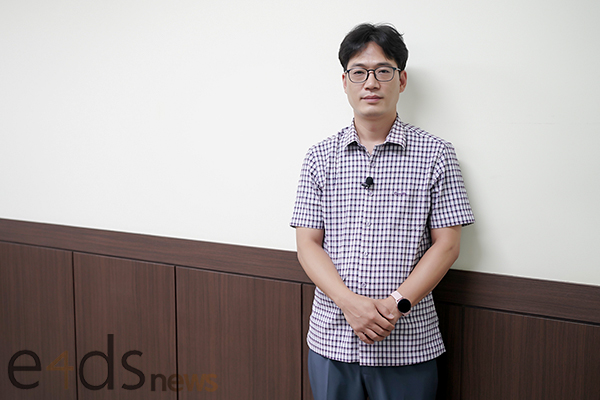
Kim Yong-eun, researcher at the Korea Automotive Research Institute, forward situation
Advancing AI and LED-based technologies for rear-facing transmission
When driving on the road, overtaking may be necessary depending on the situation. However, because drivers cannot fully perceive the situation ahead of the vehicle they are overtaking, the risk of an accident arises.
Kim Yong-eun, a researcher at the AI Sensor Research Center of the Korea Automobile Research Institute, has developed an LED-based device and method that allows a leading vehicle to provide information about the situation in front of the vehicle to the vehicle behind.
In 2015, Samsung Electronics unveiled the "Samsung Safety Truck" in Argentina, featuring a front-facing wireless camera that displays the situation ahead on rear signage. This truck was named one of Time magazine's Best Inventions of the Year. The truck's high height significantly obscures the view of drivers behind, and this design addresses this issue.
Researcher Kim Yong-eun developed a technology inspired by safety trucks while also addressing their shortcomings. Installing a large display on the rear of a vehicle, like a safety truck, inevitably raises durability concerns. Various foreign objects can fly into the vehicle on the road, potentially damaging the display and leading to significant replacement costs. Additionally, it only provides information about the vehicle ahead to the rear driver and cannot provide overtaking guidance.
The new technology stems from the recent advancements in autonomous driving technology, which are integrating various sensors into vehicles. Unlike safety trucks, which simply collect and display information via cameras, radar, GPS, and other sensors can collect and synthesize data like the speed and distance of the vehicle ahead, generating guidance information that can assist the vehicle behind in overtaking.
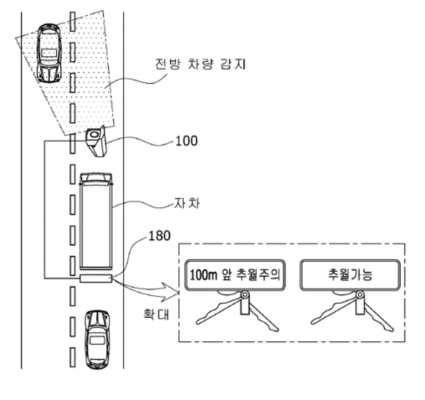
The generated information is transmitted to the rear as text on the LED display at the rear of the vehicle. For example, it can notify the vehicle behind of information such as 'Watch out for vehicles 150m ahead, overtaking speed ×× km/h, overtaking time ×× seconds'. This technology is expected to be useful in situations where not all vehicles are capable of V2X (Vehicle to Everything) communication, as it allows the driver of the vehicle behind to directly perceive the situation ahead of the vehicle ahead with their eyes.
The technology has been patented. Researcher Kim Yong-eun said, “Using this technology, even vehicles not equipped with expensive equipment such as V2X will be able to pass more safely,” and “It is also possible to use the patent to pursue new tasks related to automobile safety devices.”
More details can be found at the Technology Information Promotion Agency (TIPA) Technology Exchange Meeting, which will be held online on Tuesday, September 14th at 1:30 PM.
Comments
Related news
Mouser to Supply Maxim's Automotive DP Backlight Drivers
Mouser Electronics announced that it supplies the Maxim Integrated MAX25530 automotive 4-channel backlight driver product. The MAX25530 integrates an I2C-controlled 4-channel 150mA LED backlight driver and 4-output thin-film transistor liquid crystal display bias power supply in a 40-pin single chip, reducing installation area for automotive dashboard, central information display, and navigation display designs.
2021.07.20by 명세환 기자

[China Briefing] China Accelerates Securing CIS and OLED Markets Following ICs
e4ds News China ICT Briefing - August 18, 2021 [China Brief] : ◇China produces 31.6 billion ICs in July alone, up 41% year-over-year ◇CIS with 7 billion units shipped annually, Chinese companies showing rapid growth ◇TCL China Star to supply smartphone OLED panels to Samsung Electronics ◇Foxconn plans to establish EV factories in the US and Thailand within this year, etc.
2021.08.18by 이춘영 외신
"OLED Latest Trends at a Glance" IMID 2021, Held for the First Time in Two Years
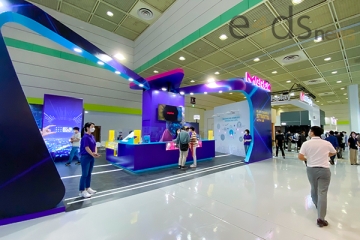
The 20th IMID 2021 Korea Display Industry Exhibition was held for four days from the 25th to the 27th at Hall C of the Seoul COEX exhibition center. The IMID event, marking its 20th anniversary, is the nation's largest specialized trade show for the display industry, where a total of 115 companies including LGD and SDC showcased their latest display technologies through 291 booths.
2021.08.30by 이수민 기자
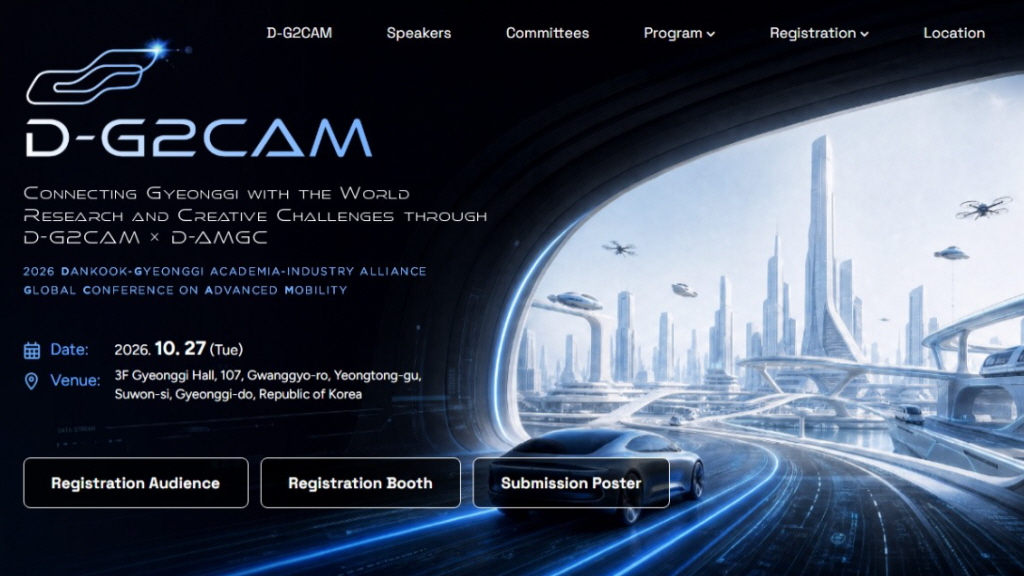
GAIA-Festa 2026, Autonomous Driving, AI, and Aerospace Experts Gather…Discussing Global Cooperation in the 'Silicon Intelligence Era'
GAIA-Festa 2026, which will be held in Suwon on October 27, is an industry-academia-research exchange event that explores the present and future of future mobility and AI technology through the global conference D-G2CAM 2026 and the international contest D-AMGC 2026. Domestic and international experts will share the latest research in autonomous driving, 5G/6G mobility, space technology, and data protection fields, while university students will showcase robots and physical AI prototypes that they have independently developed. Additionally, through poster presentations, corporate exhibitions, international cooperation meetings, and signing ceremonies, a platform will be established to connect the research capabilities and industrial needs of the Gyeonggi region with a global cooperation network.
2026.10.13by 배종인 기자

[e4ds Tech Day 2026 ⑨] Sim Sang-gyu, Autocrypt CTO: "In the Physical AI Era, Automotive Security Must Extend Beyond the Vehicle"
At e4ds Tech Day 2026, Sim Sang-gyu, CTO of Autocrypt, explained automotive cybersecurity strategies in the era of Physical AI and SDV (Software-Defined Vehicle). Automobiles are evolving as part of an ecosystem connected to AI, cloud, chargers, IoT, and robots, and he emphasized that the scope of security must expand beyond the vehicle interior to the entire connected environment. In particular, AI model tampering, adversarial attacks, OTA updates, and EV charger hacking were identified as major threats. He explained that response measures require zero trust, AI model integrity protection, intrusion detection, Security by Design and Default, and full lifecycle security management, and that proactive security system establishment beyond regulatory compliance is critical for securing future mobility competitiveness.
2026.10.12by 배종인 기자











