



Microchip Launches New PIC and AVR MCUs
 Published2022.04.29 11:44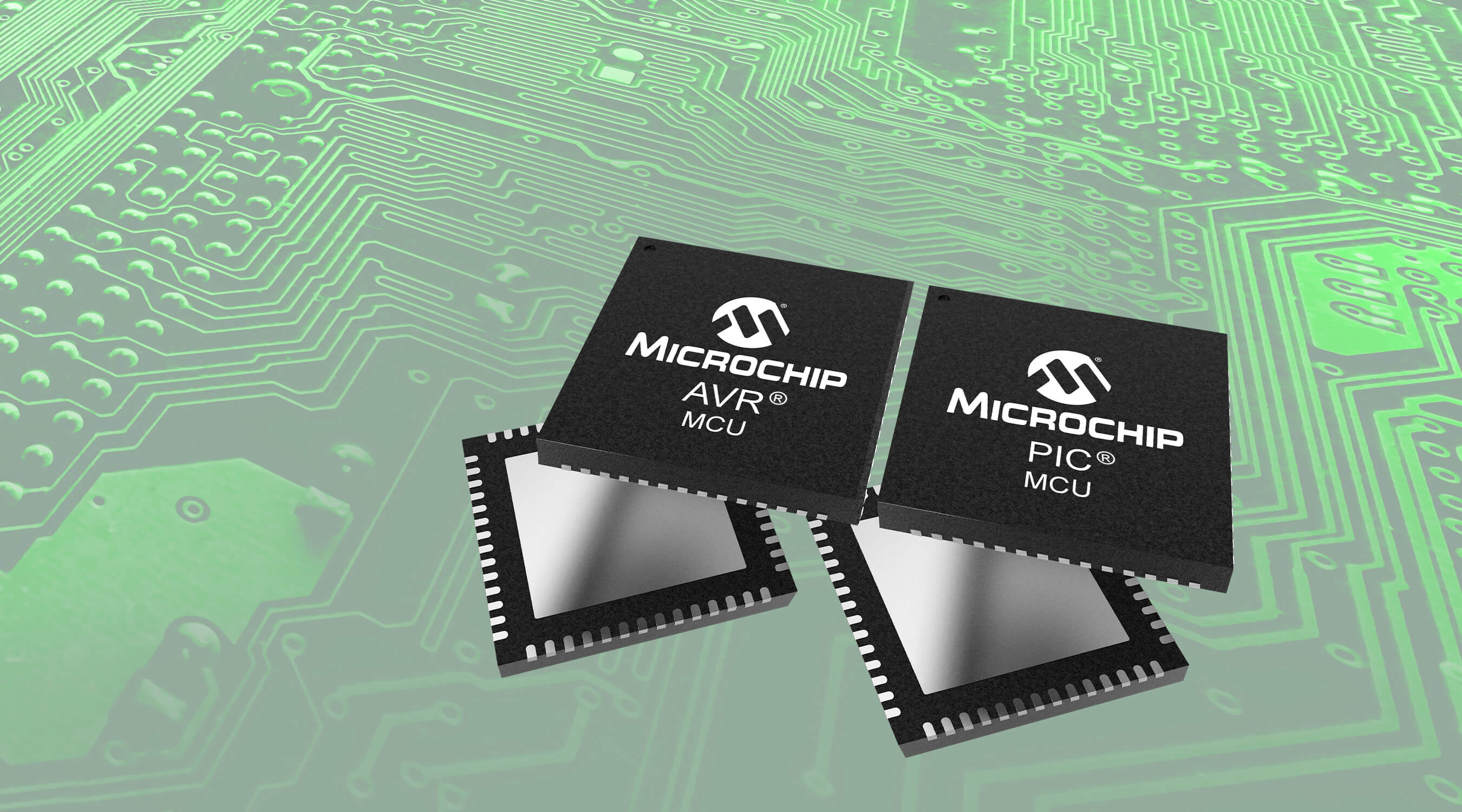
▲Microchip 8-bit PIC® and AVR® microcontroller units (MCUs)
The 8-bit MCU market has grown steadily over the past 50 years, with Microchip's MCU devices now selling at a rate of one per person per year in the U.S. and European markets.
In the embedded design market in 2022, 8-bit PIC® and AVR® microcontroller unit (MCU) product families are expected to increase their market share as smartphones, autonomous vehicles, and 5G wireless connectivity emerge as key trends.
Microchip Technology Inc. today announced five new product families and more than 60 new individual devices that provide simple solutions to common challenges faced by embedded developers.
These product families offer processing power, the ability to easily communicate with other chips, and analog peripherals that can be easily configured without changing the printed circuit board (PCB). These devices are supported by a simple development environment that allows them to be configured as smart peripheral chips, extending the functionality of existing MCUs.
Smart peripherals such as software-controlled operational amplifiers (Op Amp), multi-voltage I/O (MVIO), and analog-to-digital converters (ADCC) with built-in math functions, implemented in the PIC16F171 family, provide new value to applications that do not typically use MCUs.
Systems containing chips that use different supply voltages often face the challenge of needing to supply multiple voltages. For example, connecting a 5V MCU to a 1.8V sensor is a common example. These types of systems typically require level-shifting devices, which increases cost.
In contrast, the MVIO peripheral featured on Microchip's latest 8-bit MCUs, including the AVR DD family, allows a single port on the MCU to operate in a different voltage domain than the rest of the MCU, eliminating the need for additional external components.
Some systems require speed and response times that are difficult to achieve with software-based processing. Core Independent Peripherals (CIPs), available across all Microchip PIC and AVR products, can be easily programmed with MPLAB® Code Configurator (MCC) to configure hardware processing chains.
This allows for the creation of custom peripherals that eliminate software processing cycle time. For example, for a WS2812 LED array that requires proper timing, a super peripheral consisting of a pulse width modulator (PWM), an SPI interface, and a configurable logic cell (CLC) can be configured to easily control the array.
As the market for 8-bit PIC and AVR MCU devices continues to grow, Microchip is focusing its product portfolio and support structure to meet long-term demand. PIC and AVR MCUs are remarkably easy to design with, and their support network accelerates time to revenue for Microchip customers.
Our 8-bit MCU portfolio is pin-to-pin compatible, allowing you to choose alternative PIC or AVR MCUs when you need higher performance or want to maximize product availability while minimizing redesign requirements.
“PIC and AVR MCUs are extremely popular because they are designed to meet our customers’ needs for both current and future applications,” said Greg Robinson, senior vice president of marketing for Microchip’s 8-bit MCU business unit. “Microchip has established a supply chain for 8-bit PIC and AVR MCUs, and we manufacture the majority of them in our own facilities.”

Comments
Related news

Microchip Takes the Lead in Fostering Next-Generation Engineers
Microchip Technology (Asia General Manager and Korea Representative Han Byung-don), a global leader in microcontroller, mixed-signal, analog semiconductor, and flash-IP solution fields, is awarding scholarships to outstanding domestic electronic engineering students and actively engaging in fostering next-generation engineers.
2022.03.17by 배종인 기자
Microchip's Qi 1.3 Security Solution in One Step
A secure storage solution has been released that addresses the security requirements of the Wireless Power Consortium (WPC)'s Qi 1.3 wireless charging specification in one go, and is expected to enhance security performance while simultaneously resolving the inconvenience associated with authentication processes.
2022.03.31by 배종인 기자
.jpg)
Microchip Launches Cosmic Radiation-Tolerant Memory
It is known that approximately 30% of malfunctions in electrical equipment used in the space industry are caused by space radiation. Energy particles from space radiation can collide with electrical equipment and cause malfunctions, and as components become increasingly integrated, concerns about exposure effects are growing. Accordingly, radiation hardness of components has become an important factor in space system design options.
2022.04.25by 명세환 기자

Intel Unveils Next-Generation 'Core Ultra Series 3' and vPro Platform for Enterprise PCs
Intel has officially unveiled the "Intel Core Ultra Series 3" for next-generation enterprise PCs and the latest vPro platform, addressing a wide range of demands from enterprise notebooks to high-performance workstations.
2026.03.26by 배종인 기자

ROHM Launches ESD Protection Diode Compatible with High-Speed Interfaces of 10Gbps or Higher
Semiconductor specialist ROHM has developed the 'RESDxVx series' of ESD (electrostatic discharge) protection diodes capable of responding to next-generation high-speed data communication environments exceeding 10Gbps, simultaneously enhancing both signal quality maintenance required in high-speed interfaces and IC protection performance.
2026.03.26by 배종인 기자











